
 ARTISTS



Margerete Bagshaw-Tindel
A New Mexico painter explores new directions THE SOUND OF A WOODWORKING DRILL REACHES MARGARETE Bagshaw-Tindel`s loft studio from her husband`s frame
Gussie Fauntleroy / Southwest Art
01 Aug, 2002

A New Mexico painter explores new directions
THE SOUND OF A WOODWORKING DRILL REACHES MARGARETE
Bagshaw-Tindel`s loft studio from her husband`s frame shop downstairs in the New Mexico business/industrial space the couple shares. The dark-haired artist tilts her head toward the loft railing and smiles. "A drill is a sharp orange color," she says.
Other sounds announce themselves to her not only in auditory tones but also in thoughts of blue, purple, yellow, green, or red. And each sound/color carries with it a set of distinct emotional undertones, she says, explaining that these kinds of associations are part of an intuitive, sixthsense way of perceiving the world.
This is the way BagshawTindel has seen and heard things all her life. And not surprisingly, this vibrant emotional relationship with color is central to the way she makes art.
"When I see color, it`s like a stepping stone; it takes me into another part of the painting. I start in one area and move through the stepping stones of color and pattern. I try to continue the communication from one side of the painting to the other. Sometimes there`s a space that`s just crying for something to happen in it, and the process of painting is that keen sense of being able to hear what the painting is asking for. Sometimes all it needs for an answer is just a highlight or a line," she says.
She gazes at a large painting leaning against her studio wall, reflects for a moment, and then adds, "I develop a friendship or a love relationship with a painting. Sometimes I like to think of myself as walking inside a painting and having an adventurous experience."
There`s the key word: adventure. For this thirdgeneration painter of Santa Clara Pueblo descent, if the spark isn`t fiery, authentic, and fun, it won`t produce art worth spending the time to create. If boredom threatens or inspiration ebbs, Bagshaw-Tindel`s instinct for passion kicks in. More often than not, it spins her around and leaves her pointing in a new direction, or at least heads her toward a creative offshoot of something she`s been working on.
This ardent exploration of materials, media, and varying forms of expression has led to the artist`s alternating use of oils and pastels, which continues today. More recently, BagshawTindel has begun to open other fields of possibility by adding low relief or three-dimensional elements to her work. If stepping out in new directions comes naturally to the 37year-old artist, it should come as no surprise, considering her lineage. Her maternal grandmother, Pablita Velarde, was among the first female Pueblo artists to make her name known as a painter. And Bagshaw-Tindel`s mother was acclaimed painter Helen Hardin [1943-1984], who opened new artistic worlds by spurning convention with her geometrically structured, meticulously layered abstractions.
Beginning as a teenager in the 1930s, Pablita Velarde studied art under the legendary Dorothy Dunn at the Santa Fe Indian School. She soon was working on murals in Santa Fe and Albuquerque as part of public art projects run by the federal Works Progress Administration. In the solid-color background, two-dimensional style for which Dunn`s students became known, Velarde`s paintings often depict traditional Pueblo life, ceremonies, and mythology. At 84, she still lives and paints in her Albuquerque home, creating works that are collected internationally.
After painting for a time in a style similar to her mother`s, Hardin struck out in her own extraordinary direction beginning in the late 1960s and continuing until her early death from breast cancer. Although her work incorporated elements of Pueblo symbolism, it was anything but traditional.
It was into this world of independent women and art that Bagshaw-Tindel was born. And like her grandmother and mother, she found a means of creative expression that germinated and grew, in large part, from the seeds of rebellion against other peoples` expectations. In fact, the seemingly universal assumption that she would become an artist-an innovative, important one at that-pushed Bagshaw-Tindel completely away from art for many years.
At the same time, she now recognizes early influences that clearly left their mark on the direction her art eventually took. For example, living with her mother in Colombia and Guatemala for several years as a young child, she absorbed the vibrantly rich colors and patterns of those cultures and lands. And in her mother`s studio, Bagshaw-Tindel remembers eyeing a set of oil pastels whose bright colors cried out for little fingers to touch. But even though Hardin never used the pastels, she told her daughter not to touch them because they were too messy. So naturally, when BagshawTindel finally did turn to art, she sought out oil pastels.
While acknowledging her early sense of intimidation and rebellion, the artist now expresses appreciation for the strong female role models and creative environment she knew as a child. "My mother gave me a lot of material in which to grow-a lot of fertilizer, wisdom, and nurturing," she says.
It was during BagshawTindel`s second pregnancy that her own artistic impulses began to ripen, just as the new life inside her was preparing to emerge into the world. Increasingly, she experienced a growing desire to unleash the creative energy within her. "I felt like I was going to explode with something. Eventually it was a baby," she laughs, "but it was while I was pregnant that I started doing art."
Very quietly, at first. Getting up in the middle of the night, she began drawing and exploring oil pastel painting, not showing what she did to anyone except her husband, Greg. Before long, however, Greg framed some of his wife`s work and took it to the jury for the New Mexico State Fair art show, where it was accepted. Other positive responses followed. After years of feeling overshadowed by the success of her mother and grandmother, Bagshaw-Tindel had begun to discover her own distinctive artistic voice.
Today that voice is marked by a greater subtlety of tone and complexity of form in some works, while other paintings maintain an exuberance of gesture and color. A painting commissioned in 2001 for the Bernalillo County & Courthouse in Albuquerque has expanded Bagshaw-Tindel`s work in size; at 72 by 48 inches, it is her largest to date. Another relatively new development, painting on irregularly shaped panels, grew out of the artist`s earlier interest in the spontaneous design possibilities of torn paper.
"I used to get frustrated and have internal temper tantrums, and I would tear up paper and then draw on that," she says. "When I started with oils I sometimes took torn paper and traced its odd shape onto panel. I`d paint that shape but not cut it out. I`d follow the boundaries of the `torn` image but also go out around it, so it created a spatial illusion.
"Just recently I got bored, so I went downstairs to the frame shop, tore a piece of paper, traced it out on masonite, and cut it by hand with a little coping saw. I just followed the beautiful line of spontaneity. It`s a very emotional process, like a spark of passion or fury is still there."
Painted in the
artist`s signature style, these "torn" panels are mounted on suede backgrounds. Along with connotations of traditional Native American attire, the suede adds a textural dimension and complements the paintings` predominately earth-toned hues. Other recent works include a triptych in which the three panels contain low relief carving of geometric forms, echoing in sculptural elements the painted patterns and shapes.
Now BagshawTindel has moved further into threedimensional exploration, while at the same time reaching deeply into her Pueblo past. In "black on black" motifs reminiscent of Santa Clara and San Ildefonso Pueblo pottery, a new piece began as a shallow wooden box her husband built years ago for a longabandoned project. Cutting geometric shapes into the box, the artist created a stunning, multi-layered work that suggests even greater creative possibilities for the future.
"This is all really coming very easily to me now because I`ve always thought very threedimensionally," she says. "It`s all really starting to sing."
Gussie Fauntleroy wrote about Lisa Gordon in the July issue.
BAGSHAW-TINDEL`S WORK IS REPRESENTED By BLUE RAIN GALLERY, TAOS, NM. HER PAINTINGS CAN ALSO BE SEEN IN INSPIRATIONS, A SHOW OF CONTEMPORARY NATIVE AMERICAN PAINTING AND SCULPTURE RUNNING THROUGH JANUARY 12, 2003, AT THE MUSEUM OF INDIAN ARTS AND CULTURE IN SANTA FE. THE SHOW HONORS THE LATE LLOYD KIVA NEW, FOUNDER OF THE INSTITUTE OF AMERICAN INDIAN ART, WHO WAS CURATING THE SHOW AT THE TIME OF HIS DEATH IN EARLY 2002.
ILLUSTRATIONS
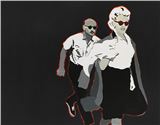
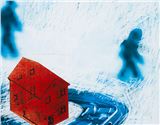
WHERE THE EARTH AND WATER TOUCH, OIL, 23 1/2 x 30 1/2.
ALIGNMENT OF A PERSONAL UNIVERSE, OIL, 25 X 33.
TRANSCENDENTAL ANASAZI, OIL, 30 x 22.
EYE FROM ABOVE, OIL, 19 X 24.
WEDDING GIFT, THREE-DIMENSIONAL SCULPTED OIL PANEL, 27 x 21.
THREE WISHES, OIL, 37 x 30.
COPYRIGHT: Copyright Sabot Publishing, Inc. Aug 2002. Provided by Proquest- CSA, LLC. All Rights Reserved. Only fair use as provided by the United States copyright law is permitted.
PROQUEST-CSA, LLC- MAKES NO WARRANTY REGARDING THE ACCURACY, COMPLETENESS, OR TIMELINESS OF THE LICENSED MATERIALS OR ANY WARRANTY, EXPRESS OR IMPLIED.
THE SOUND OF A WOODWORKING DRILL REACHES MARGARETE
Bagshaw-Tindel`s loft studio from her husband`s frame shop downstairs in the New Mexico business/industrial space the couple shares. The dark-haired artist tilts her head toward the loft railing and smiles. "A drill is a sharp orange color," she says.
Other sounds announce themselves to her not only in auditory tones but also in thoughts of blue, purple, yellow, green, or red. And each sound/color carries with it a set of distinct emotional undertones, she says, explaining that these kinds of associations are part of an intuitive, sixthsense way of perceiving the world.
This is the way BagshawTindel has seen and heard things all her life. And not surprisingly, this vibrant emotional relationship with color is central to the way she makes art.
"When I see color, it`s like a stepping stone; it takes me into another part of the painting. I start in one area and move through the stepping stones of color and pattern. I try to continue the communication from one side of the painting to the other. Sometimes there`s a space that`s just crying for something to happen in it, and the process of painting is that keen sense of being able to hear what the painting is asking for. Sometimes all it needs for an answer is just a highlight or a line," she says.
She gazes at a large painting leaning against her studio wall, reflects for a moment, and then adds, "I develop a friendship or a love relationship with a painting. Sometimes I like to think of myself as walking inside a painting and having an adventurous experience."
There`s the key word: adventure. For this thirdgeneration painter of Santa Clara Pueblo descent, if the spark isn`t fiery, authentic, and fun, it won`t produce art worth spending the time to create. If boredom threatens or inspiration ebbs, Bagshaw-Tindel`s instinct for passion kicks in. More often than not, it spins her around and leaves her pointing in a new direction, or at least heads her toward a creative offshoot of something she`s been working on.
This ardent exploration of materials, media, and varying forms of expression has led to the artist`s alternating use of oils and pastels, which continues today. More recently, BagshawTindel has begun to open other fields of possibility by adding low relief or three-dimensional elements to her work. If stepping out in new directions comes naturally to the 37year-old artist, it should come as no surprise, considering her lineage. Her maternal grandmother, Pablita Velarde, was among the first female Pueblo artists to make her name known as a painter. And Bagshaw-Tindel`s mother was acclaimed painter Helen Hardin [1943-1984], who opened new artistic worlds by spurning convention with her geometrically structured, meticulously layered abstractions.
Beginning as a teenager in the 1930s, Pablita Velarde studied art under the legendary Dorothy Dunn at the Santa Fe Indian School. She soon was working on murals in Santa Fe and Albuquerque as part of public art projects run by the federal Works Progress Administration. In the solid-color background, two-dimensional style for which Dunn`s students became known, Velarde`s paintings often depict traditional Pueblo life, ceremonies, and mythology. At 84, she still lives and paints in her Albuquerque home, creating works that are collected internationally.
After painting for a time in a style similar to her mother`s, Hardin struck out in her own extraordinary direction beginning in the late 1960s and continuing until her early death from breast cancer. Although her work incorporated elements of Pueblo symbolism, it was anything but traditional.
It was into this world of independent women and art that Bagshaw-Tindel was born. And like her grandmother and mother, she found a means of creative expression that germinated and grew, in large part, from the seeds of rebellion against other peoples` expectations. In fact, the seemingly universal assumption that she would become an artist-an innovative, important one at that-pushed Bagshaw-Tindel completely away from art for many years.
At the same time, she now recognizes early influences that clearly left their mark on the direction her art eventually took. For example, living with her mother in Colombia and Guatemala for several years as a young child, she absorbed the vibrantly rich colors and patterns of those cultures and lands. And in her mother`s studio, Bagshaw-Tindel remembers eyeing a set of oil pastels whose bright colors cried out for little fingers to touch. But even though Hardin never used the pastels, she told her daughter not to touch them because they were too messy. So naturally, when BagshawTindel finally did turn to art, she sought out oil pastels.
While acknowledging her early sense of intimidation and rebellion, the artist now expresses appreciation for the strong female role models and creative environment she knew as a child. "My mother gave me a lot of material in which to grow-a lot of fertilizer, wisdom, and nurturing," she says.
It was during BagshawTindel`s second pregnancy that her own artistic impulses began to ripen, just as the new life inside her was preparing to emerge into the world. Increasingly, she experienced a growing desire to unleash the creative energy within her. "I felt like I was going to explode with something. Eventually it was a baby," she laughs, "but it was while I was pregnant that I started doing art."
Very quietly, at first. Getting up in the middle of the night, she began drawing and exploring oil pastel painting, not showing what she did to anyone except her husband, Greg. Before long, however, Greg framed some of his wife`s work and took it to the jury for the New Mexico State Fair art show, where it was accepted. Other positive responses followed. After years of feeling overshadowed by the success of her mother and grandmother, Bagshaw-Tindel had begun to discover her own distinctive artistic voice.
Today that voice is marked by a greater subtlety of tone and complexity of form in some works, while other paintings maintain an exuberance of gesture and color. A painting commissioned in 2001 for the Bernalillo County & Courthouse in Albuquerque has expanded Bagshaw-Tindel`s work in size; at 72 by 48 inches, it is her largest to date. Another relatively new development, painting on irregularly shaped panels, grew out of the artist`s earlier interest in the spontaneous design possibilities of torn paper.
"I used to get frustrated and have internal temper tantrums, and I would tear up paper and then draw on that," she says. "When I started with oils I sometimes took torn paper and traced its odd shape onto panel. I`d paint that shape but not cut it out. I`d follow the boundaries of the `torn` image but also go out around it, so it created a spatial illusion.
"Just recently I got bored, so I went downstairs to the frame shop, tore a piece of paper, traced it out on masonite, and cut it by hand with a little coping saw. I just followed the beautiful line of spontaneity. It`s a very emotional process, like a spark of passion or fury is still there."
Painted in the
artist`s signature style, these "torn" panels are mounted on suede backgrounds. Along with connotations of traditional Native American attire, the suede adds a textural dimension and complements the paintings` predominately earth-toned hues. Other recent works include a triptych in which the three panels contain low relief carving of geometric forms, echoing in sculptural elements the painted patterns and shapes.
Now BagshawTindel has moved further into threedimensional exploration, while at the same time reaching deeply into her Pueblo past. In "black on black" motifs reminiscent of Santa Clara and San Ildefonso Pueblo pottery, a new piece began as a shallow wooden box her husband built years ago for a longabandoned project. Cutting geometric shapes into the box, the artist created a stunning, multi-layered work that suggests even greater creative possibilities for the future.
"This is all really coming very easily to me now because I`ve always thought very threedimensionally," she says. "It`s all really starting to sing."
Gussie Fauntleroy wrote about Lisa Gordon in the July issue.
BAGSHAW-TINDEL`S WORK IS REPRESENTED By BLUE RAIN GALLERY, TAOS, NM. HER PAINTINGS CAN ALSO BE SEEN IN INSPIRATIONS, A SHOW OF CONTEMPORARY NATIVE AMERICAN PAINTING AND SCULPTURE RUNNING THROUGH JANUARY 12, 2003, AT THE MUSEUM OF INDIAN ARTS AND CULTURE IN SANTA FE. THE SHOW HONORS THE LATE LLOYD KIVA NEW, FOUNDER OF THE INSTITUTE OF AMERICAN INDIAN ART, WHO WAS CURATING THE SHOW AT THE TIME OF HIS DEATH IN EARLY 2002.
ILLUSTRATIONS
WHERE THE EARTH AND WATER TOUCH, OIL, 23 1/2 x 30 1/2.
ALIGNMENT OF A PERSONAL UNIVERSE, OIL, 25 X 33.
TRANSCENDENTAL ANASAZI, OIL, 30 x 22.
EYE FROM ABOVE, OIL, 19 X 24.
WEDDING GIFT, THREE-DIMENSIONAL SCULPTED OIL PANEL, 27 x 21.
THREE WISHES, OIL, 37 x 30.
COPYRIGHT: Copyright Sabot Publishing, Inc. Aug 2002. Provided by Proquest- CSA, LLC. All Rights Reserved. Only fair use as provided by the United States copyright law is permitted.
PROQUEST-CSA, LLC- MAKES NO WARRANTY REGARDING THE ACCURACY, COMPLETENESS, OR TIMELINESS OF THE LICENSED MATERIALS OR ANY WARRANTY, EXPRESS OR IMPLIED.