ARTISTS




Art Basel Miami Beach: The Defining Sales and Stories
This year’s fair saw a wave of strong transactions, signaling renewed confidence in the art market
MutualArt
Dec 09, 2025
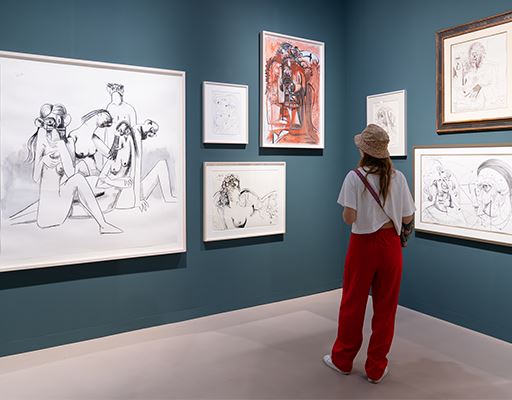
From the very first VIP day (December 3–4), galleries reported brisk activity. Dealers and gallerists alike seemed to sense that something had shifted. For many, 2025’s edition marked not just another busy week in Miami – but a renewed chapter for the global art market.
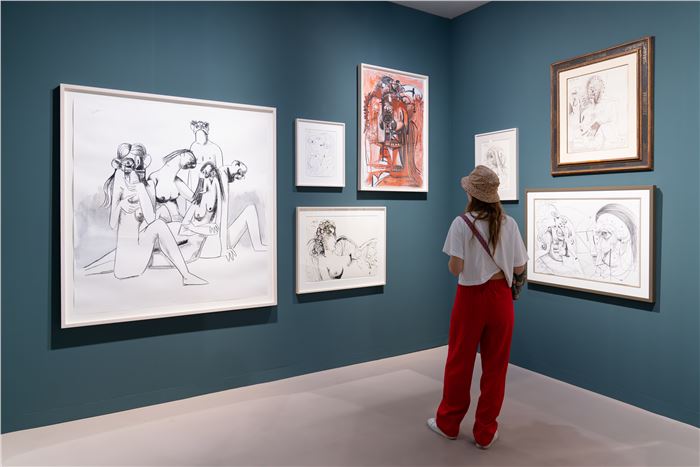 Gladstone Gallery, George Condo. Courtesy of Art Basel
A Surge in Sales: Blue-Chip, Digital & Emerging
Within hours of the fair’s opening, galleries began reporting headline-making transactions. The most notable: a painting by Gerhard Richter, reportedly sold by David Zwirner for US$ 5.5 million – a strong signal that blue-chip works remain central to the fair’s appeal. The following day, established dealers further affirmed their influence: Andy Warhol’s Muhammad Ali, 1977, from Lévy Gorvy Dayan, sold for US$ 18 million – by far the highest-reported price of the fair.
That said, the stream of sales didn’t end there. At David Zwirner, works across modern and contemporary practices changed hands: from a painting by Alice Neel to prints by Raymond Pettibon; from a photograph by William Eggleston to a sculpture by Dana Schutz.
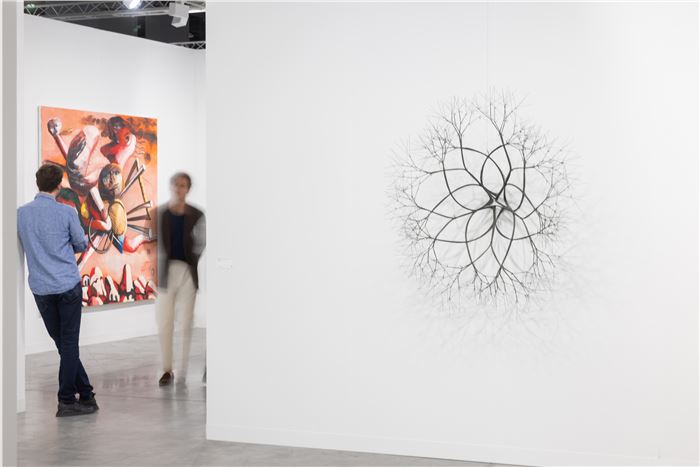 David Zwirner, Ruth Asawa and Dana Schutz. Courtesy of Art Basel
Elsewhere, galleries such as Hauser & Wirth reported sales 40% greater than at last year’s fair. Among their highlights were George Condo’s Untitled (Taxi Painting), 2011, which sold for nearly US$ 4M and Louise Bourgeois’s Persistent Antagonism, 1946-48, which sold for US$ 3.2M, both had been pre-sold.
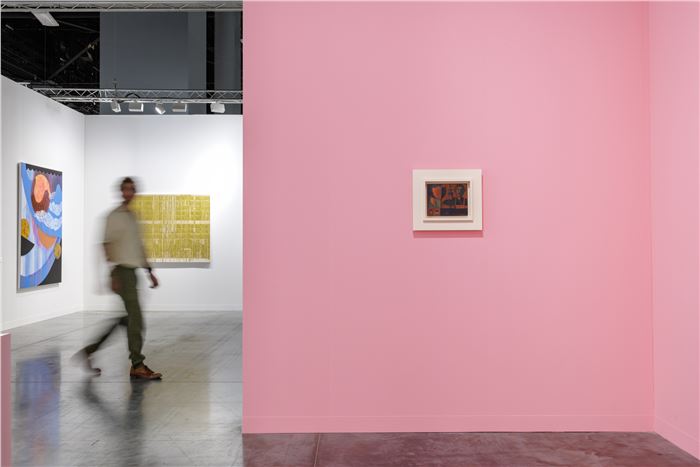 Hauser & Wirth, Louise Bourgeois. Courtesy of Art Basel
In parallel, a more surprising undercurrent ran through the aisles: the sale success of works under six or even five figures. Across booths, mid-market contemporary artists – many younger or emerging – saw buying interest. More tellingly, prices that once might have been seen as conservative began to look reasonable again, with paintings in lower price ranges (US$ 12,000–30,000) selling steadily, especially among contemporary galleries.
Digital art emerged as a defining story: the new platform Zero 10, created this year for art of the digital era, proved a success. A bold installation by Beeple – futuristic robot-dogs that “went into poop mode,” complete with NFT printouts – sold out on opening day at US$ 100,000 per edition.
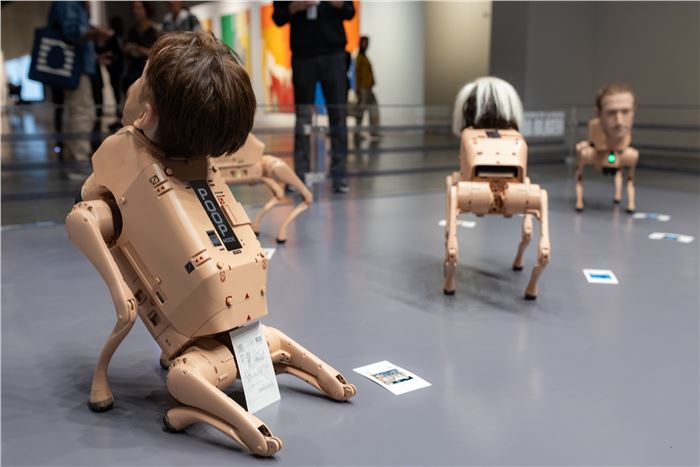 Beeple Studios. Courtesy of Art Basel
By fair’s end, many exhibitors spoke of 2025 as a “turnaround moment” – a conclusion that resonated from VIP previews to closing receptions, 2025’s Art Basel felt like a strong signal that both collectors and institutions are ready to re-engage.
A Redesigned Fair: New Layout, New Focus
Beyond sales, this edition of Art Basel Miami Beach felt different structurally: with a reshuffling of fair sections, a large influx of first-time galleries, and a pronounced pivot toward new media and “non-traditional” art.
The sectors Nova and Positions – traditionally showcasing emerging and mid-career artists – were relocated to a new entrance along Washington Avenue, closer to the beachfront. This repositioning aligns with a renewed emphasis on discovery and younger practices. Several galleries made their ABMB debut: overall, a record 48 new exhibitors participated this year – a sign that the fair wasn’t simply coasting on established names. Among the new entrants, the presence of galleries from regions historically under-represented at global fairs stood out – a gesture toward inclusivity and geographic diversity.
Furthermore, to highlight contemporary shifts – especially around non-traditional media – the launch of Zero 10 marks a strategic embrace of digital and hybrid production (NFTs, robotics, generative art), bedding the digital art community into the traditional international fair structure.
This redesign, from layout to institutional participation, suggests the organizers are thinking long-term: not just about sales, but about shaping how art is discovered, appreciated, and collected.
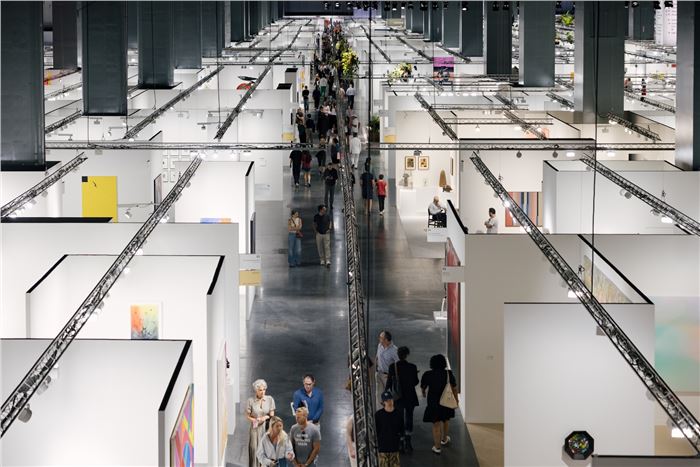 Art Basel Miami Beach 2025. Courtesy of Art Basel
Spotlight on Emerging Voices & Cultural Diversity
This year’s fair didn’t just reward high prices: it actively showcased and elevated younger artists, underrepresented voices, and diverse cultural backgrounds.
Among the youngest breakout stars was painter Lorenzo Amos (23). His solo presentation at the Rubell Museum “room” became a hot talking point, his intimate-realist style and personal narrative resonated strongly with younger audiences and collectors.
The fair platformed artists working with deep cultural and social resonance: for example, from the Nova sector came Akeem Smith (scratch-off dancehall-ephemera paintings) and from Mexico a body of work by Renata Petersen – her ceramics, tile murals, and blown glass draw on religious iconography, gender, and memory.
There’s also a broader geographic and cultural rebalancing: more galleries from Latin America, the Caribbean, and diasporic communities participated this year, a fact noted both in fair coverage and reflected in the growing institutional interest.
Critically, the fair didn’t treat these voices as “minor categories” – many were integrated into main sectors, allowed equal visibility alongside blue-chip names; this is a meaningful shift in fair dynamics and signal for future editions.
What This Edition Means
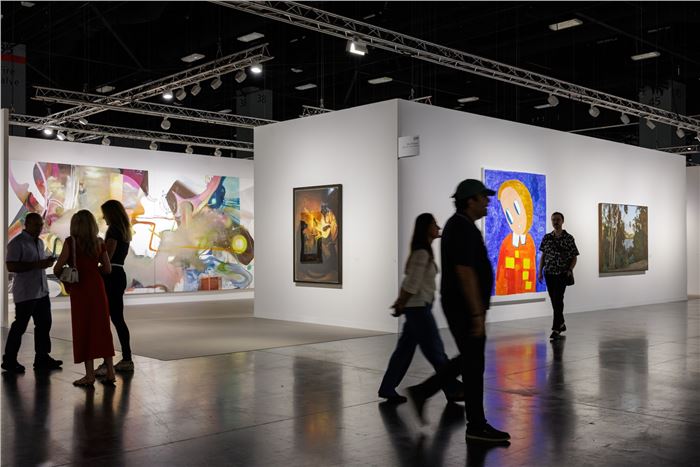 Art Basel Miami Beach 2025. Courtesy of Art Basel
Taken together, Art Basel Miami Beach 2025 suggests something important: the fair – and perhaps the global art market – might be entering a new era.
For collectors accustomed to shock-and-awe sticker prices, the renewed viability of mid-market contemporary work, affordable digital pieces, and culturally rich, non-traditional media opens new opportunities.
For artists, especially those outside the traditional Western art centers, the success of booths by Latin American artists signals a growing appetite for diverse voices, histories, and perspectives.
For the institutions, galleries, and fair organizers: the embrace of digital art, the refreshed layout, and the high number of first-time exhibitors point toward a deliberate recalibration, away from excess, toward sustainability, inclusion, experimentation.
Perhaps most importantly, this year’s edition stands as a reaffirmation that art fairs can evolve. That they can still be markets, yes. But also spaces for dialogue, culture, and the unexpected.
For more on auctions, exhibitions, and current trends, visit our Magazine Page