
 ARTISTS



Meet the Artists Using Their Work to Fight Against Climate Change
Exploring climate change through art, or using work to support sustainable causes, we bring you 10 of the most important artists exploring environmental themes
MutualArt
Aug 08, 2018
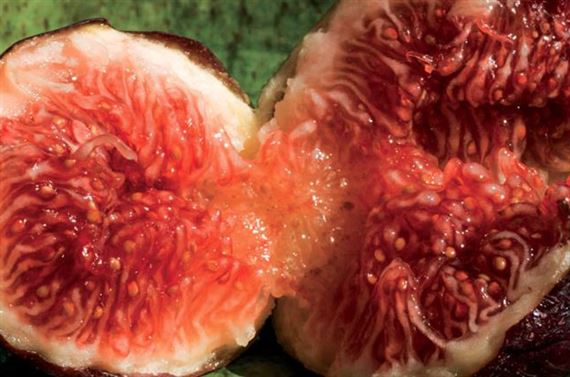
It's arguably the most pressing issue facing our generation, so it’s no surprise artists are using their work to address the issue of sustainability.
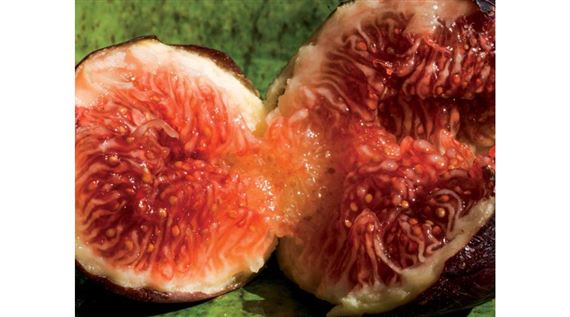
Denis Piel, Down to Earth No.110 (2013) exhibited at Phillips London Down to Earth exhibition, in collaboration with the Soil Association
Environmental art is an important genre with a rich history, where works seek to re-situate the human within nature, change our perceptions of stewardship and the natural environment, and improve our everyday engagement with the planet. In this sense, Claude Monet is sometimes described as an early environmentalist, as many of his most famous paintings explored humankind’s relationship to nature.
As our scientific understanding of climate change has become deeper (and perhaps bleaker), artistic engagement with this issue has flourished. Art is a fantastic way of challenging perceptions, and inspiring action, and many artists have become concerned with sustainability and sustainable practice.
Using the environment as canvas, climate change as the process, or simply utilizing their work to promote and support sustainable causes, we bring you 10 of the most important artists exploring sustainability through art.
Denis Piel
In early 2018, Phillips London hosted DOWN TO EARTH, a public exhibition of photographs by the acclaimed artist Denis Piel. The selling exhibition featured over 40 works, designed to communicate and address the theme of sustainable living. The pieces were photographed over one complete agricultural cycle, meaning the fertility and abundance of nature feature prominently in these magnificent storyscapes. Piel’s photographs are alive with a very real sense of erotic, yet challenging beauty. What was exciting about this exhibition for the art world, is that 10% of sales from Piel’s works went to the Soil Association, a leading charitable organization that strives to transform the future of food and farming in a more sustainable way.
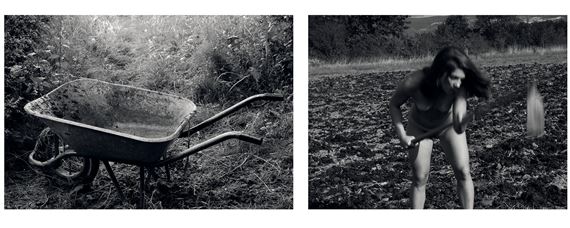
Deins Piel, Down To Earth No. 45 & No. 106, 2018, Image copyright of the artist
Christo & Jeanne-Claude
Husband and wife team Christo & Jeanne-Claude are perhaps the most influential environmental artists. Together they created monumental sculptures and installations, often by draping, wrapping or distorting large portions of existent landscapes, buildings, and industrial objects with specially made fabric. The works they produced remain among the most striking and ambitious, site-specific artworks ever made.
Their work is widely regarded as an expression of environmental degradation, as their artistic interventions in the natural world and the built environment often permanently alter the physical form of the chosen sites. While many Land Artists make a point of blurring lines between the artwork and its natural environment, Christo and Jeanne-Claude made a stark distinction between the highly engineered, man-made materials of their work, and the organic "canvas" of the site. Their work was therefore hugely important in redefining not only the scope of large-scale, site-specific installation art, but the medium’s capacity to address themes of sustainability and environmentalism.
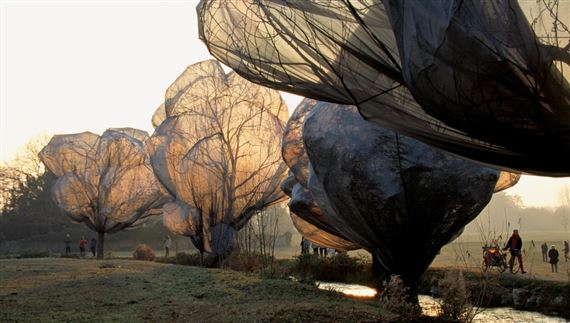
Christo & Jeanne-Claude’s Wrapped Trees, Fondation Beyeler and Berower Park, Riehen, Switzerland 1997-98. Image copyright of the artist
Rimini Protokoll
Rimini Protokoll are a collective of artists, made up of Helgard Haug, Stefan Kaegi and Daniel Wetzel. They produce video installations, documentary theater, creating artworks in urban environments under a wide variety of collaborative forms. Their works are often interactive or immersive and principally deal with the conflict between the individual and the collective, as well as present vs future, that lies at the heart of climate change.
Much of their work is based on helping (what they call) "experts" to find their artistic voice. In 2018, they worked alongside academics and artists alike, to present their immersive installation piece, Win-Win, at After The End of the World at Barcelona’s Centre of Contemporary Culture. The exhibition, organized by climate philosopher Timothy Morton, was an amalgamation of artistic visions of a world post-climate change. Rimini Protokoll’s piece used video projection, audience interaction, and a two-way mirror to show the projected evolution of the jellyfish, which scientists believe will actually benefit under the same conditions that would lead to human demise.
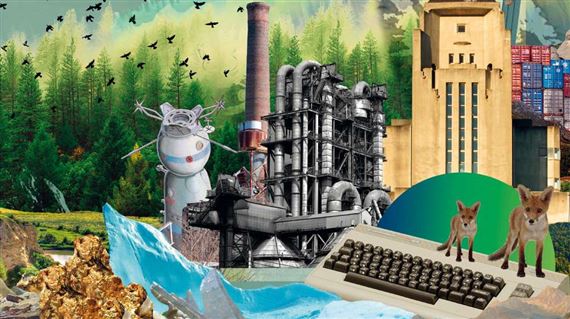
Rimini Protokoll, Win-Win presented at After The End of the World, 2018, Immersive Installation. Image copyright of the Centre of Contemporary Culture
Sarah Lucas
One of the more underrated Young British Artists who emerged during the 1990s, Sarah Lucas makes use of visual puns and bawdy humor to provoke, challenge, and reflect the audience’s expectations. Working across diverse media, including photography, collage and found objects, Lucas’ work explores the absurdity of the every day and reconstitutes the body in a feminist context.
She's committed to using her art to raise funds for sustainable causes and was recently announced as one of the artists presenting at this year’s Art for One Drop charity auction at Phillips London. A highly anticipated contemporary art auction, all proceeds from Art for One Drop go directly toward providing sustainable access to safe water and sanitation for the most vulnerable populations in the world. The mission of this auction is to harness the power of art to bring positive change to the global water crisis.
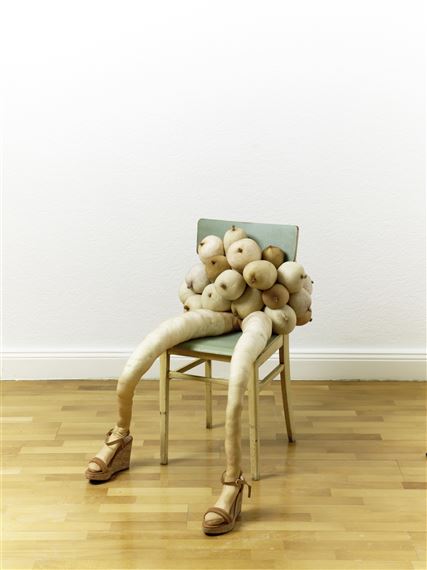
Sarah Lucas, Titti Doris, 2017. Courtesy of Sarah Lucas and Contemporary Fine Arts, Berlin - Charlottenburg. Image courtesy of the Fine Arts Museums of San Francisco. Photo: Jochen Littkemann
Superflux
Also invited to present at After The End of the World, Superflux are an artistic collective, founded by Anab Jain and Jon Ardern, who use the stories and tools that define us today to confront us with the precariousness of our rapidly changing world.
Having exhibited internationally in institutions such as the MoMA in New York, the Victoria & Albert Museum, the Dublin Science Gallery, the National Museum of China, the Vitra Design Museum and the Tate Modern, Superflux brought a startling installation piece to Barcelona in early 2018.
How Do You Imagine Your House In 2050? Is an immersive installation piece that places the viewer inside an imagined apartment in London from the year 2050, a time where droughts and hurricanes have altered our diet, and toxic gases linger outside. Stepping into the fully realised apartment, each viewer is able to walk around, interact with the space, touch and hold the tools of the future, and look out the window at the London of tomorrow. A challenging and thought-provoking work that excited the imagination whilst terrifying the soul.
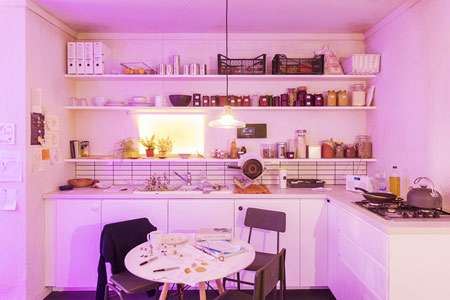
Superflux, How Do You Imagine Your House In 2050?, 2018, Image copyright of the artist
herman de vries
herman de vries, who stylises his name in lower case on his artwork "to avoid hierarchy", was part of the influential and subversive "Zero" movement in the 1960s. de vries exhibited alongside Joseph Beuys in Dusseldorf before retreating from the art scene to focus on nature and the environment. His work explores the disrupted relationship between humanity and nature, using painting, sculpture, and found objects.
de vries walks in the Black Forest every day, and keeps a map charting his walks on the wall of his kitchen, which, at the end of each year, becomes an artwork in its own right. He finds and collects fallen trees, which he describes as “sculpture[s] that nature makes.” Perhaps his most famous work is his Earth Bank, which the artist has exhibited at the Venice Biennale. The ongoing work contains more than 8000 earth rubbings on paper, and is made with only natural materials. de vries maintains that in declining to use man-made tools, his process remains in line with the philosophy of Zero.
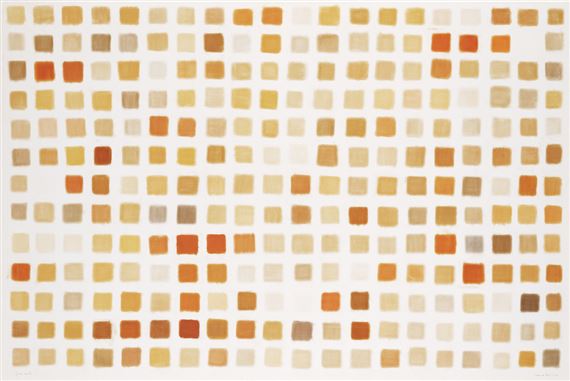
herman de vries, From Earth, 1985. Image copyright of the artist
Chris Jordan
Chris Jordan is an environmental artist who has become internationally recognized for his photographs depicting the adverse effects of consumerist culture. His shocking works show the damage of waste, plastic, mass production, and the decay caused by consumer products. Jordan uses his photographs to capture what he describes as the “slow-motion apocalypse” that we have put in progress, as we continue to destroy our environment and our planet.
He says his technique originated when he visited an industrial yard to look at patterns of color and order, and found that the garbage contained a powerful message about unconscious behaviors that guide our every day lives. Jordan’s photograph of an albatross has become one of the most iconic images of the Anthropocene - a stark reminder of environmental damage.
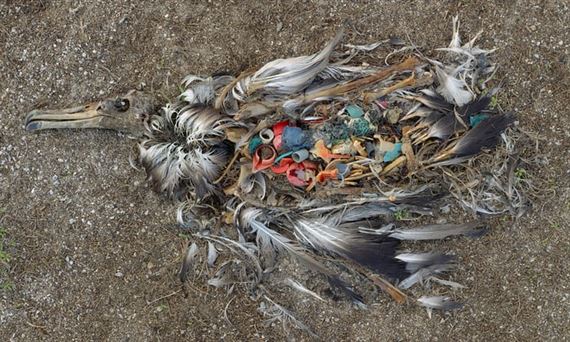
Chris Jordan, Albatross, 2017. Image copyright of the artist
Olafur Eliasson
Olafur Eliasson is an internationally acclaimed Icelandic-Danish artist known for his vast sculptures and large-scale installation art. His distinctive works employ elemental materials such as light, water, and air temperature to create a unique viewing experience that aims to reorient our perception of nature.
Eliasson’s captivating immersive installations betray a deep engagement with social and environmental issues. Some pieces recreate natural phenomena; Beauty used reflections and light to imitate rainbows, whilst The Weather Project created a glowing sun visible through fog. Others go beyond the realm of artistic practice, and enact actual change within the world. For example, the artist’s Little Sun initiative has brought light and income to people around the world without electricity. In 2019, Eliasson will exhibit at Tate Modern, with a major retrospective of his career so far.
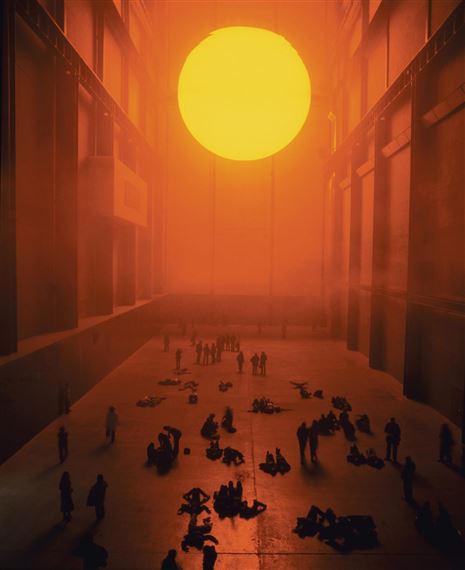
Olafur Eliasson, The Weather Project, 2003. Installation. Image copyright of the artist
Agnes Denes
The Hungarian-born conceptual artist Agnes Denes is often referred to as the "grandmother" of the environmental art movement. Having long been based in New York City, Denes’ work catalogs and challenges humankind’s perception of natural cycles, responsibility and stewardship. Perhaps her most famous artwork is Wheatfield, a Confrontation (1982), in which the artist spent six months planting a field of golden wheat across two acres of rubble-strewn landfill near Wall Street in Manhattan. But Denes’ artistic practice is by no means limited to environmental installations. The artist has works in the permanent collections at MoMA, The Met and The Whitney Museum in New York, and has redefined the scope of environmental art.
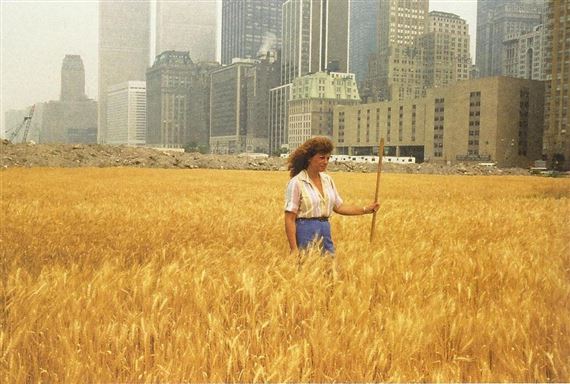
Agnes Denes, Wheatfield, a Confrontation (1982), Image copyright of the artist
Edith Meusnier
Edith Meusnier uses her trademark, enormous textile installations to examine the interlocking notions of sustainability and vulnerability. Her installations are erected outdoors, in a variety of unique places, ranging from castles, and cloisters of monasteries, to the facades of museums. Meusnier starts every new work by choosing a singular location to work around, using the exactitudes of her setting to define and shape her installation. Her pieces are joyful, vast, colorful, and captivating, despite the fact they draw attention to sustainability and other environmental issues.
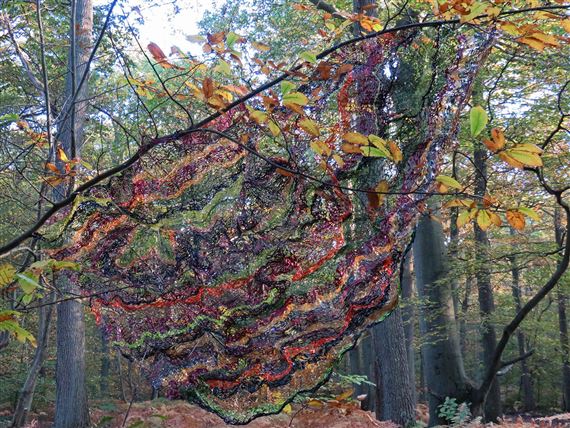
Edith Meusnier, Installation at Picardy Forest, France. Image copyright of the artist
For more on auctions, exhibitions, and current trends, visit our Articles Page