BUY ART
Painting a la mode
Looking at a Medium, Finding a Message PAINTING AS PARADOX Artists Space 38 Greene Street Through December 21 An appeal to painters before we look at
Jerry Saltz / Village Voice
Dec 04, 2002
Looking at a Medium, Finding a Message
PAINTING AS PARADOX
Artists Space
38 Greene Street
Through December 21
An appeal to painters before we look at "Painting as Paradox," the big, uneven group show at Artists Space. I love painting; so do you. But hear this: Notwithstanding its near death experience (what one critic called its "passage through the eye of the Minimal-Conceptual needle in the late 1960s and early 19700, except for a few curmudgeons, the pleasure police at October, some pedantic curators, and maybe Arthur Dante, no one thinks painting is dead. More importantly, no one has actually thought this since the Nixon administration.
We need to get over the painting-as-- victim-and-victor complex. Painting is much in evidence need to galleries and art schools. As always, collectors covet it. Like many recurrent avant-garde ideas, this onne is self-serving belly-button gazing. We need to stop thinking painting is fighting for its life and that we`re saving it. It isn`t and we`re not.
Nonetheless, many painters seek shelter in this position, cling to it, or act as if they were involved in some sort of noble rescue mission. The only thing painting needs rescuing from is those predumptuous artists who treat it as if it needs protecting-the ones who think theirs was the last generation that really understood the medium. Painting is one of the greatest visionary tools ever invented, and among the most effective was to alter reality, see it better, or invent a new one. Painting gives permission, it doesn`t ask for it; it not only explores consciousness, it changes it.
"Painting as Paradox" includes work ranging from paint on canvas to video by 60 artists. Among them are up-and-comers, recent graduates of hot local art schools, current students, two artists who are featured in a recent tome devoted to the medium, Vitamin P, and one whose paintings (I swear) I saw in the lobby of the Rio hotel in Las Vegas. The show was organized by Artists Space curator Lauri Firstenberg, herself a quick study with a savvy touch and a knack for mounting didactic group exhibitions that you can sink your teeth into. "Painting as Paradox" is no exception: It gives the viewer a glut of information and a polemic to think about.
When the chewing and thinking are done, however, this show, in spite of its profusion, trendy names, and sporadic surprises, comes up short. At a moment when painting is all over the place and coming from all over, the mosl dispiriting thing about "Painting as Paradox" is how similar much of the work in it looks. The alikeness undermines individual artists anc dulls edges. Still, it provides an occasion to con sider two painterly tendencies and maybe pu a third behind us.
Three modish ideas are explored in "Painting as Paradox." None are paradoxical, all are familiar, one is annoying. Fortunately, the latter concept is also the least represented. One mini art-about-art alcove could be called L`Ecole de la Critique Ironique, after the French deconstructivist theories that helped spawn it. Here, in amusing but nonetheless 10th-generation moves, you can see a witty Rubik`s Cube portrait; a well-done, hand-painted rendition of one of Warhol`s flower paintings; and a painted grid of Louis Vuitton logos. All are handsome but conceptually haggard. Better because better looking is Jose Leon Cerrillo`s painting that doubles as a skateboarder`s ramp and a tombstone. On some level all paintings are comments on all the paintings that have ever been made. To foreground this is tautological. To make it the primary focus of your art is limiting. To think it`s anything but preaching to the converted ot to expect congratulations for it is sad.
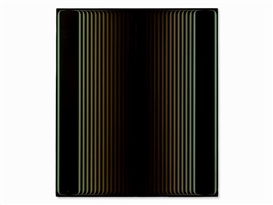
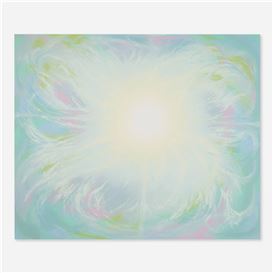
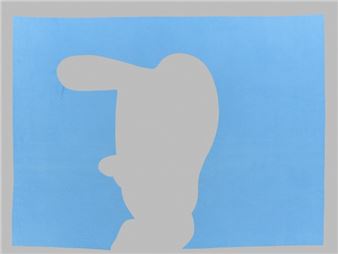
The bulk of the show zeros in on two cur rent art-world styles or cliches: hard-edged ab straction and photo-based representation. Of the abstract artists, none work in what cook be called an "expressive," "gestural," or "wild" style. Color is cool or Pop-y and is applied it even, mostly opaque fields, An overall crisp ness predominates. Facture is kept to a mini mum; space is amorphous; lines, whethe curved or straight, tend to be precise or lag i Edges are deliberate; brush strokes, while pre sent, are rarely random. Much of this work relates to or derives from architectural drawing, computer graphics, or landscape painting. Think Gary Hume, Inka Essenhigh, or Sarah Morris without the enamel; Jeremy Blake video stills on canvas: the cleanness of Takashi Murakari; the slabs of Arturo Herrera; fussier Monique Prieto; or Ghost World.
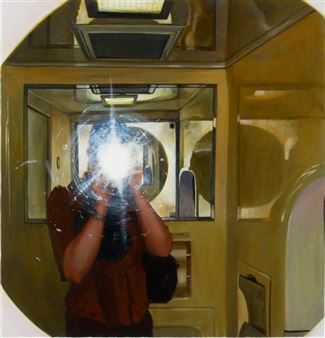
As for the representational painters (it`s a shame to even have to talk about artists as "abstract" or "representational" when these categories are all but obsolete and the crossover between the two is so rich), the going formula seems to be: Take a photograph-yours, an existing image, a snapshot, something from the Internet, etc.-and simply reproduce it via a slide or opaque projector, tracing paper, or whatnot. Whether the image is altered, blurred, or left intact, whether it`s a portrait, a bedroom, or a building, the lens is almost always irritatingly present.
No one is against using photography or reproductive processes in painting. Artists have been doing this for decades. By now. however, this technique has devolved into a manner, a crutch, or a bandwagon unto itself. Artists claim a painting of a street, say, is important because it`s the street a crack dealer lives on. Or that a portrait means something because it`s of a long-lost relative, or someone who once harassed them. The real problem with much of this art isn`t that it doesn`t mean anything, that it`s conventional, or that it`s thoroughly indebted to an already worn-out Gerhard Richter-Walter Benjamin discourse. It`s tha the work is dull to look at, All that matters about a work of art is what it looks like-how it was made, not the story it tells. In a hundred years no one will know the stories. No one knows the stories in Bosch anymore, but that doesn`t stop Bosch from being ravishing.
There are high points here. On my Good list would be Benjamin Edwards`s very tight but still interesting vivisection of suburbia, Carla Klein`s loose painting of a Piper Cub (she`s one of the few "realist" painters not fettered by photography); Karel Funk`s super-- realistic portraits that adroitly sidestep the lens problem; and maybe Ellen Harvey`s clever trompe l`oeil video. Very Good is Jessica Rohrer`s Gursky-esque rendition of a college dormitory and Seth Price`s slide-show-- cum-PBS special. My Probablies would include Dorota Kolodziejcxyk`s mysteriously abstract landscapes, Kieran Kinney`s Robert Yarber-like cityscape, Terry Haggerty`s buzzy stripe painting, Claire Corey (although she needs to get more physical), John Tremblay, maybe Marc Handelman, and possibly Ellen Altfest (but she`s veering dangerously close tc Neil Welliver), and Jay Davis, even though heE really getting repetitious.
"Painting as Paradox" made me think tha some painting is in a kind of temporary lock down--a place where moves are small, issue are pre-approved, risk is kept to a minimum and everyone has their paperwork in order. We all have two conversations about art: the public one about stratagems, and the private one about necessities. The former is about authority; the later, experimentation. As much as I admire and respect many of these artists, in the end "Painting as Paradox" feels more about the public conversation than the private one.
SIDEBAR
ON SOME LEVEL ALL PAINTINGS ARE COMMENTS ON ALL THE PAINTINGS THAT HAVE EVER BEEN MADE. TO FOREGROUND THIS IS TAUTOLOGICAL. TO MAKE IT THE PRIMARY FOCUS OF YOUR ART IS LIMITING.
ILLUSTRATIONS
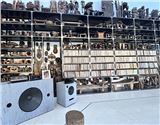
A GLUT OF INFORMATION AND A POLEMIC TO THINK ABOUT: THE `PAINTING AS PARADOX" INSTALLATION AT ARTISTS SPACE
COPYRIGHT: Copyright Village Voice Dec 4-Dec 10, 2002. Provided by Proquest- CSA, LLC. All Rights Reserved. Only fair use as provided by the United States copyright law is permitted.
PROQUEST-CSA, LLC- MAKES NO WARRANTY REGARDING THE ACCURACY, COMPLETENESS, OR TIMELINESS OF THE LICENSED MATERIALS OR ANY WARRANTY, EXPRESS OR IMPLIED.
PAINTING AS PARADOX
Artists Space
38 Greene Street
Through December 21
An appeal to painters before we look at "Painting as Paradox," the big, uneven group show at Artists Space. I love painting; so do you. But hear this: Notwithstanding its near death experience (what one critic called its "passage through the eye of the Minimal-Conceptual needle in the late 1960s and early 19700, except for a few curmudgeons, the pleasure police at October, some pedantic curators, and maybe Arthur Dante, no one thinks painting is dead. More importantly, no one has actually thought this since the Nixon administration.
We need to get over the painting-as-- victim-and-victor complex. Painting is much in evidence need to galleries and art schools. As always, collectors covet it. Like many recurrent avant-garde ideas, this onne is self-serving belly-button gazing. We need to stop thinking painting is fighting for its life and that we`re saving it. It isn`t and we`re not.
Nonetheless, many painters seek shelter in this position, cling to it, or act as if they were involved in some sort of noble rescue mission. The only thing painting needs rescuing from is those predumptuous artists who treat it as if it needs protecting-the ones who think theirs was the last generation that really understood the medium. Painting is one of the greatest visionary tools ever invented, and among the most effective was to alter reality, see it better, or invent a new one. Painting gives permission, it doesn`t ask for it; it not only explores consciousness, it changes it.
"Painting as Paradox" includes work ranging from paint on canvas to video by 60 artists. Among them are up-and-comers, recent graduates of hot local art schools, current students, two artists who are featured in a recent tome devoted to the medium, Vitamin P, and one whose paintings (I swear) I saw in the lobby of the Rio hotel in Las Vegas. The show was organized by Artists Space curator Lauri Firstenberg, herself a quick study with a savvy touch and a knack for mounting didactic group exhibitions that you can sink your teeth into. "Painting as Paradox" is no exception: It gives the viewer a glut of information and a polemic to think about.
When the chewing and thinking are done, however, this show, in spite of its profusion, trendy names, and sporadic surprises, comes up short. At a moment when painting is all over the place and coming from all over, the mosl dispiriting thing about "Painting as Paradox" is how similar much of the work in it looks. The alikeness undermines individual artists anc dulls edges. Still, it provides an occasion to con sider two painterly tendencies and maybe pu a third behind us.
Three modish ideas are explored in "Painting as Paradox." None are paradoxical, all are familiar, one is annoying. Fortunately, the latter concept is also the least represented. One mini art-about-art alcove could be called L`Ecole de la Critique Ironique, after the French deconstructivist theories that helped spawn it. Here, in amusing but nonetheless 10th-generation moves, you can see a witty Rubik`s Cube portrait; a well-done, hand-painted rendition of one of Warhol`s flower paintings; and a painted grid of Louis Vuitton logos. All are handsome but conceptually haggard. Better because better looking is Jose Leon Cerrillo`s painting that doubles as a skateboarder`s ramp and a tombstone. On some level all paintings are comments on all the paintings that have ever been made. To foreground this is tautological. To make it the primary focus of your art is limiting. To think it`s anything but preaching to the converted ot to expect congratulations for it is sad.
The bulk of the show zeros in on two cur rent art-world styles or cliches: hard-edged ab straction and photo-based representation. Of the abstract artists, none work in what cook be called an "expressive," "gestural," or "wild" style. Color is cool or Pop-y and is applied it even, mostly opaque fields, An overall crisp ness predominates. Facture is kept to a mini mum; space is amorphous; lines, whethe curved or straight, tend to be precise or lag i Edges are deliberate; brush strokes, while pre sent, are rarely random. Much of this work relates to or derives from architectural drawing, computer graphics, or landscape painting. Think Gary Hume, Inka Essenhigh, or Sarah Morris without the enamel; Jeremy Blake video stills on canvas: the cleanness of Takashi Murakari; the slabs of Arturo Herrera; fussier Monique Prieto; or Ghost World.
As for the representational painters (it`s a shame to even have to talk about artists as "abstract" or "representational" when these categories are all but obsolete and the crossover between the two is so rich), the going formula seems to be: Take a photograph-yours, an existing image, a snapshot, something from the Internet, etc.-and simply reproduce it via a slide or opaque projector, tracing paper, or whatnot. Whether the image is altered, blurred, or left intact, whether it`s a portrait, a bedroom, or a building, the lens is almost always irritatingly present.
No one is against using photography or reproductive processes in painting. Artists have been doing this for decades. By now. however, this technique has devolved into a manner, a crutch, or a bandwagon unto itself. Artists claim a painting of a street, say, is important because it`s the street a crack dealer lives on. Or that a portrait means something because it`s of a long-lost relative, or someone who once harassed them. The real problem with much of this art isn`t that it doesn`t mean anything, that it`s conventional, or that it`s thoroughly indebted to an already worn-out Gerhard Richter-Walter Benjamin discourse. It`s tha the work is dull to look at, All that matters about a work of art is what it looks like-how it was made, not the story it tells. In a hundred years no one will know the stories. No one knows the stories in Bosch anymore, but that doesn`t stop Bosch from being ravishing.
There are high points here. On my Good list would be Benjamin Edwards`s very tight but still interesting vivisection of suburbia, Carla Klein`s loose painting of a Piper Cub (she`s one of the few "realist" painters not fettered by photography); Karel Funk`s super-- realistic portraits that adroitly sidestep the lens problem; and maybe Ellen Harvey`s clever trompe l`oeil video. Very Good is Jessica Rohrer`s Gursky-esque rendition of a college dormitory and Seth Price`s slide-show-- cum-PBS special. My Probablies would include Dorota Kolodziejcxyk`s mysteriously abstract landscapes, Kieran Kinney`s Robert Yarber-like cityscape, Terry Haggerty`s buzzy stripe painting, Claire Corey (although she needs to get more physical), John Tremblay, maybe Marc Handelman, and possibly Ellen Altfest (but she`s veering dangerously close tc Neil Welliver), and Jay Davis, even though heE really getting repetitious.
"Painting as Paradox" made me think tha some painting is in a kind of temporary lock down--a place where moves are small, issue are pre-approved, risk is kept to a minimum and everyone has their paperwork in order. We all have two conversations about art: the public one about stratagems, and the private one about necessities. The former is about authority; the later, experimentation. As much as I admire and respect many of these artists, in the end "Painting as Paradox" feels more about the public conversation than the private one.
SIDEBAR
ON SOME LEVEL ALL PAINTINGS ARE COMMENTS ON ALL THE PAINTINGS THAT HAVE EVER BEEN MADE. TO FOREGROUND THIS IS TAUTOLOGICAL. TO MAKE IT THE PRIMARY FOCUS OF YOUR ART IS LIMITING.
ILLUSTRATIONS
A GLUT OF INFORMATION AND A POLEMIC TO THINK ABOUT: THE `PAINTING AS PARADOX" INSTALLATION AT ARTISTS SPACE
COPYRIGHT: Copyright Village Voice Dec 4-Dec 10, 2002. Provided by Proquest- CSA, LLC. All Rights Reserved. Only fair use as provided by the United States copyright law is permitted.
PROQUEST-CSA, LLC- MAKES NO WARRANTY REGARDING THE ACCURACY, COMPLETENESS, OR TIMELINESS OF THE LICENSED MATERIALS OR ANY WARRANTY, EXPRESS OR IMPLIED.