ARTISTS







Selling Art is Becoming Harder – But Smarter
Applying data and relying on global access is becoming key in securing optimal terms to sell art, which historically has safe haven attributes in an otherwise shaky economy
MutualArt
04 Apr, 2023

As the world is still reeling from an earthshaking March that saw us edge closer than ever to a significant downturn of markets, the dreaded scenario of snowballing bank failures seems to have taken a breather. After the surprising end of SVB and Signature Bank in early March, and the state-forced sale of 170-years old Swiss giant Credit Suisse less than 10 days later, focus quickly turned to Deutsche Bank with fears of a similar fate awaiting the German banking behemoth. Initial worries haven’t materialized for now, however, and the end of the month saw some stabilization on capital markets. But the economic environment is in its most fragile state since the 2008 crisis, and high and rising interest rates and inflation has put an end to the cheap and easy money era of the last decade.
Inevitably, investors are becoming more cautious with their money, and whereas startups around the world might be the first to feel the impact of hard-to-access funds, other markets are not immune to spending tightening – among them the art market.

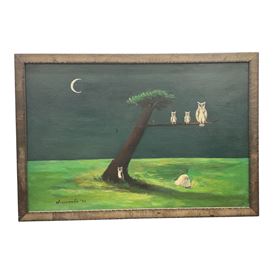
Gertrude Abercrombie, Still Life and Owl, 1949. Courtesy of Rago Arts/Wright
While the secondary art market has long held steadfast, the March London marquee sales showed first signals of weakening as totals from the three biggest auction houses dropped by 36% from the year before. But, as we mentioned in our sales analysis, demand remained relatively stable and it was mainly a lack of qualitative supply that was responsible for the drop. As was the case with the onset of the pandemic in 2020, uncertainty led to collectors holding off with their sales, which brought about an overly saturated market the year after. But whereas the pandemic was more of a delaying factor, the current economic factors are leading to a deeper sea change.
“The conditions for selling art are becoming more complex,” explains Roni Gurfinkel, Sales Director at MutualArt, “and small factors can lead to wholly different outcomes and prices.” In the age of cheap money, lucrative artworks meant lucrative, sometimes skyrocketing prices, but that is not a given anymore. The decision where to sell and which auction house to consign the works to can have a significant impact. “We’re seeing an influx of collectors coming to us for help,” Gurfinkel continues, “as they understand that our global reach, our data-based approach, and the experience and connections we have with auction houses will give them an advantage.”

Gertrude Abercrombie, Dizzy Gillespie, 1949. Courtesy of Rago Arts/Wright
As an example the sales specialist cites two Gertrude Abercrombie paintings she recently consigned on behalf of a client. Negotiating with several auction houses in different locations, Gurfinkel decided that the Rago/Wright would be the ideal venue for these works, the Chicago location being one of the deciding factors, given Abercrombie’s huge impact on the local art scene and lasting status. The two lots, Still Life and Owl and Dizzy Gillespie, both from 1949, ended up raking in a combined $529,200 USD versus a combined estimate of $150,000 - $220,000 – making them some of Abercrombie’s top lots to date.
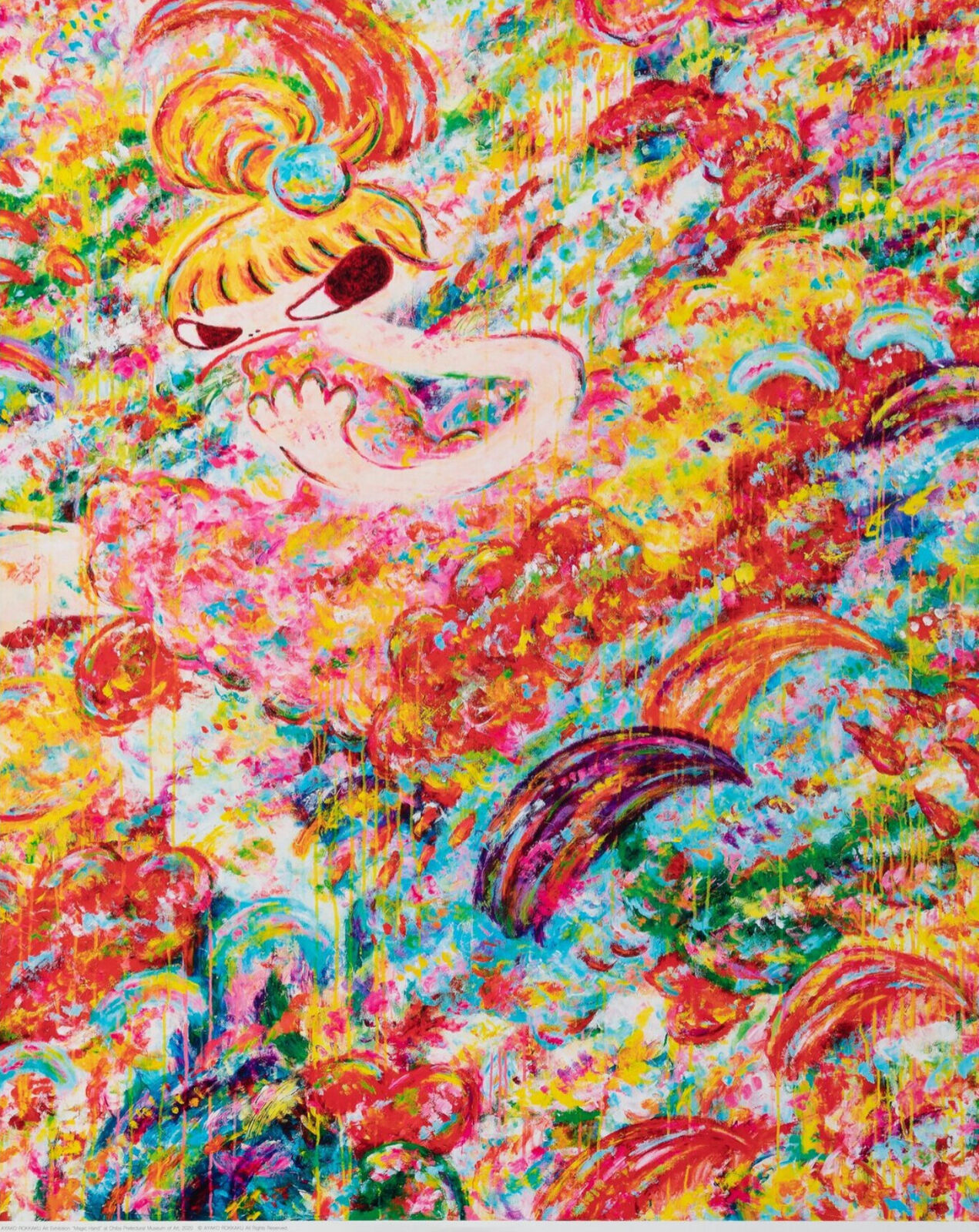
In a different case, the artist’s origin played a lesser role in the decision-making progress. “Late last year, an American collector came to us with an early Ayako Rokkaku – who is a sought-after contemporary Japanese artist – thinking it would be best to sell it in Japan” Gurfinkel recounts. “After weighing the offers received from several auction houses, we negotiated favorable terms with Bonhams, and with the client’s approval decided to send the work from the US to Hong Kong, where it sold near its high estimate.”

Ayako Rokkaku, Untitled, 2006. Courtesy of Bonhams Hong Kong
More than ever, art owners want to rely on expertise to navigate the uncertain territory of jittery markets. Besides being able to outsource the footwork, technology – such as MutualArt’s proprietary AI tools and Auction Database – has become an indispensable component for collectors looking for the best deal – especially with commission structures that favor the sellers.
The freshly released Art Basel and UBS Global Art Market Report for 2022 recorded a 3% overall increase in art sales last year, transaction volume increasing by only 1%. Across the board, much of the growth stemmed from the top segment of the market: Dealers with turnovers of over $10 million saw increases (their top three artists accounting for 51% of them), whereas ones with lower revenue saw declines; and auction houses, too, attributed the solidity of their sales to the top end of the market stabilizing their overall steady figures. Both Christie’s and Sotheby’s reported record sales in 2022, the former seeing over 30% growth in auctions and almost 30% declines in their private sales YOY, while the latter registered 9.5% more in auction sales and 15% less through private dealings. In an interview with CNBC in November of last year, Sotheby’s CEO Charles Stewart maintained that the art market long proved itself a safe haven in times of economic turbulence, but maintained that “We're seeing a rotation of buyers.” Speaking of Sotheby’s’ November iteration of the recently launched The Now sales – the marquee auctions dedicated to ultra-contemporary artist starlets – Stewart said, “half that sale was sold to Asian buyers,” concluding that “These markets are incredibly global.”

Ernie Barnes, Untitled (Boston Patriots), circa 1962. Coming up for sale. Courtesy of Bonhams Los Angeles
The global aspect is one that will arguably play a crucial role in the art markets’ resilience in the face of possible recession, or worse, crisis. While the pandemic forced a new level of transparency onto art players – which had long resisted laying open their transactional figures, holding back the art industry as one of the most opaque segments in global markets – some of that progress has receded after the post-pandemic normalization. But the harder it becomes to transact and to find the right buyers to deliver optimal results for clients, openness will be key in stabilizing the art market.
“Our consignment service is in line with our values and mission to make the art market transparent and accessible through data and know-how that benefits both sides of the deal,” explains Tal Yahav, Managing Director at MutualArt.
Art has indeed proven itself to be a safe storage of money in the face of economic worries, but lagging progress and implementation of technological capabilities would obstruct it from the necessary adjustments to sail the storm. The global economy, after all, has changed vastly – even since 2008.
For more on auctions, exhibitions, and current trends, visit our Magazine Page