 BUY ART




The Evolving Art of Autograph Collecting
We talk to collectors about the myths, the magic, and the madness of collecting autographs, and how you can start your own obsession
Adam Heardman / MutualArt
Jan 30, 2019

Autograph collecting is certainly considered a specialized niche of the market - so much so that the world’s biggest collector calls himself ‘crazy’. But there’s an art to the madness. MutualArt spoke to auction house expert Richard Hall and collector Pedro Corrêa do Lago to find out more.
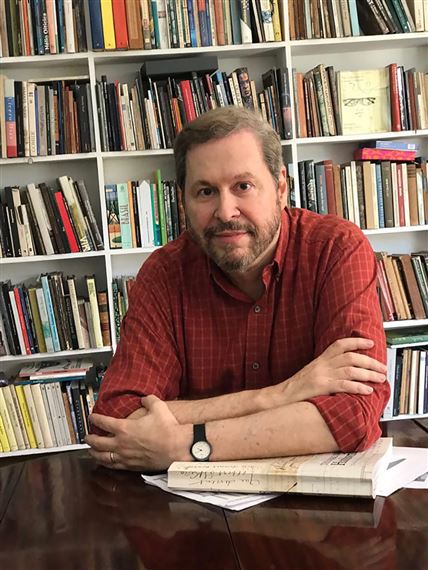
Pedro Corrêa do Lago. Image courtesy of Taschen.
The cover of The Magic of Handwriting shows a sequence of illustrations from a letter written by René Magritte to the Italian filmmaker Francis Lee. They show a man arriving home, stowing away his umbrella and carefully removing his gloves. He then goes to remove his hat, but detaches his entire head with it, and sets it upside-down on the table. The sequence is surprising, jocund, surreal, a little morbid. The man gives away more of himself than he intends. It’s a perfect illustration of the often wacky and always wonderful world of autographs.
Amassed over a career spanning five decades, Pedro Corrêa do Lago’s collection of autographs is the largest in the world, surpassing even his predecessor and personal inspiration, John Pierpont Morgan.
Following on from an exhibition of his collection, and the publication of The Magic of Handwriting which compiles all the exhibited pieces, Pedro hopes that the practice of autograph collecting might gain in popularity.
“It would be wonderful if this collection could inspire or encourage a vocation in future collectors,” Pedro says. “I would be very happy. It would share the fantastic pleasure this thing has given me over these decades.”
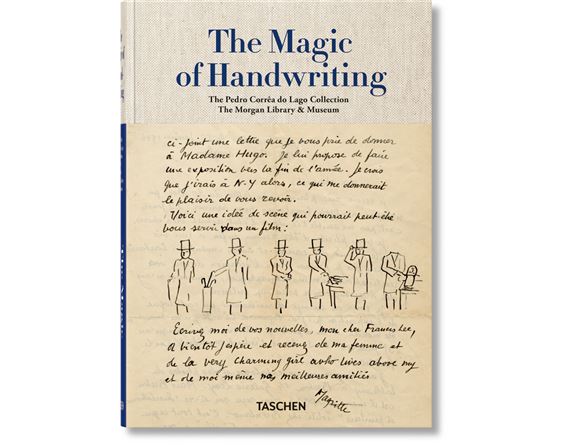
The Magic of Handwriting cover art. Image courtesy of Taschen.
But, he admits, the nature of the thing has changed considerably since he began writing letters to people he admired and simply asking for a response. Changing practices and new technology have had an effect on what’s available to collect.
“I think an important distinction should be made here between autographs and signatures”, he says. “I’m not really interested in signatures on plain card. That only proves that the person can sign their own name. I’m interested in the content of letters, documents, manuscripts; the information and the meaning that they can provide. In the future people will have to content themselves with short notes, because people just don’t write long-hand letters anymore.”
Richard Hall, a collector, appraisals expert, and adviser on manuscripts to Alex Cooper Auctioneers in Maryland, agrees. “The impulse to collect is still the same today in many cases, but there have been some important changes in my opinion”, he tells MutualArt.
Corrêa do Lago and Hall agree that digital communication has much to do with this. For modern luminaries, there are simply fewer examples of their handwriting on offer. But it’s not just the increasing use of email and instant messaging over handwritten communication which is changing the landscape for collectors. Hall believes there has been a fundamental change in attitude which has to do with “the relationship between the collection as a personal, sentimental avocation and the collection as an investment.”
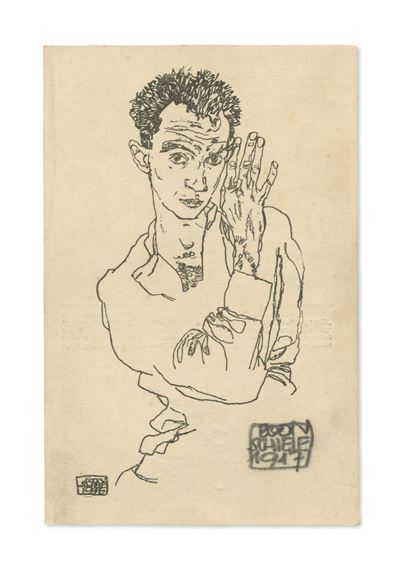
A postcard sent by Egon Schiele and Edith Harms Schiele featuring a Schiele self-portrait. Image courtesy Taschen.
“The old-time collectors of autographs and related materials did so out of passion”, he says. “Sometimes there was an element of irrational acquisitiveness: the popular image of the collector as hoarder has an aspect of truth, but it's not the whole story. The really important collections were the product of intense effort and scholarship.” Hall admires Corrêa do Lago’s collection as a contemporary example of this passion.
“Many modern collectors are more interested in the investment aspects of collecting, however,” Hall continues. “We see perversions like the sale of documents cut into bits, encased in plastic with "COAs" [certificates of authenticity] and sold off, one word at a time. Autographs and historical memorabilia increasingly are items for a financial portfolio rather than an album.”
Though he believes there’s “room for everybody: collectors at all levels as well as speculators," Hall is adamant that anyone coming to the autograph market purely to make money will not hang around for long. For Hall, autographs “are a pure form of self-expression,” and the purchase of such a piece should be driven by the heart.
“For a person interested in the early days of the United States, for instance,” Hall tells us, “holding or owning a letter written by George Washington would be a powerful, almost magical, experience. For many, that experience is addictive - the thrill of the hunt, the discovery of something special, the acquisition (even better at a low cost), and the ability to hold it and show it to others with similar interests.”
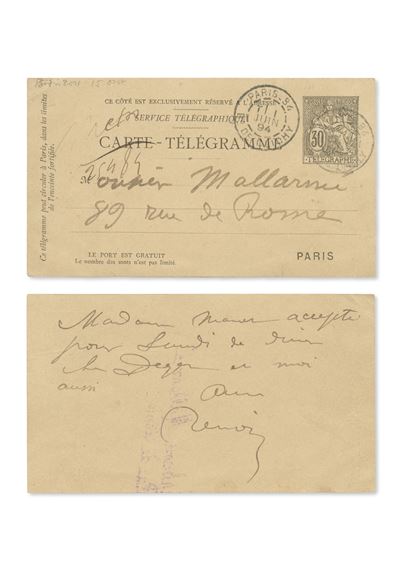
Renoir and Degas arrange a dinner date meeting with Morisot and Mallarmé. Image courtesy Taschen.
Pedro Corrêa do Lago talks in remarkably similar terms about the pleasure of the thing. “It gives you pleasures on every level, you know” he enthuses. “You are excited when you spot something, you are even more excited when you can afford it. And you know some people may have overlooked the importance of the item and you buy it inexpensively. Then you get the item and you have the pleasure of looking at it and feeling it. And sometimes you research it and you discover that there’s much more about it than you had originally suspected.”
Pedro works extra hours to afford particularly coveted pieces, and keeps his collection intimately close, housing the entire body of documents in his home in Brazil. He understands that his is a passion fringing on madness. “I keep [my collection] in fireproof filing cabinets that weigh half a tonne each. I have to live on the ground floor because it would make an apartment crumble. I have a hundred thousand documents in them. I mean, I should be in a straight-jacket!”
But for collectors like this, it’s worth the effort to own something which “offers a window into the thinking and personality of the writer”, as Hall puts it. And though it’s a consuming pursuit, even, as Pedro admits, a potentially morbid one, a true collector finds their pay-off in those human connections to past figures, historical icons whom Hall calls ‘magical’, and Pedro calls ‘mythical’.
“So many of my documents have meant incredible joys, incredible conquests, incredible sadnesses”, says Pedro. “If I were to believe Feng Shui - that you shouldn’t keep documents that are not of immediate use, that such documents weigh on your life - I think the room where I keep my collection would have been swallowed by poltergeists many years ago. But when I look at a document, I see life much more than death. I see that moment of a dead person’s life coming alive again. Death is present everywhere, but I see these slices of life.”
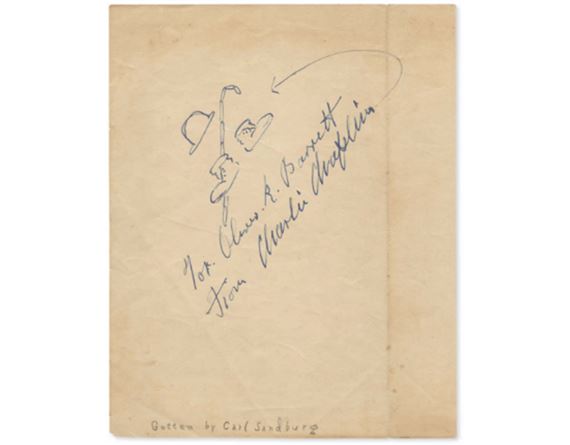
Charlie Chaplin signed sketch showing a tramp's accoutrements. Image courtesy Taschen.
For anyone beginning to feel the pull of this specialized magic, Hall would advise them to “think of something that holds personal meaning. Say you grew up in the 1960s, and the Civil Rights Movement had a significant impact on your life. Having autographs and documents relating to Martin Luther King and so many others who were significant might have real meaning to you.”
Pedro would agree, but highlights the appeal of rare pieces, too, as well as the importance of keeping abreast of movements and developments in the market. “Abraham Lincoln, for instance, has always been very much in demand in the States, for obvious reasons”, he says, “but today an average letter by Steve Jobs is worth more than an average letter by Lincoln. There’s a lot more demand than offer in Jobs’ case, you see, because he wrote few letters.”
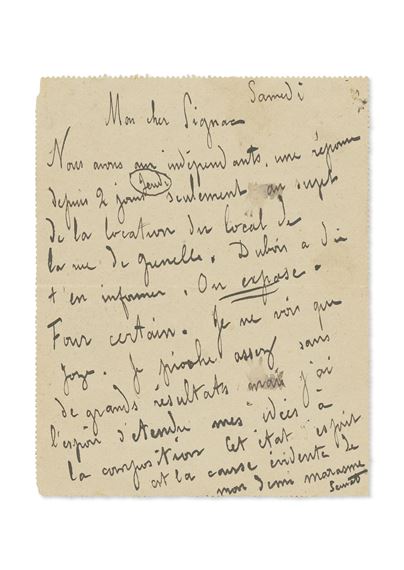
Letter by Georges Seurat in which he worries that his and Signac's planned exhibition of Les Indépendants might be a 'flop'.
However, though both collectors value a certain pragmatism, they keep returning to the importance of emotional attachment, even sentimentalism, when talking of autograph collecting.
Hall’s final pieces of advice are resounding: “Buy carefully. It's better to have one really good thing than ten indifferent or questionable things. Ask questions. Any worthwhile dealer will be interested in developing steady business relationships with collectors.
“Don't think so much about investment. Instead, think about how the pieces in your collection tell a story and make that the major part of your collecting strategy. Over time, the intellectual and sentimental rewards will grow. Handwriting will always be with us, I believe, and we might even see a revival of it as an art form.”
For more on auctions, exhibitions, and current trends, visit our Articles Page
