ARTISTS

A Museum, A Collection Celebrating Eugene Delacroix Twelve Years of Acquisitions 2002-2014
Founded in 1929 more than sixty years after the death of the painter, thanks to the tenacity of Maurice Denis, the Musée Eugène Delacroix was created to celebrate one of the greatest French artists. Thus, it differs from other museums-studios. Despite his attachment to the calm and serenity of this place located in the heart of Paris, Delacroix did not wish, like others before him including Gustave Moreau, to preserve it after his passing. Several months before his death, he wrote a will and planned a posthumous sale that effectively took place in February 1864. All of the painter’s possessions, the thousands of drawings that were found in the studio as well were given or sold according to his will. For more than sixty years, different tenants occupied the now empty apartment and studio.
The implication of the Society of the Friends of Eugène Delacroix, which numbered, with Denis, some of the great artists at the time- Henri Matisse, Paul Signac, Edouard Vuillard- connoisseurs such as the Baron Vitta- and Parisian museum curators, was valuable. Donations from the members enabled the establishment of a first collection, enriched by major loans by the Paintings and Drawings Departments of the Louvre. As Maurice Denis brilliantly wrote in the preface of the first exhibition’s catalog in 1932: “Delacroix found himself at home again, at last”.
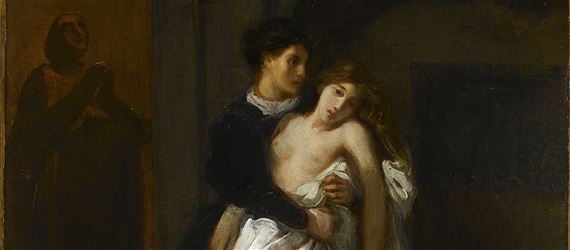
Faithful to the founding of the museum as a celebration of the painter, it also gathers works by masters, close friends as well as disciples- Antoine Gros, Théodore Géricault, Hippolyte Poterlet, Théodore Chassériau, Pierre Andrieu and Maurice Denis, among others. The new display, from February 11th to June 29th 2015, presents an ensemble of selected works, including some that have never been seen or recently restored, such as the copy of Furious Medea by Theodore Chassériau, the pastel portrait of Sophie Gay by Jules-Robert Auguste. It also highlights important masterpieces from the collection, and particularly distinct works by Delacroix, including Charles Baudelaire’s favorite painting the Mary Magdalen in the desert, The Education of the Virgin, painted for George Sand, Richard de la Hautière’s portrait, Thales Fielding’s portrait, Romeo and Juliet at the tomb of the Capulet, as well as youth manuscripts from the painter.
Recommended for you


Founded in 1929 more than sixty years after the death of the painter, thanks to the tenacity of Maurice Denis, the Musée Eugène Delacroix was created to celebrate one of the greatest French artists. Thus, it differs from other museums-studios. Despite his attachment to the calm and serenity of this place located in the heart of Paris, Delacroix did not wish, like others before him including Gustave Moreau, to preserve it after his passing. Several months before his death, he wrote a will and planned a posthumous sale that effectively took place in February 1864. All of the painter’s possessions, the thousands of drawings that were found in the studio as well were given or sold according to his will. For more than sixty years, different tenants occupied the now empty apartment and studio.
The implication of the Society of the Friends of Eugène Delacroix, which numbered, with Denis, some of the great artists at the time- Henri Matisse, Paul Signac, Edouard Vuillard- connoisseurs such as the Baron Vitta- and Parisian museum curators, was valuable. Donations from the members enabled the establishment of a first collection, enriched by major loans by the Paintings and Drawings Departments of the Louvre. As Maurice Denis brilliantly wrote in the preface of the first exhibition’s catalog in 1932: “Delacroix found himself at home again, at last”.
Faithful to the founding of the museum as a celebration of the painter, it also gathers works by masters, close friends as well as disciples- Antoine Gros, Théodore Géricault, Hippolyte Poterlet, Théodore Chassériau, Pierre Andrieu and Maurice Denis, among others. The new display, from February 11th to June 29th 2015, presents an ensemble of selected works, including some that have never been seen or recently restored, such as the copy of Furious Medea by Theodore Chassériau, the pastel portrait of Sophie Gay by Jules-Robert Auguste. It also highlights important masterpieces from the collection, and particularly distinct works by Delacroix, including Charles Baudelaire’s favorite painting the Mary Magdalen in the desert, The Education of the Virgin, painted for George Sand, Richard de la Hautière’s portrait, Thales Fielding’s portrait, Romeo and Juliet at the tomb of the Capulet, as well as youth manuscripts from the painter.

What's on nearby