ARTISTS


Abstraction at Mid-Century
In the wake of World War II, abstraction became a dominant aesthetic and, for many, a visual language capable of addressing the atomic age. Abstract Expressionism, a term most often used to identify a post-war art movement characterized primarily by its loose brushwork and gestural strokes, was in fact, quite varied. This gallery presents a few of the artists who developed different approaches and techniques.
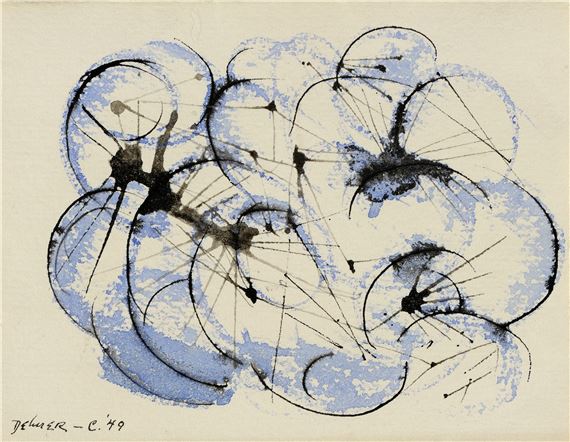
Works from the 1940s and into the 1950s by Hans Hofmann, Romare Bearden, and Dorothy Dehner recall Cubist-inspired geometric abstraction of the early twentieth century. In the mid-1950s, artists such as Byron Browne, Manuel Neri, and John Rhoden combined abstraction with floral and figurative imagery. By the end of the decade, younger artists such as Roy Lichtenstein and Al Held’s experimentation with mark-making led to the development of the Pop Art and Minimalist movements of the 1960s.
Recommended for you


In the wake of World War II, abstraction became a dominant aesthetic and, for many, a visual language capable of addressing the atomic age. Abstract Expressionism, a term most often used to identify a post-war art movement characterized primarily by its loose brushwork and gestural strokes, was in fact, quite varied. This gallery presents a few of the artists who developed different approaches and techniques.
Works from the 1940s and into the 1950s by Hans Hofmann, Romare Bearden, and Dorothy Dehner recall Cubist-inspired geometric abstraction of the early twentieth century. In the mid-1950s, artists such as Byron Browne, Manuel Neri, and John Rhoden combined abstraction with floral and figurative imagery. By the end of the decade, younger artists such as Roy Lichtenstein and Al Held’s experimentation with mark-making led to the development of the Pop Art and Minimalist movements of the 1960s.
Contact details

What's on nearby