
 ARTISTS

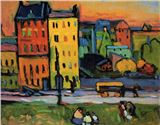
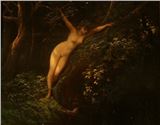
After Raphael. 1520–2020
On 10 December 2020, during the Hermitage Days, the exhibition “After Raphael. 1520–2020” begins its run in the state rooms of the Winter Palace’s Neva Enfilade. It marks the 500th anniversary of the death of Raffaello Santi (1483–1520) and is devoted to the phenomenon of his influence on European art from the 16th century to the present day.
Raphael is the most influential artist of the Modern Era. Over the course of five centuries, exponents of Mannerism and Academicism, Caravaggisti and masters of the Baroque, Romantics and Modernists have invariably compared their own work with Raphael’s legacy. What is the cause of such fame? What did his name represent in this or that historical period, and what does it represent today? What connects the artist’s followers in different centuries? The exhibition in the Hermitage is an attempt to answer those questions and to look at the art of the past 500 years through the lens of Raphael’s influence.
The Raphael myth formed soon after his death. He was perceived as an embodiment of the ideal, an artist of a bright, perfect harmony that unites the spiritual and the earthly. He was associated with the image of the Golden Age, seen as a reincarnation of Apelles, the legendary artist of Antiquity, and even compared to Jesus Christ. Raphael’s art – for some a model for emulation, for others an object for rebellious rejection or playful irony – became one of the reference points of European culture.
The choice for the central metaphor of the exhibition fell upon the line – the embodiment of interconnection, tradition, dialogue. (The Russian title of the exhibition means “Raphael’s Line”.) This line joins together the works of Raphael, Giulio Romano, Parmigianino, Poussin, Rubens, Mengs, Ivanov, Venetsianov, Ingres, Corot and Picasso – and on, right up to artists of our own day. The parallels, and on occasion unexpected juxtapositions, with the European and Russian schools are constructed not only on the classic textbook works by the great native of Urbino and his celebrated heirs, but also on lesser-known works from the Hermitage stocks on show for the first time. The chain of the followers of Raphael linked by ties of artistic continuity is compared to a genealogical line – a succession of descendants going back to a single forefather. To perceive this as a whole, to attempt to comprehend its significance not only for art but for the whole of European culture is one of the goals of the exhibition.
The exhibition belongs to the “exhibition-dialogue” genre – works by artists from five centuries are examined in comparison with Raphael’s art. A thoughtful analysis of this dialogue is capable of shedding light on many things, both in the oeuvre of the master himself and in the evolution of the whole of art in the Modern Era and beyond. There is a visual demonstration of what this or that artist adopted from this celebrated predecessor and how they then interpreted it. Gathered together, the works of such diverse artists of different periods inspired by a single ideal help us to better sense what it is that unites them, and not only to understand but also to fall in love with Raphael, to be inspired anew by him.
The large-scale display includes more than 300 exhibits – paintings, graphic art, sculpture and applied art from the Hermitage’s own stocks and twelve other collections in Russia and Western Europe. They include both famous masterpieces and previously unknown works. Dozens of paintings and pieces of graphic art are leaving the museum’s storerooms and being presented to the public for the first time, while a whole number of the exhibits are going on show after painstaking restoration in the Hermitage’s workshops.
Recommended for you


On 10 December 2020, during the Hermitage Days, the exhibition “After Raphael. 1520–2020” begins its run in the state rooms of the Winter Palace’s Neva Enfilade. It marks the 500th anniversary of the death of Raffaello Santi (1483–1520) and is devoted to the phenomenon of his influence on European art from the 16th century to the present day.
Raphael is the most influential artist of the Modern Era. Over the course of five centuries, exponents of Mannerism and Academicism, Caravaggisti and masters of the Baroque, Romantics and Modernists have invariably compared their own work with Raphael’s legacy. What is the cause of such fame? What did his name represent in this or that historical period, and what does it represent today? What connects the artist’s followers in different centuries? The exhibition in the Hermitage is an attempt to answer those questions and to look at the art of the past 500 years through the lens of Raphael’s influence.
The Raphael myth formed soon after his death. He was perceived as an embodiment of the ideal, an artist of a bright, perfect harmony that unites the spiritual and the earthly. He was associated with the image of the Golden Age, seen as a reincarnation of Apelles, the legendary artist of Antiquity, and even compared to Jesus Christ. Raphael’s art – for some a model for emulation, for others an object for rebellious rejection or playful irony – became one of the reference points of European culture.
The choice for the central metaphor of the exhibition fell upon the line – the embodiment of interconnection, tradition, dialogue. (The Russian title of the exhibition means “Raphael’s Line”.) This line joins together the works of Raphael, Giulio Romano, Parmigianino, Poussin, Rubens, Mengs, Ivanov, Venetsianov, Ingres, Corot and Picasso – and on, right up to artists of our own day. The parallels, and on occasion unexpected juxtapositions, with the European and Russian schools are constructed not only on the classic textbook works by the great native of Urbino and his celebrated heirs, but also on lesser-known works from the Hermitage stocks on show for the first time. The chain of the followers of Raphael linked by ties of artistic continuity is compared to a genealogical line – a succession of descendants going back to a single forefather. To perceive this as a whole, to attempt to comprehend its significance not only for art but for the whole of European culture is one of the goals of the exhibition.
The exhibition belongs to the “exhibition-dialogue” genre – works by artists from five centuries are examined in comparison with Raphael’s art. A thoughtful analysis of this dialogue is capable of shedding light on many things, both in the oeuvre of the master himself and in the evolution of the whole of art in the Modern Era and beyond. There is a visual demonstration of what this or that artist adopted from this celebrated predecessor and how they then interpreted it. Gathered together, the works of such diverse artists of different periods inspired by a single ideal help us to better sense what it is that unites them, and not only to understand but also to fall in love with Raphael, to be inspired anew by him.
The large-scale display includes more than 300 exhibits – paintings, graphic art, sculpture and applied art from the Hermitage’s own stocks and twelve other collections in Russia and Western Europe. They include both famous masterpieces and previously unknown works. Dozens of paintings and pieces of graphic art are leaving the museum’s storerooms and being presented to the public for the first time, while a whole number of the exhibits are going on show after painstaking restoration in the Hermitage’s workshops.
Contact details

