
 ARTISTS


Afterlife: The Story of Henri Matisse’s Ivy in Flower
May 07, 2011 - Dec 11, 2011
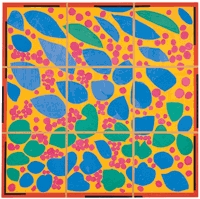
Ivy in Flower, one of Henri Matisse's final and most magisterial works of art, fired the artist's imagination from its conception in the fall of 1952. “I almost have to tie myself hand and foot to prevent myself from starting work at once,” he wrote to his son Pierre. By early 1954, though, his feelings about the commission for a stained-glass window to decorate the mausoleum of American businessman Albert Lasker had undergone a dramatic change: “It is miserable businesses that I should be treated like this at my age, and with all my past work to speak for me.” What was the origin of this singular project? And how did it bring the artist to such an impasse? This exhibition tells the story of how, after the apparent failure of the Ivy in Flower project, the work—a cutout, or collage of painted paper—became what neither Matisse nor his patron anticipated, one of the most beloved masterpieces in the collection of the Dallas Museum of Art.
Recommended for you

Jul 07, 2017
- Jun 05, 2027


May 01, 2022
- Jun 01, 2050
Ivy in Flower, one of Henri Matisse's final and most magisterial works of art, fired the artist's imagination from its conception in the fall of 1952. “I almost have to tie myself hand and foot to prevent myself from starting work at once,” he wrote to his son Pierre. By early 1954, though, his feelings about the commission for a stained-glass window to decorate the mausoleum of American businessman Albert Lasker had undergone a dramatic change: “It is miserable businesses that I should be treated like this at my age, and with all my past work to speak for me.” What was the origin of this singular project? And how did it bring the artist to such an impasse? This exhibition tells the story of how, after the apparent failure of the Ivy in Flower project, the work—a cutout, or collage of painted paper—became what neither Matisse nor his patron anticipated, one of the most beloved masterpieces in the collection of the Dallas Museum of Art.
Artists on show
Contact details
Sunday
11:00 AM - 5:00 PM
Tuesday - Wednesday
11:00 AM - 5:00 PM
Thursday
11:00 AM - 9:00 PM
Friday - Saturday
11:00 AM - 5:00 PM
1717 North Harwood Dallas Arts District - Dallas, TX, USA 75201

What's on nearby

May 07, 2025
- Jan 18, 2026
Nov 02, 2025
- Mar 22, 2026

Nov 08, 2025
- Jan 03, 2026
