ARTISTS
Andy Warhol: The Last Decade
Oct 17, 2010 - Jan 09, 2011
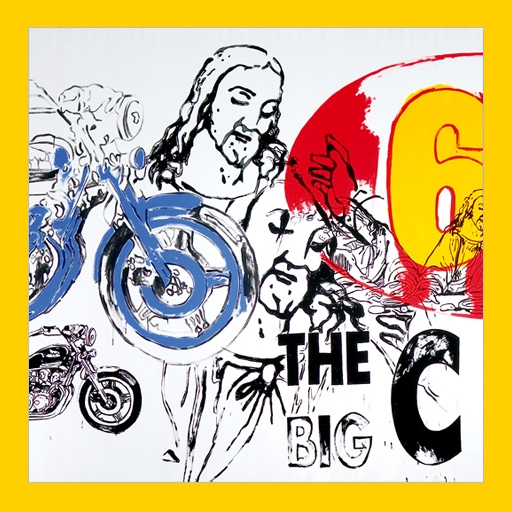
Andy Warhol: The Last Decade is the first U.S. museum exhibition to explore the late works of this iconic American artist. These more than 50 inventive, experimental, and intensely personal works reveal Warhol’s energetic return to painting and renewed spirit of experimentation during the last decade of his life.
The exhibition explores a surprising side of Warhol. An artist of constant reinvention, by the late 1970s, he had evolved from the hard-working commercial artist of the 1950s, through the Pop Art movement of the 60s, into an international celebrity famous for his experimental films and widely recognized screenprinted images of soup cans and superstars. The last decade of his life shows Warhol in the midst of his fame creating more paintings and on a vastly larger scale than at any other moment of his 40-year career. These extraordinary works are assembled from national and international public and private collections, as well as the BMA’s exceptional collection of late works by Warhol.
Highlights include psychologically revealing fright wig self-portraits, three variations on Leonardo da Vinci’s The Last Supper, and collaborations with younger artists such as Jean-Michel Basquiat that reveal the dramatic transformation of Warhol’s artistic style. He introduces new techniques, reengages in the physical act of art making, and explores painting in a culture awash with commercial and photographic imagery. Through these works, several not exhibited until after the artist's death, Warhol continually asks viewers to contemplate celebrity (including his own), glamour, and death in the contemporary era.
The exhibition explores a surprising side of Warhol. An artist of constant reinvention, by the late 1970s, he had evolved from the hard-working commercial artist of the 1950s, through the Pop Art movement of the 60s, into an international celebrity famous for his experimental films and widely recognized screenprinted images of soup cans and superstars. The last decade of his life shows Warhol in the midst of his fame creating more paintings and on a vastly larger scale than at any other moment of his 40-year career. These extraordinary works are assembled from national and international public and private collections, as well as the BMA’s exceptional collection of late works by Warhol.
Highlights include psychologically revealing fright wig self-portraits, three variations on Leonardo da Vinci’s The Last Supper, and collaborations with younger artists such as Jean-Michel Basquiat that reveal the dramatic transformation of Warhol’s artistic style. He introduces new techniques, reengages in the physical act of art making, and explores painting in a culture awash with commercial and photographic imagery. Through these works, several not exhibited until after the artist's death, Warhol continually asks viewers to contemplate celebrity (including his own), glamour, and death in the contemporary era.
Recommended for you

Jul 07, 2017
- Jun 05, 2027


May 01, 2022
- Jun 01, 2050

Feb 09, 2024
- Feb 01, 2026
Andy Warhol: The Last Decade is the first U.S. museum exhibition to explore the late works of this iconic American artist. These more than 50 inventive, experimental, and intensely personal works reveal Warhol’s energetic return to painting and renewed spirit of experimentation during the last decade of his life.
The exhibition explores a surprising side of Warhol. An artist of constant reinvention, by the late 1970s, he had evolved from the hard-working commercial artist of the 1950s, through the Pop Art movement of the 60s, into an international celebrity famous for his experimental films and widely recognized screenprinted images of soup cans and superstars. The last decade of his life shows Warhol in the midst of his fame creating more paintings and on a vastly larger scale than at any other moment of his 40-year career. These extraordinary works are assembled from national and international public and private collections, as well as the BMA’s exceptional collection of late works by Warhol.
Highlights include psychologically revealing fright wig self-portraits, three variations on Leonardo da Vinci’s The Last Supper, and collaborations with younger artists such as Jean-Michel Basquiat that reveal the dramatic transformation of Warhol’s artistic style. He introduces new techniques, reengages in the physical act of art making, and explores painting in a culture awash with commercial and photographic imagery. Through these works, several not exhibited until after the artist's death, Warhol continually asks viewers to contemplate celebrity (including his own), glamour, and death in the contemporary era.
The exhibition explores a surprising side of Warhol. An artist of constant reinvention, by the late 1970s, he had evolved from the hard-working commercial artist of the 1950s, through the Pop Art movement of the 60s, into an international celebrity famous for his experimental films and widely recognized screenprinted images of soup cans and superstars. The last decade of his life shows Warhol in the midst of his fame creating more paintings and on a vastly larger scale than at any other moment of his 40-year career. These extraordinary works are assembled from national and international public and private collections, as well as the BMA’s exceptional collection of late works by Warhol.
Highlights include psychologically revealing fright wig self-portraits, three variations on Leonardo da Vinci’s The Last Supper, and collaborations with younger artists such as Jean-Michel Basquiat that reveal the dramatic transformation of Warhol’s artistic style. He introduces new techniques, reengages in the physical act of art making, and explores painting in a culture awash with commercial and photographic imagery. Through these works, several not exhibited until after the artist's death, Warhol continually asks viewers to contemplate celebrity (including his own), glamour, and death in the contemporary era.
Artists on show

What's on nearby
Sep 17, 2025
- Feb 08, 2026
Feb 09, 2025
- Feb 22, 2026