
 ARTISTS

Andy Warhol Now
Dec 12, 2020 - Jun 13, 2021
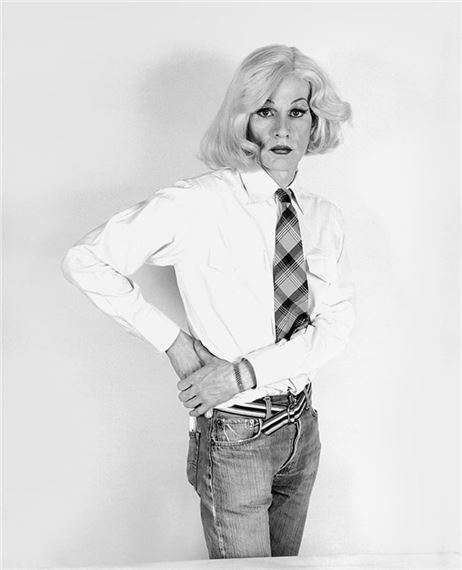
Andy Warhol (1928–1987) captivated and polarized people with his personality, and his art shaped an entire era. His multifaceted work redefined the boundaries of painting, sculpture, film, and music. As a shy young man from a religious, working-class milieu, Warhol carved his own path into the art world, which was still dominated by Abstract Expressionism. In his early work, personal, often homoerotic drawings stood alongside commissions as a successful advertising illustrator, while his unmistakable screen prints made him the epitome of the new Pop Art movement. He had a lifelong fascination for popular culture. But just as his celebrity portraits and Coca-Cola bottles held a mirror to American society, Warhol stands for a diverse, queer counterculture that found its expression not least in his New York studio, the Factory. This major exhibition illuminates Warhol’s expanded artistic practice against the backdrop of pressing social issues with over 100 works. Key works such as the Elvis Presley series and colorful variations of an electric chair are represented as well as less well-known aspects, which allow for a current view of this artist of the century in a time of political and cultural upheavals. It also illuminates his development as the son of Russian immigrants in Pittsburgh, which is reflected in a complex processing of religious themes and subjects, among other things.
Recommended for you

Jul 07, 2017
- Jun 05, 2027


May 01, 2022
- Jun 01, 2050

Feb 09, 2024
- Feb 01, 2026
Andy Warhol (1928–1987) captivated and polarized people with his personality, and his art shaped an entire era. His multifaceted work redefined the boundaries of painting, sculpture, film, and music. As a shy young man from a religious, working-class milieu, Warhol carved his own path into the art world, which was still dominated by Abstract Expressionism. In his early work, personal, often homoerotic drawings stood alongside commissions as a successful advertising illustrator, while his unmistakable screen prints made him the epitome of the new Pop Art movement. He had a lifelong fascination for popular culture. But just as his celebrity portraits and Coca-Cola bottles held a mirror to American society, Warhol stands for a diverse, queer counterculture that found its expression not least in his New York studio, the Factory. This major exhibition illuminates Warhol’s expanded artistic practice against the backdrop of pressing social issues with over 100 works. Key works such as the Elvis Presley series and colorful variations of an electric chair are represented as well as less well-known aspects, which allow for a current view of this artist of the century in a time of political and cultural upheavals. It also illuminates his development as the son of Russian immigrants in Pittsburgh, which is reflected in a complex processing of religious themes and subjects, among other things.
Artists on show
Contact details
Tuesday
10:00 AM - 6:00 PM
Heinrich-Böll-Platz Cologne, Germany 50667

Related articles
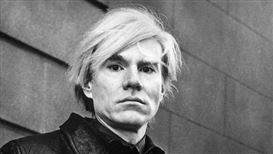
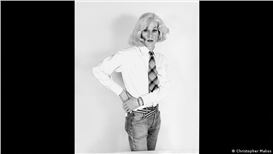
The Museum Ludwig is postponing the exhibition Andy Warhol Now, originally planned for October 10, 2020 to February 21, 2021.
Feb 25, 2021
He revolutionized what art could be in an age of immense social, political and technological change: An online exhibition in Cologne revisits his work.
What's on nearby
Nov 06, 2025
- Jan 16, 2026
Nov 08, 2025
- Jan 18, 2026
