ARTISTS

Captivated by Vincent
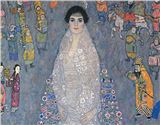
To mark the centenary of Jo van Gogh-Bonger’s death (1862–1925), the Van Gogh Museum presents Captivated by Vincent. The Intimate Friendship of Jo van Gogh-Bonger and Isaac Israëls.
This small-scale exhibition explores her special relationship with the painter Isaac Israëls (1865–1934). Jo was married to Vincent van Gogh’s brother Theo and played a pivotal role in preserving and promoting Vincent’s legacy.
Busy ‘Vincenting’
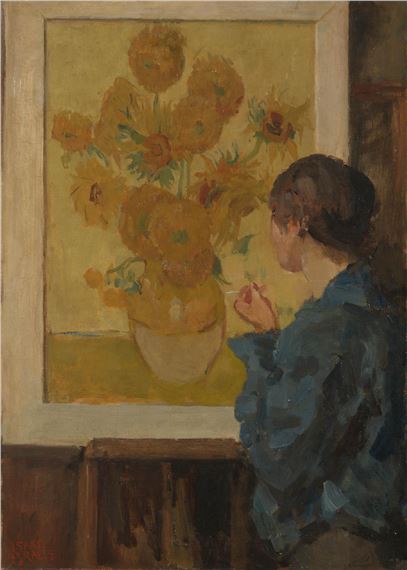
Isaac Israëls and Jo shared an intimate friendship between 1895 and 1897, and became close friends later on. Jo lent several of Van Gogh’s masterpieces to Isaac, including Sunflowers, The Bedroom and The Yellow House (The Street). Israëls used these paintings as backdrops in at least seventeen of his own works.
He even coined the verb ‘Vincenting’ to describe this creative process. ‘I'm still very busy Vincenting’, he wrote to her happily.
The exhibition shows ten of these paintings, from Dutch museums and private collections. Two of the works with the Sunflowers are in the collection of the Van Gogh Museum. There is also a special drawn study on display, in which Van Gogh's works can be seen.
Letters and portraits
In Captivated by Vincent, Israëls’ paintings are placed in the context of his relationship with Jo. In addition to the artworks, the exhibition also features portraits he made of Jo and her son Vincent, as well as a selection from the more than hundred letters he wrote to Jo.
These letters – full of passion, humour and reflection on art, love and friendship – offer a rare insight into their world of thought.
A digital edition of these letters will be published to coincide with the exhibition, edited by Hans Luijten, senior researcher at the Van Gogh Museum and specialist in the Van Gogh family correspondence.
He also wrote the biography Jo van Gogh-Bonger: The Woman Who Made Vincent Famous.
Israëls’ Portrait of Jo van Gogh-Bonger (1895–1897), restored especially for the exhibition, will be shown for the first time in its renewed state. The painting had been obscured by a yellowed, matt layer of varnish and multiple overpaintings.
Recommended for you


To mark the centenary of Jo van Gogh-Bonger’s death (1862–1925), the Van Gogh Museum presents Captivated by Vincent. The Intimate Friendship of Jo van Gogh-Bonger and Isaac Israëls.
This small-scale exhibition explores her special relationship with the painter Isaac Israëls (1865–1934). Jo was married to Vincent van Gogh’s brother Theo and played a pivotal role in preserving and promoting Vincent’s legacy.
Busy ‘Vincenting’
Isaac Israëls and Jo shared an intimate friendship between 1895 and 1897, and became close friends later on. Jo lent several of Van Gogh’s masterpieces to Isaac, including Sunflowers, The Bedroom and The Yellow House (The Street). Israëls used these paintings as backdrops in at least seventeen of his own works.
He even coined the verb ‘Vincenting’ to describe this creative process. ‘I'm still very busy Vincenting’, he wrote to her happily.
The exhibition shows ten of these paintings, from Dutch museums and private collections. Two of the works with the Sunflowers are in the collection of the Van Gogh Museum. There is also a special drawn study on display, in which Van Gogh's works can be seen.
Letters and portraits
In Captivated by Vincent, Israëls’ paintings are placed in the context of his relationship with Jo. In addition to the artworks, the exhibition also features portraits he made of Jo and her son Vincent, as well as a selection from the more than hundred letters he wrote to Jo.
These letters – full of passion, humour and reflection on art, love and friendship – offer a rare insight into their world of thought.
A digital edition of these letters will be published to coincide with the exhibition, edited by Hans Luijten, senior researcher at the Van Gogh Museum and specialist in the Van Gogh family correspondence.
He also wrote the biography Jo van Gogh-Bonger: The Woman Who Made Vincent Famous.
Israëls’ Portrait of Jo van Gogh-Bonger (1895–1897), restored especially for the exhibition, will be shown for the first time in its renewed state. The painting had been obscured by a yellowed, matt layer of varnish and multiple overpaintings.
Artists on show
Contact details

What's on nearby