ARTISTS
Circus
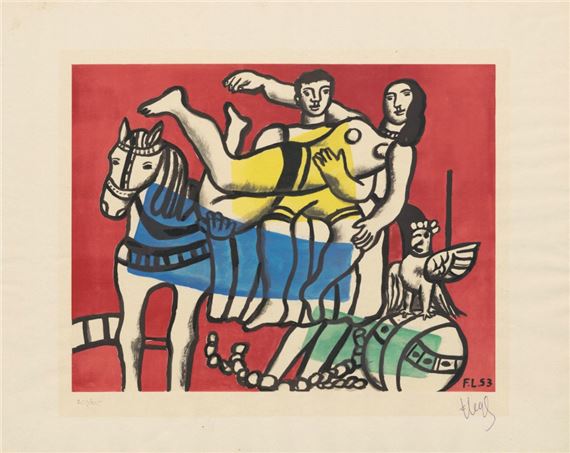
Circus shows featuring wild animal trainers, acrobats and trick riders have beguiled hearts and minds since the very birth of the modern circus in the late 18th century. The circus tent was a place of true egalitarianism, bringing together people of all social classes, men and women, adults and children. Artists too were not immune to the pull of the circus. Inspiring them was its freedom and the defiance of human limitations that they observed under the big top. For some, it was a return to their carefree childhood years. Some cherished the circus show as a conduit to escaping formalism. Others identified with the peculiarity of its performers, admiring their disregard for existing conventions, or were dazzled by the superhuman strength with which they opposed the forces of nature.
The CIRCUS exhibition arose from our curator scouring the collections of primarily the National Museum in Warsaw, whose modern and ancient holdings include about one hundred objects of circus relevance, not counting the Poster Museum at Wilanów and its 370 circus posters. These are works by artists like: Roman Cieślewicz, Paul Klee, Ferdynand Léger, Jan Lenica, Leopold Lewicki, Max Liebermann, Jan Młodożeniec, Tymon Niesiołowski, Teresa Pągowska, Pablo Picasso, Henryk Tomaszewski, Witold Wojtkiewicz and Andrzej Wróblewski.
By incorporating pieces from contemporary artists in the CIRCUS exhibition (Alicja Bielawska, Norbert Delman, Rafał Milach), we wish to trace the continuity of these themes, and to tie the past to the present. We want to build a bridge between the time when the circus was a special and anxiously awaited highlight and the present day, when it is just one of many attractions in the entertainment landscape.
Recommended for you


Circus shows featuring wild animal trainers, acrobats and trick riders have beguiled hearts and minds since the very birth of the modern circus in the late 18th century. The circus tent was a place of true egalitarianism, bringing together people of all social classes, men and women, adults and children. Artists too were not immune to the pull of the circus. Inspiring them was its freedom and the defiance of human limitations that they observed under the big top. For some, it was a return to their carefree childhood years. Some cherished the circus show as a conduit to escaping formalism. Others identified with the peculiarity of its performers, admiring their disregard for existing conventions, or were dazzled by the superhuman strength with which they opposed the forces of nature.
The CIRCUS exhibition arose from our curator scouring the collections of primarily the National Museum in Warsaw, whose modern and ancient holdings include about one hundred objects of circus relevance, not counting the Poster Museum at Wilanów and its 370 circus posters. These are works by artists like: Roman Cieślewicz, Paul Klee, Ferdynand Léger, Jan Lenica, Leopold Lewicki, Max Liebermann, Jan Młodożeniec, Tymon Niesiołowski, Teresa Pągowska, Pablo Picasso, Henryk Tomaszewski, Witold Wojtkiewicz and Andrzej Wróblewski.
By incorporating pieces from contemporary artists in the CIRCUS exhibition (Alicja Bielawska, Norbert Delman, Rafał Milach), we wish to trace the continuity of these themes, and to tie the past to the present. We want to build a bridge between the time when the circus was a special and anxiously awaited highlight and the present day, when it is just one of many attractions in the entertainment landscape.

What's on nearby