
 ARTISTS
Color Gone Wild: Fauve and Expressionist Masterworks from the Merzbacher Collection
Jul 05, 2013 - Nov 02, 2013
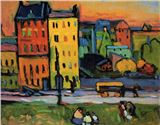
The Israel Museum, Jerusalem, will showcase Fauve and Expressionist paintings from one of the world’s most notable private collections of modern art in the exhibition Color Gone Wild: Fauve and Expressionist Masterworks from the Merzbacher Collection. On view through November 2, 2013, the exhibition features works by major Fauve and Expressionist artists from high points in their careers, including paintings by Georges Braque, André Derain, Alexej Jawlensky, Wassily Kandinsky, Henri Matisse, and Maurice Vlaminck, among others. Fifteen years following the collection’s public debut at the Israel Museum, Color Gone Wild provides a focused examination of forty-two collection highlights, including important works acquired since then, all linked by a vivid use of vibrant color as a vehicle for emotional expression.
“Since its first public presentation at the Israel Museum in 1998, the Merzbacher Collection has been universally embraced for its exceptional quality, comprising paintings that trace the history of color in the 20th century,” said James S. Snyder, the Anne and Jerome Fisher Director of the Israel Museum. “The works on view in Color Gone Wild are linked by their intensity of color and their emotional expressiveness—reflecting Werner and Gabrielle Merzbacher’s persisting passion for collecting artworks by some of the most pioneering artists of the 20th century. We are deeply grateful to the Merzbachers for making the presentation of this extraordinary display possible.”
Color Gone Wild reflects the Merzbachers’ aesthetic passions. Their interest in collecting was spurred initially by Mrs. Merzbacher’s grandparents, staunch supporters of the avant-garde who amassed a small but stunning collection of modern art. The modern masterpieces on view in this presentation are unified by their brilliantly contrasting hues and energized brushwork. Though differing in subject matter, the paintings all demonstrate a freedom from the social and artistic conventions of their time and a vision of art as socially and spiritually transforming. The exhibition opens with Fauve painting, leading then to the two groups of Expressionists, The Bridge (Die Brücke) and the Blue Rider (Der Blaue Reiter), emphasizing the contemporaneous preoccupation of these painters with expressive color, bold brushstrokes, and innovative composition.
Included in the exhibition are two keystones of the Merzbacher collection: Blooming Trees (1909) by Karl Schmidt Rottluf and Interior at Collioure (1905) by Henri Matisse. The acquisition of Blooming Trees marked a significant break in the Merzbachers’ earlier collecting practice, which initially favored works by Social Realists and colorful Impressionists. Shortly thereafter, the arrival on loan from Mrs. Merzbacher’s parents of Matisse’s Interior at Collioure further established the foundation for the Merzbachers’ new collecting focus and fueled their search for seminal Fauve and Expressionist works, as well as paintings from related art movements.
Approximately one quarter of the works in Color Gone Wild were purchased following the collection’s public debut in 1998 and have never been seen in Israel. Among the newly acquired works in the exhibition is Wassily Kandinsky’s Two Hoursemen and a Lying Person (1909-1910), an early work that demonstrates the artist’s inclination towards abstraction with its bold simplification of figures and heightened use of color. Also on view are Girl with Cat (1910) and Two Nudes on a Blue Sofa (1910-20) by Ernst Ludwig Kirchner, which in their crude, non-naturalistic depictions of contemporary bohemian life reflect the artist’s attempts to break from the traditional academic style of the age. Another work that marks a shift in artistic practice is Maurice de Vlaminck’s Potato Pickers (ca. 1905-07), an example of the artist’s trend towards “deconstructing” the physical landscape into violent streaks of color that convey a sense of motion. The exhibition will also showcase newly acquired paintings by Erich Heckel, Emil Nolde, and Max Beckmann.
“Since its first public presentation at the Israel Museum in 1998, the Merzbacher Collection has been universally embraced for its exceptional quality, comprising paintings that trace the history of color in the 20th century,” said James S. Snyder, the Anne and Jerome Fisher Director of the Israel Museum. “The works on view in Color Gone Wild are linked by their intensity of color and their emotional expressiveness—reflecting Werner and Gabrielle Merzbacher’s persisting passion for collecting artworks by some of the most pioneering artists of the 20th century. We are deeply grateful to the Merzbachers for making the presentation of this extraordinary display possible.”
Color Gone Wild reflects the Merzbachers’ aesthetic passions. Their interest in collecting was spurred initially by Mrs. Merzbacher’s grandparents, staunch supporters of the avant-garde who amassed a small but stunning collection of modern art. The modern masterpieces on view in this presentation are unified by their brilliantly contrasting hues and energized brushwork. Though differing in subject matter, the paintings all demonstrate a freedom from the social and artistic conventions of their time and a vision of art as socially and spiritually transforming. The exhibition opens with Fauve painting, leading then to the two groups of Expressionists, The Bridge (Die Brücke) and the Blue Rider (Der Blaue Reiter), emphasizing the contemporaneous preoccupation of these painters with expressive color, bold brushstrokes, and innovative composition.
Included in the exhibition are two keystones of the Merzbacher collection: Blooming Trees (1909) by Karl Schmidt Rottluf and Interior at Collioure (1905) by Henri Matisse. The acquisition of Blooming Trees marked a significant break in the Merzbachers’ earlier collecting practice, which initially favored works by Social Realists and colorful Impressionists. Shortly thereafter, the arrival on loan from Mrs. Merzbacher’s parents of Matisse’s Interior at Collioure further established the foundation for the Merzbachers’ new collecting focus and fueled their search for seminal Fauve and Expressionist works, as well as paintings from related art movements.
Approximately one quarter of the works in Color Gone Wild were purchased following the collection’s public debut in 1998 and have never been seen in Israel. Among the newly acquired works in the exhibition is Wassily Kandinsky’s Two Hoursemen and a Lying Person (1909-1910), an early work that demonstrates the artist’s inclination towards abstraction with its bold simplification of figures and heightened use of color. Also on view are Girl with Cat (1910) and Two Nudes on a Blue Sofa (1910-20) by Ernst Ludwig Kirchner, which in their crude, non-naturalistic depictions of contemporary bohemian life reflect the artist’s attempts to break from the traditional academic style of the age. Another work that marks a shift in artistic practice is Maurice de Vlaminck’s Potato Pickers (ca. 1905-07), an example of the artist’s trend towards “deconstructing” the physical landscape into violent streaks of color that convey a sense of motion. The exhibition will also showcase newly acquired paintings by Erich Heckel, Emil Nolde, and Max Beckmann.

Recommended for you

Jul 07, 2017
- Jun 05, 2027


May 01, 2022
- Jun 01, 2050

Feb 09, 2024
- Feb 01, 2026
The Israel Museum, Jerusalem, will showcase Fauve and Expressionist paintings from one of the world’s most notable private collections of modern art in the exhibition Color Gone Wild: Fauve and Expressionist Masterworks from the Merzbacher Collection. On view through November 2, 2013, the exhibition features works by major Fauve and Expressionist artists from high points in their careers, including paintings by Georges Braque, André Derain, Alexej Jawlensky, Wassily Kandinsky, Henri Matisse, and Maurice Vlaminck, among others. Fifteen years following the collection’s public debut at the Israel Museum, Color Gone Wild provides a focused examination of forty-two collection highlights, including important works acquired since then, all linked by a vivid use of vibrant color as a vehicle for emotional expression.
“Since its first public presentation at the Israel Museum in 1998, the Merzbacher Collection has been universally embraced for its exceptional quality, comprising paintings that trace the history of color in the 20th century,” said James S. Snyder, the Anne and Jerome Fisher Director of the Israel Museum. “The works on view in Color Gone Wild are linked by their intensity of color and their emotional expressiveness—reflecting Werner and Gabrielle Merzbacher’s persisting passion for collecting artworks by some of the most pioneering artists of the 20th century. We are deeply grateful to the Merzbachers for making the presentation of this extraordinary display possible.”
Color Gone Wild reflects the Merzbachers’ aesthetic passions. Their interest in collecting was spurred initially by Mrs. Merzbacher’s grandparents, staunch supporters of the avant-garde who amassed a small but stunning collection of modern art. The modern masterpieces on view in this presentation are unified by their brilliantly contrasting hues and energized brushwork. Though differing in subject matter, the paintings all demonstrate a freedom from the social and artistic conventions of their time and a vision of art as socially and spiritually transforming. The exhibition opens with Fauve painting, leading then to the two groups of Expressionists, The Bridge (Die Brücke) and the Blue Rider (Der Blaue Reiter), emphasizing the contemporaneous preoccupation of these painters with expressive color, bold brushstrokes, and innovative composition.
Included in the exhibition are two keystones of the Merzbacher collection: Blooming Trees (1909) by Karl Schmidt Rottluf and Interior at Collioure (1905) by Henri Matisse. The acquisition of Blooming Trees marked a significant break in the Merzbachers’ earlier collecting practice, which initially favored works by Social Realists and colorful Impressionists. Shortly thereafter, the arrival on loan from Mrs. Merzbacher’s parents of Matisse’s Interior at Collioure further established the foundation for the Merzbachers’ new collecting focus and fueled their search for seminal Fauve and Expressionist works, as well as paintings from related art movements.
Approximately one quarter of the works in Color Gone Wild were purchased following the collection’s public debut in 1998 and have never been seen in Israel. Among the newly acquired works in the exhibition is Wassily Kandinsky’s Two Hoursemen and a Lying Person (1909-1910), an early work that demonstrates the artist’s inclination towards abstraction with its bold simplification of figures and heightened use of color. Also on view are Girl with Cat (1910) and Two Nudes on a Blue Sofa (1910-20) by Ernst Ludwig Kirchner, which in their crude, non-naturalistic depictions of contemporary bohemian life reflect the artist’s attempts to break from the traditional academic style of the age. Another work that marks a shift in artistic practice is Maurice de Vlaminck’s Potato Pickers (ca. 1905-07), an example of the artist’s trend towards “deconstructing” the physical landscape into violent streaks of color that convey a sense of motion. The exhibition will also showcase newly acquired paintings by Erich Heckel, Emil Nolde, and Max Beckmann.
“Since its first public presentation at the Israel Museum in 1998, the Merzbacher Collection has been universally embraced for its exceptional quality, comprising paintings that trace the history of color in the 20th century,” said James S. Snyder, the Anne and Jerome Fisher Director of the Israel Museum. “The works on view in Color Gone Wild are linked by their intensity of color and their emotional expressiveness—reflecting Werner and Gabrielle Merzbacher’s persisting passion for collecting artworks by some of the most pioneering artists of the 20th century. We are deeply grateful to the Merzbachers for making the presentation of this extraordinary display possible.”
Color Gone Wild reflects the Merzbachers’ aesthetic passions. Their interest in collecting was spurred initially by Mrs. Merzbacher’s grandparents, staunch supporters of the avant-garde who amassed a small but stunning collection of modern art. The modern masterpieces on view in this presentation are unified by their brilliantly contrasting hues and energized brushwork. Though differing in subject matter, the paintings all demonstrate a freedom from the social and artistic conventions of their time and a vision of art as socially and spiritually transforming. The exhibition opens with Fauve painting, leading then to the two groups of Expressionists, The Bridge (Die Brücke) and the Blue Rider (Der Blaue Reiter), emphasizing the contemporaneous preoccupation of these painters with expressive color, bold brushstrokes, and innovative composition.
Included in the exhibition are two keystones of the Merzbacher collection: Blooming Trees (1909) by Karl Schmidt Rottluf and Interior at Collioure (1905) by Henri Matisse. The acquisition of Blooming Trees marked a significant break in the Merzbachers’ earlier collecting practice, which initially favored works by Social Realists and colorful Impressionists. Shortly thereafter, the arrival on loan from Mrs. Merzbacher’s parents of Matisse’s Interior at Collioure further established the foundation for the Merzbachers’ new collecting focus and fueled their search for seminal Fauve and Expressionist works, as well as paintings from related art movements.
Approximately one quarter of the works in Color Gone Wild were purchased following the collection’s public debut in 1998 and have never been seen in Israel. Among the newly acquired works in the exhibition is Wassily Kandinsky’s Two Hoursemen and a Lying Person (1909-1910), an early work that demonstrates the artist’s inclination towards abstraction with its bold simplification of figures and heightened use of color. Also on view are Girl with Cat (1910) and Two Nudes on a Blue Sofa (1910-20) by Ernst Ludwig Kirchner, which in their crude, non-naturalistic depictions of contemporary bohemian life reflect the artist’s attempts to break from the traditional academic style of the age. Another work that marks a shift in artistic practice is Maurice de Vlaminck’s Potato Pickers (ca. 1905-07), an example of the artist’s trend towards “deconstructing” the physical landscape into violent streaks of color that convey a sense of motion. The exhibition will also showcase newly acquired paintings by Erich Heckel, Emil Nolde, and Max Beckmann.
Contact details
Sunday - Monday
10:00 AM - 5:00 PM
Tuesday
4:00 - 9:00 PM
Wednesday - Thursday
10:00 AM - 5:00 PM
Friday
10:00 AM - 2:00 PM
Saturday
10:00 AM - 5:00 PM
Ruppin Blvd. 11 Jerusalem, Israel 9171002

What's on nearby

Jun 26, 2025
- Dec 29, 2025
Nov 04, 2025
- Aug 15, 2026
