ARTISTS
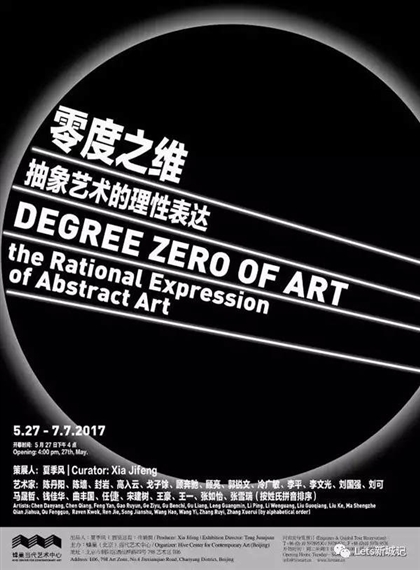
Degree Zero of Art: the Rational Expression of Abstract Art
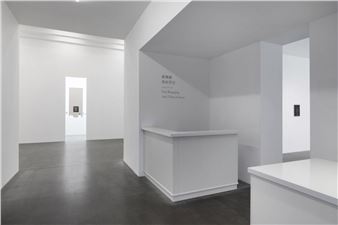
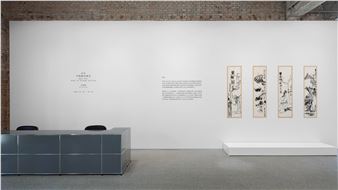
Hive Center for Contemporary Art (Beijing) is pleased to announce the opening of Degree Zero of Art: the Rational Expression of Abstract Art. Degree Zero of Art invites 22 participating artists who work purely in Geometric Abstraction in such mediums as painting, installation, video and photography. Two years after Boundaries of Order, this is the next major exhibition at the Hive Center for Contemporary Art to examine Chinese Abstract art.
At the theoretical core of this exhibition is the concept of “zero writing” from French literary theorist Roland Barthes, which it employs in an attempt to sift through and present a direction and scene of relatively rational expression within contemporary Abstract artistic creation.
Barthes’ concept of zero writing comes from his 1953 book Writing Degree Zero. The basic idea is that when writing, the author strives to cast off all individual emotion and thus achieve a cold, objective, rational, even mechanical account, “an impassive mode of writing, innocent.” Meanwhile, zero emotion does not imply the loss of emotion in creation. To the contrary, it demands that the artist possess greater ability to recognize the world and to effectively adjust and control their own floods of subjective emotions, lowering their emotions to the freezing point so that reason can express the objective reality. It is not our intention to examine whether Barthes’ zero theory was influenced by Suprematist artist Kazimir Malevich, but we cannot deny that since Malevich’s creation of Geometric Abstraction painting, his work, with its unprecedented levels of rational expression, influenced the progression of Geometric Abstraction in Western art. The creative approach of Geometric Abstraction, sometimes called Cold Abstraction or Rational Abstraction, occupies an important position in art history. Much to the opposite of realist painting, Abstract painting focuses on painting itself, not subject matter, and stands as a substantive presence as it carries out self-replication and generation within the system. Not only is it not dependent on the true imitation of the likeness of nature, it must, as he said discard subject matter and appearance. Infinite uncertain but possibly extant internal relationships fill Abstract art with unlimited vitality.
Recommended for you
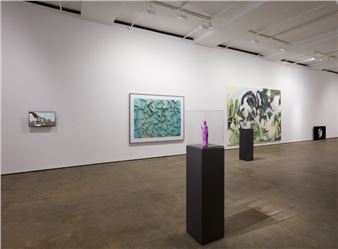
Hive Center for Contemporary Art (Beijing) is pleased to announce the opening of Degree Zero of Art: the Rational Expression of Abstract Art. Degree Zero of Art invites 22 participating artists who work purely in Geometric Abstraction in such mediums as painting, installation, video and photography. Two years after Boundaries of Order, this is the next major exhibition at the Hive Center for Contemporary Art to examine Chinese Abstract art.
At the theoretical core of this exhibition is the concept of “zero writing” from French literary theorist Roland Barthes, which it employs in an attempt to sift through and present a direction and scene of relatively rational expression within contemporary Abstract artistic creation.
Barthes’ concept of zero writing comes from his 1953 book Writing Degree Zero. The basic idea is that when writing, the author strives to cast off all individual emotion and thus achieve a cold, objective, rational, even mechanical account, “an impassive mode of writing, innocent.” Meanwhile, zero emotion does not imply the loss of emotion in creation. To the contrary, it demands that the artist possess greater ability to recognize the world and to effectively adjust and control their own floods of subjective emotions, lowering their emotions to the freezing point so that reason can express the objective reality. It is not our intention to examine whether Barthes’ zero theory was influenced by Suprematist artist Kazimir Malevich, but we cannot deny that since Malevich’s creation of Geometric Abstraction painting, his work, with its unprecedented levels of rational expression, influenced the progression of Geometric Abstraction in Western art. The creative approach of Geometric Abstraction, sometimes called Cold Abstraction or Rational Abstraction, occupies an important position in art history. Much to the opposite of realist painting, Abstract painting focuses on painting itself, not subject matter, and stands as a substantive presence as it carries out self-replication and generation within the system. Not only is it not dependent on the true imitation of the likeness of nature, it must, as he said discard subject matter and appearance. Infinite uncertain but possibly extant internal relationships fill Abstract art with unlimited vitality.
What's on nearby