BUY ART

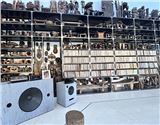
Echoes Across the Nile: A Hundred Years of Egyptian Art From the DAF Collection
Echoes Across the Nile: a Hundred Years of Egyptian Art from the DAF Collection highlights the development of modern and contemporary Egyptian art since the 1920s through its showcase of 103 artworks by 53 Egyptian artists. Spanning nearly a century of artistic production, successive generations of artists responded to the shifting realities of their time by creating art movements and engaging in dialogue both with one another and with the sociopolitical transformations unfolding around them.
In the early twentieth century, amid the ferment of al-Nahda (the Arab renaissance) and post-independence nation-building, pioneering artists founded groups such as the Art Advocacy Group (Jama’at al-Da’ayah al-Fanniyya), and La Chimère (Jama’at al-Khayal) in 1927. The latter was foundational in the creation of what would become a distinctly authentic Egyptian visual language during a time of heightened anticolonial and nationalist sentiment. Its members included pioneering European and Egyptian artists such as Mahmoud Mokhtar, Mahmoud Said, Ragheb Ayyad, and Mohamed Naghi. Each had his own style, but the collective’s main characteristic is its approach of merging Western academic techniques the artists had learned at Cairo’s École des Beaux-Arts and in Europe with subjects rooted in Egyptian rural and urban life; this included depictions of the fellaha, village festivals, Nile landscapes, Alexandrian coastal scenes, and reimagined Pharaonic symbols and monuments – a style often referred to as Neo-Pharaonism.
By the late 1930s, the rise of fascism in Europe and the condemnation of so-called “degenerate art” by Nazi Germany galvanized Egyptian and expatriate artists in Cairo. In December 1938, the Egyptian writer and intellectual Georges Henein responded by founding the movement Art et Liberté (Jama’at al-Fann wa al-Hurriya) and issuing the manifesto “Vive l’art dégénéré,” bringing together visual artists such as Ramses Younan and Antoine Malliarakis (Mayo) in a collective committed to artistic freedom and anti-fascist solidarity. They embraced Surrealism’s experimental visual language, employing what they described as ‘subjective realism’ and ‘free art’ as demonstrated by their use of dream imagery and bodily distortions. Between 1940 and 1945, the group organized five exhibitions in Cairo, and although Art et Liberté remained active until 1948, its activities largely circulated within the city’s Francophone intellectual circles.
In response to the cosmopolitan Surrealism and European-oriented intellectualism of Art et Liberté, artists in Cairo founded the Contemporary Art Group (Jama’at al-Fann al-Mu’aser) in 1946 with the aim of positioning modern art more firmly within Egypt’s social realities and popular traditions. Led by Hussein Youssef Amin, and shaped by figures such as Abdel Hadi El-Gazzar and Hamed Nada, the group turned to folklore and everyday experience, developing a distinctly local modernist language that combined symbolism with social commentary.
Mid-twentieth century Egyptian art was shaped by pan-Arab nationalism and anti-imperialist ideals, as seen in the works of Inji Efflatoun, who depicted the daily labor of Egyptian women, as well as Effat Naghi, who prioritized allegory and symbolism to assert Egyptian authenticity. In conversation with these two artists is the work of Ramses Wissa Wassef, whose hand-woven cotton and wool tapestry reflects his belief in the importance of preserving Egyptian craft traditions while fostering intuitive creative expression – exemplified by the weaving school he founded in 1951, where local children created original tapestries without formal templates.
The development of contemporary abstraction by Egyptian artists highlights a sense of continuity across Egyptian art. Many artists, some of whom are considered modernists, shifted towards or increasingly incorporated the more universal languages of abstraction. Within the exhibition, this approach is seen in the Cézannean perspective employed by Zeinab Abdel Hamid’s in her depiction of the frenzied energy of an urban port area. It is paralleled by Ahmed Farid’s cartographic abstraction of what, on closer look, appears to be urban density.
The transitional period between modernist and contemporary Egyptian art is also evident in the works of Adam Henein, whose decades-long practice reflects his artistic evolution in relation to abstraction. With the disillusionment that came with Egypt’s new political landscape, his work moved away from nationalist themes, reflected in his minimalist Pharaonic bold sculptures to abstractions that prioritized materiality, with the incorporation of papyrus paper and natural pigments.
From the 1990s onward, the expansion of global media and the growth of consumer culture reshaped Egypt’s cultural landscape, while the decline of pan-Arab political ideals fostered a broader reassessment of national and regional identity. Within this context, artists such as Chant Avedissian, Mohamed Taman, and Khaled Hafez turned to popular culture (Egyptian, Arab, and Western) and layered visual references to explore and interrogate collective memory, while reflecting the fractured and/or hybrid identities produced by globalization and contemporary Egypt.
Illustrating the notion of an ‘Egyptian’ thread of artistic legacy that weaves its way across the works of the exhibition is Riham El Sadany’s surrealist painting There is a Place like no place on earth, 2014. It depicts the city’s dynamic urbanism and women’s inner lives explored amidst the powerful presence of ancestral specters. This is represented by the Avenue of Sphinxes/Ram’s Road ( in Luxor,Egypt) in a scene which blends history and subjective imagination. It reflects both the reverberating echoes of modern art movements and the dynamism of contemporary Egyptian art.
Together, the works presented in Echoes Across the Nile bring these artistic trajectories into dialogue, placing the key figures discussed alongside many others from the DAF Collection. Spanning nearly a century, featuring artworks dated from 1921 to 2023, the exhibition reveals how successive generations continually reimagined the possibilities of “Egyptian art”.
Recommended for you


Echoes Across the Nile: a Hundred Years of Egyptian Art from the DAF Collection highlights the development of modern and contemporary Egyptian art since the 1920s through its showcase of 103 artworks by 53 Egyptian artists. Spanning nearly a century of artistic production, successive generations of artists responded to the shifting realities of their time by creating art movements and engaging in dialogue both with one another and with the sociopolitical transformations unfolding around them.
In the early twentieth century, amid the ferment of al-Nahda (the Arab renaissance) and post-independence nation-building, pioneering artists founded groups such as the Art Advocacy Group (Jama’at al-Da’ayah al-Fanniyya), and La Chimère (Jama’at al-Khayal) in 1927. The latter was foundational in the creation of what would become a distinctly authentic Egyptian visual language during a time of heightened anticolonial and nationalist sentiment. Its members included pioneering European and Egyptian artists such as Mahmoud Mokhtar, Mahmoud Said, Ragheb Ayyad, and Mohamed Naghi. Each had his own style, but the collective’s main characteristic is its approach of merging Western academic techniques the artists had learned at Cairo’s École des Beaux-Arts and in Europe with subjects rooted in Egyptian rural and urban life; this included depictions of the fellaha, village festivals, Nile landscapes, Alexandrian coastal scenes, and reimagined Pharaonic symbols and monuments – a style often referred to as Neo-Pharaonism.
By the late 1930s, the rise of fascism in Europe and the condemnation of so-called “degenerate art” by Nazi Germany galvanized Egyptian and expatriate artists in Cairo. In December 1938, the Egyptian writer and intellectual Georges Henein responded by founding the movement Art et Liberté (Jama’at al-Fann wa al-Hurriya) and issuing the manifesto “Vive l’art dégénéré,” bringing together visual artists such as Ramses Younan and Antoine Malliarakis (Mayo) in a collective committed to artistic freedom and anti-fascist solidarity. They embraced Surrealism’s experimental visual language, employing what they described as ‘subjective realism’ and ‘free art’ as demonstrated by their use of dream imagery and bodily distortions. Between 1940 and 1945, the group organized five exhibitions in Cairo, and although Art et Liberté remained active until 1948, its activities largely circulated within the city’s Francophone intellectual circles.
In response to the cosmopolitan Surrealism and European-oriented intellectualism of Art et Liberté, artists in Cairo founded the Contemporary Art Group (Jama’at al-Fann al-Mu’aser) in 1946 with the aim of positioning modern art more firmly within Egypt’s social realities and popular traditions. Led by Hussein Youssef Amin, and shaped by figures such as Abdel Hadi El-Gazzar and Hamed Nada, the group turned to folklore and everyday experience, developing a distinctly local modernist language that combined symbolism with social commentary.
Mid-twentieth century Egyptian art was shaped by pan-Arab nationalism and anti-imperialist ideals, as seen in the works of Inji Efflatoun, who depicted the daily labor of Egyptian women, as well as Effat Naghi, who prioritized allegory and symbolism to assert Egyptian authenticity. In conversation with these two artists is the work of Ramses Wissa Wassef, whose hand-woven cotton and wool tapestry reflects his belief in the importance of preserving Egyptian craft traditions while fostering intuitive creative expression – exemplified by the weaving school he founded in 1951, where local children created original tapestries without formal templates.
The development of contemporary abstraction by Egyptian artists highlights a sense of continuity across Egyptian art. Many artists, some of whom are considered modernists, shifted towards or increasingly incorporated the more universal languages of abstraction. Within the exhibition, this approach is seen in the Cézannean perspective employed by Zeinab Abdel Hamid’s in her depiction of the frenzied energy of an urban port area. It is paralleled by Ahmed Farid’s cartographic abstraction of what, on closer look, appears to be urban density.
The transitional period between modernist and contemporary Egyptian art is also evident in the works of Adam Henein, whose decades-long practice reflects his artistic evolution in relation to abstraction. With the disillusionment that came with Egypt’s new political landscape, his work moved away from nationalist themes, reflected in his minimalist Pharaonic bold sculptures to abstractions that prioritized materiality, with the incorporation of papyrus paper and natural pigments.
From the 1990s onward, the expansion of global media and the growth of consumer culture reshaped Egypt’s cultural landscape, while the decline of pan-Arab political ideals fostered a broader reassessment of national and regional identity. Within this context, artists such as Chant Avedissian, Mohamed Taman, and Khaled Hafez turned to popular culture (Egyptian, Arab, and Western) and layered visual references to explore and interrogate collective memory, while reflecting the fractured and/or hybrid identities produced by globalization and contemporary Egypt.
Illustrating the notion of an ‘Egyptian’ thread of artistic legacy that weaves its way across the works of the exhibition is Riham El Sadany’s surrealist painting There is a Place like no place on earth, 2014. It depicts the city’s dynamic urbanism and women’s inner lives explored amidst the powerful presence of ancestral specters. This is represented by the Avenue of Sphinxes/Ram’s Road ( in Luxor,Egypt) in a scene which blends history and subjective imagination. It reflects both the reverberating echoes of modern art movements and the dynamism of contemporary Egyptian art.
Together, the works presented in Echoes Across the Nile bring these artistic trajectories into dialogue, placing the key figures discussed alongside many others from the DAF Collection. Spanning nearly a century, featuring artworks dated from 1921 to 2023, the exhibition reveals how successive generations continually reimagined the possibilities of “Egyptian art”.
Artists on show
- Abd El Salam Eid
- Abdul Hadi El-Gazzar
- Adam Henein
- Adham Wanly
- Ahmed Abdel Wahab
- Ahmed Farid
- Anna Boghiguian
- Antoine Mayo
- Bahaa Amer
- Chant Avedissian
- Effat Nagui
- Ezekiel Baroukh
- Gamal El-Sagini
- Gazbia Sirry
- Georges Bahgoury
- Georges Hanna Sabbagh
- Georges Henein
- Guirguis Lotfy
- Hamed Abdalla
- Hamed Nada
- Hamed Owais
- Hassan Soliman
- Hussein Bicar
- Hussein Youssef Amin
- Ibrahim El Dessouki
- Inji Efflatoun
- Khaled Hafez
- Mahmoud El-Dewihi
- Mahmoud Mokhtar
- Mahmoud Moussa
- Mahmoud Said
- Mariam Abdel Aleem
- Moataz Nasr
- Mogli
- Mohamed Abla
- Mohamed Taman
- Mohammed Adel
- Mohammed Naghi Bey
- Ragheb Ayad
- Ramses Wissa Wassef
- Ramses Younan
- Riham El Sadany
- Said El-Adawi
- Salah Abdel Karim
- Salah Taher
- Samir Rafi
- Seif Wanly
- Souad Abdelrassoul
- Tahia Halim
- Youssef Kamel
- Youssef Nabil
- Zeinab Abdel Hamid
Contact details
What's on nearby