ARTISTS




Frauenzimmer (Women)
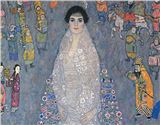
Realising a comprehensive exhibition with 20th and early 21st century portraits of women would no doubt represent an impossible task even for large international museums. Nevertheless, we have attempted to do justice to the many facets of this wide spectrum within the limited possibilities of a gallery exhibition. Deliberately refusing to approach the subject from the primacy of feminist criteria, opposition may be expected in accordance with the current standards of political correctness. However, social and ethical-moral changes can be discerned within the limited framework of our exhibition, as well.
The main gallery at Georgenstraße 15 is dominated by the classical media of sculpture, painting and drawing. The entrée comprises a selection of drawings from the first half of the 20th century. These are on loan from the Klüser collection and not for sale. Images of women by Henri Matisse, Constantin Brancusi, Kees van Dongen, Egon Schiele, Wilhelm Lehmbruck, August Rodin, George Grosz, Ernst Ludwig Kirchner and Alberto Giacometti are all shown.
Large-format paintings by Georg Baselitz, Alex Katz, David Salle and Ryan Mendoza are supplemented by a portrait of a woman by Andy Warhol. Various views on art and differing attitudes between American and European art are evident in the contributions by Georg Baselitz and Alex Katz in particular, and yet the two are linked by a common factor: their wives were the ever-recurring subjects of their painting for many decades.
The sculpture section comprises work by Tony Cragg, Stephan Balkenhol and Joseph Beuys; there are three early bronze works by the latter, shown in a glass display case. Joseph Beuys probably reflected on the differences between the sexes more intensively than all his artist contemporaries, making it into an influential component of his oeuvre. He saw the male side as more mind-driven, intellectual, and analytical – as a principle of coldness –, the female as revealing the quality of the emotions in e.g. sensitivity, intuition and creativity, as life-giving warmth. Since he regarded art and life as a single unit, the solution for him could only lie in a complementary symbiosis of both forms.
The variety of the works exhibited gives an insight into the differentiated perceptions of woman in the fine art of the past 100 years. Particular thanks are due to the artists Georg Baselitz, Stephan Balkenhol, Tony Cragg and Olaf Metzel for creating or selecting works especially for this exhibition.

Recommended for you


Realising a comprehensive exhibition with 20th and early 21st century portraits of women would no doubt represent an impossible task even for large international museums. Nevertheless, we have attempted to do justice to the many facets of this wide spectrum within the limited possibilities of a gallery exhibition. Deliberately refusing to approach the subject from the primacy of feminist criteria, opposition may be expected in accordance with the current standards of political correctness. However, social and ethical-moral changes can be discerned within the limited framework of our exhibition, as well.
The main gallery at Georgenstraße 15 is dominated by the classical media of sculpture, painting and drawing. The entrée comprises a selection of drawings from the first half of the 20th century. These are on loan from the Klüser collection and not for sale. Images of women by Henri Matisse, Constantin Brancusi, Kees van Dongen, Egon Schiele, Wilhelm Lehmbruck, August Rodin, George Grosz, Ernst Ludwig Kirchner and Alberto Giacometti are all shown.
Large-format paintings by Georg Baselitz, Alex Katz, David Salle and Ryan Mendoza are supplemented by a portrait of a woman by Andy Warhol. Various views on art and differing attitudes between American and European art are evident in the contributions by Georg Baselitz and Alex Katz in particular, and yet the two are linked by a common factor: their wives were the ever-recurring subjects of their painting for many decades.
The sculpture section comprises work by Tony Cragg, Stephan Balkenhol and Joseph Beuys; there are three early bronze works by the latter, shown in a glass display case. Joseph Beuys probably reflected on the differences between the sexes more intensively than all his artist contemporaries, making it into an influential component of his oeuvre. He saw the male side as more mind-driven, intellectual, and analytical – as a principle of coldness –, the female as revealing the quality of the emotions in e.g. sensitivity, intuition and creativity, as life-giving warmth. Since he regarded art and life as a single unit, the solution for him could only lie in a complementary symbiosis of both forms.
The variety of the works exhibited gives an insight into the differentiated perceptions of woman in the fine art of the past 100 years. Particular thanks are due to the artists Georg Baselitz, Stephan Balkenhol, Tony Cragg and Olaf Metzel for creating or selecting works especially for this exhibition.

What's on nearby