ARTISTS
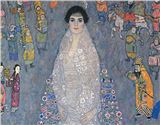
Hard Edged: Geometric Abstraction on Paper
Hard Edged: Geometric Abstraction on Paper presents eleven leading abstract painters from the second part of the twentieth century. The exhibition, from HoMA’s permanent collection of Western prints, includes artworks by artists Josef Albers, Bridget Riley, Victor Vasarely, and Ad Reinhardt.
The non-representational prints examine the relationship between shape, color, and perception. Evolving out of the Cubist dismantling of established conventions of form and space, geometric or “hard-edged” abstraction became one of the most significant and enduring pictorial languages in the last century.
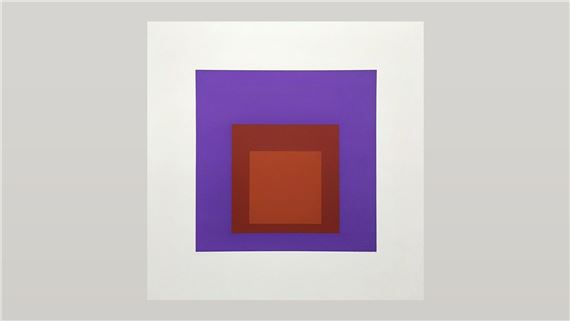
Reducing visual art to its simplest elements, such as geometric shapes and linear forms, the works refer to nothing outside themselves and make perception itself an intricate part of their experience. Albers’ Palatial from his “Homage to a Square: Soft Edge-Hard Edge” series, for example, uses color and shape to create the illusion of a flat surface that both recedes and hovers above the paper. Riley’s Flat Image and Vasarely’s Oeruen 6 use repeating shapes to create optical illusions that seem to move as the viewer moves, while Reinhardt’s Screenprint #1 challenges the limits of visual perception as purple rectangles emerge out of inky blacks.
Recommended for you


Hard Edged: Geometric Abstraction on Paper presents eleven leading abstract painters from the second part of the twentieth century. The exhibition, from HoMA’s permanent collection of Western prints, includes artworks by artists Josef Albers, Bridget Riley, Victor Vasarely, and Ad Reinhardt.
The non-representational prints examine the relationship between shape, color, and perception. Evolving out of the Cubist dismantling of established conventions of form and space, geometric or “hard-edged” abstraction became one of the most significant and enduring pictorial languages in the last century.
Reducing visual art to its simplest elements, such as geometric shapes and linear forms, the works refer to nothing outside themselves and make perception itself an intricate part of their experience. Albers’ Palatial from his “Homage to a Square: Soft Edge-Hard Edge” series, for example, uses color and shape to create the illusion of a flat surface that both recedes and hovers above the paper. Riley’s Flat Image and Vasarely’s Oeruen 6 use repeating shapes to create optical illusions that seem to move as the viewer moves, while Reinhardt’s Screenprint #1 challenges the limits of visual perception as purple rectangles emerge out of inky blacks.
Artists on show
Contact details

What's on nearby