ARTISTS
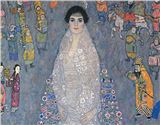
High Society
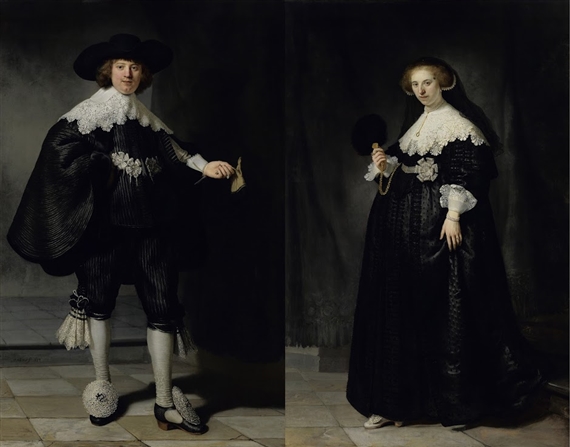
The highlight of the exhibition will be Rembrandt’s pendant portraits of Marten Soolmans and Oopjen Coppit. These spectacular portraits were painted to commemorate the couple’s marriage. This will be the first time since their restoration that they will be on view to the public. The exhibition features over 35 paintings from international museums and private collections in Paris, London, Florence, Vienna and Los Angeles.
Over the centuries, many powerful monarchs, eccentric aristocrats and fabulously wealthy burghers have commissioned portraits of themselves, arrayed in all their finery, from the best painters in the world. Preferably standing, life-size and full-length. The young Marten Soolmans and Oopjen Coppit are the only couple that Rembrandt ever painted life-size, standing and full-length (1634). This prestigious format was primarily reserved for monarchs and members of the aristocracy. It was not until some time later that it was used for high society in general.
In the exhibition, Rembrandt’s Marten and Oopjen are in very exclusive company. The others include mighty rulers, such as Charles V, the Holy Roman Emperor, ruler of the largest domain since the Roman Empire. There are also eccentric aristocrats like the Marchesa Luisa Casati, a femme fatale who was widely known for her extravagant parties. Or Jane Fleming, who, at that time, was considered to be one of the most beautiful women in England. Prominent burghers, such as the German politician Walther Rathenau (by Edvard Munch) and Dr Pozzi, a dandy, gynaecologist and notorious womanizer (by John Singer Sargent), also feature among the guests of honour in High Society.
Most of the subjects are very elegantly or extravagantly dressed, so the exhibition presents a snapshot of four centuries of international fashion: from the slashed breeches and doublet of 1514 to the haute couture of the late nineteenth century.
While the glamorous portraits present high society at its very best, there are more than 80 prints and drawings depicting – in explicit detail – events that often took place behind closed doors, such as parties, drinking, gambling and surreptitious visits to brothels and boudoirs. These drawings and prints are from the Rijksmuseum’s own collection.
Recommended for you


The highlight of the exhibition will be Rembrandt’s pendant portraits of Marten Soolmans and Oopjen Coppit. These spectacular portraits were painted to commemorate the couple’s marriage. This will be the first time since their restoration that they will be on view to the public. The exhibition features over 35 paintings from international museums and private collections in Paris, London, Florence, Vienna and Los Angeles.
Over the centuries, many powerful monarchs, eccentric aristocrats and fabulously wealthy burghers have commissioned portraits of themselves, arrayed in all their finery, from the best painters in the world. Preferably standing, life-size and full-length. The young Marten Soolmans and Oopjen Coppit are the only couple that Rembrandt ever painted life-size, standing and full-length (1634). This prestigious format was primarily reserved for monarchs and members of the aristocracy. It was not until some time later that it was used for high society in general.
In the exhibition, Rembrandt’s Marten and Oopjen are in very exclusive company. The others include mighty rulers, such as Charles V, the Holy Roman Emperor, ruler of the largest domain since the Roman Empire. There are also eccentric aristocrats like the Marchesa Luisa Casati, a femme fatale who was widely known for her extravagant parties. Or Jane Fleming, who, at that time, was considered to be one of the most beautiful women in England. Prominent burghers, such as the German politician Walther Rathenau (by Edvard Munch) and Dr Pozzi, a dandy, gynaecologist and notorious womanizer (by John Singer Sargent), also feature among the guests of honour in High Society.
Most of the subjects are very elegantly or extravagantly dressed, so the exhibition presents a snapshot of four centuries of international fashion: from the slashed breeches and doublet of 1514 to the haute couture of the late nineteenth century.
While the glamorous portraits present high society at its very best, there are more than 80 prints and drawings depicting – in explicit detail – events that often took place behind closed doors, such as parties, drinking, gambling and surreptitious visits to brothels and boudoirs. These drawings and prints are from the Rijksmuseum’s own collection.
Contact details

Related articles
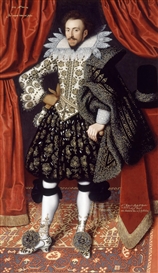
Lavish costumes and striking poses are on show at the Rijksmuseum’s exhibition of full-length portraits
What's on nearby