ARTISTS
History In The Making: Andy Warhol’s “Mao” Prints And William Gropper’s “Watergate Series”
This exhibition marks the 50th Anniversary of two landmark events of Richard M. Nixon’s presidency. In February 1972, Nixon became the first United States President to visit the People’s Republic of China, ending years of diplomatic isolation between the two nations. Later that same year, on June 17, five perpetrators connected to the Committee for the Re-election of the President broke into the Democratic National Committee headquarters at the Washington, D.C., Watergate Office Building, the coverup of which eventually led to Nixon’s resignation on August 9, 1974. The exhibition includes works by Andy Warhol and William Gropper drawn exclusively from the NSU Art Museum Fort Lauderdale’s collection.
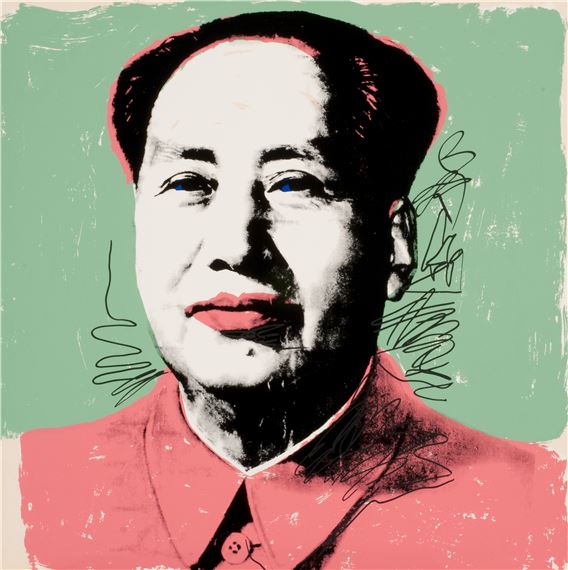
Pop artist Andy Warhol (1928-1987) began a series of ten vividly colored screenprints of Chairman Mao Zedong after President Nixon’s landmark visit to China in 1972. At the time, Mao, the Chairman of the Communist Party of China, was named the most famous man in the world by Life magazine (March 3, 1972). Mao played an important role in shaping this cult of personality, using mass media, propaganda spectacles, and political demonstrations to promote himself and his agenda. Photography was essential to Mao’s consolidation of power, where his portrait was broadly displayed and ever-present. For his Mao screenprints, Warhol used the photograph reproduced in the Chairman’s so-called Little Red Book (published from 1964 to about 1976), which compiled statements from his speeches and writings. This book was widely distributed during China’s Cultural Revolution (1966-1976), which aimed to impose Communist ideology by purging capitalism and elements of traditional Chinese society. Although Warhol was considered to be apolitical, this Mao series suggests his deeper involvement in politics.
Warhol was fascinated by the role mass media played in producing fame. Photographs were a powerful tool for creating Hollywood legends, such as Marilyn Monroe, Elvis Presley, and Elizabeth Taylor. The replication of photographic portraits and film stills were essential to the spread of a star’s fame. Warhol transformed publicity photographs or his own Polaroids of these stars into modern-day icons, by silkscreening their images onto his canvas. Warhol realized the potential of the democratization of fame, in which anyone could achieve “fifteen minutes of fame.” He also understood that fame is fleeting, and the identity of Elvis, Marilyn Monroe, Elizabeth Taylor, even Mao, might eventually be unfamiliar to future (and perhaps present) viewers of his work.
Recommended for you


This exhibition marks the 50th Anniversary of two landmark events of Richard M. Nixon’s presidency. In February 1972, Nixon became the first United States President to visit the People’s Republic of China, ending years of diplomatic isolation between the two nations. Later that same year, on June 17, five perpetrators connected to the Committee for the Re-election of the President broke into the Democratic National Committee headquarters at the Washington, D.C., Watergate Office Building, the coverup of which eventually led to Nixon’s resignation on August 9, 1974. The exhibition includes works by Andy Warhol and William Gropper drawn exclusively from the NSU Art Museum Fort Lauderdale’s collection.
Pop artist Andy Warhol (1928-1987) began a series of ten vividly colored screenprints of Chairman Mao Zedong after President Nixon’s landmark visit to China in 1972. At the time, Mao, the Chairman of the Communist Party of China, was named the most famous man in the world by Life magazine (March 3, 1972). Mao played an important role in shaping this cult of personality, using mass media, propaganda spectacles, and political demonstrations to promote himself and his agenda. Photography was essential to Mao’s consolidation of power, where his portrait was broadly displayed and ever-present. For his Mao screenprints, Warhol used the photograph reproduced in the Chairman’s so-called Little Red Book (published from 1964 to about 1976), which compiled statements from his speeches and writings. This book was widely distributed during China’s Cultural Revolution (1966-1976), which aimed to impose Communist ideology by purging capitalism and elements of traditional Chinese society. Although Warhol was considered to be apolitical, this Mao series suggests his deeper involvement in politics.
Warhol was fascinated by the role mass media played in producing fame. Photographs were a powerful tool for creating Hollywood legends, such as Marilyn Monroe, Elvis Presley, and Elizabeth Taylor. The replication of photographic portraits and film stills were essential to the spread of a star’s fame. Warhol transformed publicity photographs or his own Polaroids of these stars into modern-day icons, by silkscreening their images onto his canvas. Warhol realized the potential of the democratization of fame, in which anyone could achieve “fifteen minutes of fame.” He also understood that fame is fleeting, and the identity of Elvis, Marilyn Monroe, Elizabeth Taylor, even Mao, might eventually be unfamiliar to future (and perhaps present) viewers of his work.
Artists on show
Contact details

What's on nearby