ARTISTS
In the Footsteps of Rembrandt: The Etching Revival in Britain and America
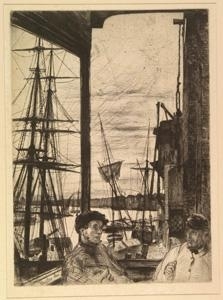
Possibly the finest etcher in Western European art, Rembrandt van Rijn (1606–1669) is well known for rich and subtle effects of light and form. Interest in his etchings grew during the mid 1800s, and helped to revive the practice throughout France, England and America. The leader of the British etching revival was an American working in London, James Abbott McNeill Whistler (1834–1903). A century ago, at the height of the revival, prices for etchings were significantly higher than today. The market was severely affected by the Depression and has only recently recovered.
This exhibition highlights examples of both etching and drypoint printmaking techniques. In etching, the artist cuts lines into a wax-covered metal plate with an etching needle. The plate is then bathed in acid, which bites into the exposed metal creating etched lines. Etching has the ability to create rich shadows and subtly graded tones, effects like those in expensive landscape paintings. A similar method is drypoint, in which lines are cut directly onto an unwaxed plate.
Recommended for you


Possibly the finest etcher in Western European art, Rembrandt van Rijn (1606–1669) is well known for rich and subtle effects of light and form. Interest in his etchings grew during the mid 1800s, and helped to revive the practice throughout France, England and America. The leader of the British etching revival was an American working in London, James Abbott McNeill Whistler (1834–1903). A century ago, at the height of the revival, prices for etchings were significantly higher than today. The market was severely affected by the Depression and has only recently recovered.
This exhibition highlights examples of both etching and drypoint printmaking techniques. In etching, the artist cuts lines into a wax-covered metal plate with an etching needle. The plate is then bathed in acid, which bites into the exposed metal creating etched lines. Etching has the ability to create rich shadows and subtly graded tones, effects like those in expensive landscape paintings. A similar method is drypoint, in which lines are cut directly onto an unwaxed plate.
Artists on show
Contact details

What's on nearby