ARTISTS

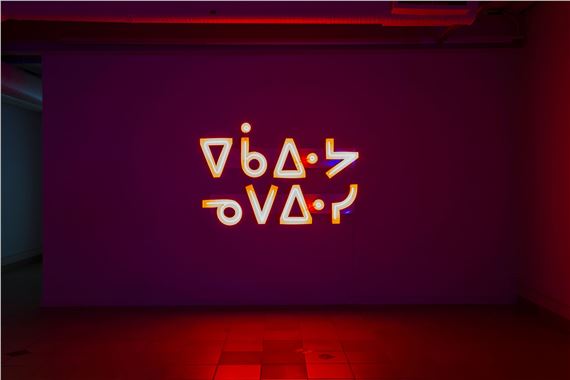
Joi T. Arcand: ᐯᐦᐯᔭᐠ ᐆᒥᓯ ᐃᓯ ᐁᐊᑎᐦᑌᑭ ᑕᑿᐦᐃᒥᓈᓇ (pêh-pêyak ômisi isi ê-atihtêki takwahiminâna)
Joi T. Arcand is an artist from Muskeg Lake Cree Nation, Saskatchewan, Treaty 6 Territory, currently residing in Ottawa, Ontario. Encompassing installation, photography, and design, her practice enacts a visionary and subversive reclamation and indigenization of public spaces using Cree language and syllabics. Installed at the end of the corridor outside Marquee Gallery on Level 3, the phrase ᐯᐦᐯᔭᐠ ᐆᒥᓯ ᐃᓯ ᐁᐊᑎᐦᑌᑭ ᑕᑿᐦᐃᒥᓈᓇ appears in cahkipēhikana (syllabics) as an LED channel sign, its bright glow beckoning visitors onward.
The phrase is drawn from the chapter “Reminiscences of Muskeg Lake” in kôhkominawak otâcimowiniwâwa / Our Grandmothers’ Lives as Told in Their Own Words, a collection of personal stories from the daily lives of seven nêhiyaw-iskwêwak (nêhiyaw women) spanning the past century. In a conversation between Alpha Lafond, Arcand’s great-aunt by marriage, and Rosa Longneck, Lafond recalls the words of her relative, Julia Arcand: “Just like this, as one by one the chokecherries are ripening.” The ripening of chokecherries in August marked both the passage of time and the cyclical return of the seasons. For the kôhkomwak (grandmothers), attentiveness to the land is itself a form of knowledge—nêhiyawîhtwȃwin, the Cree way—yet they note that chokecherries now ripen earlier, reflecting the effects of environmental change.
A language learner herself, Arcand describes nêhiyawêwin as present everywhere on the land, resonating through place names, plants, animals, and people. For her, working in these territories means engaging with language as an essential part of place. She sees the beauty of syllabics as a powerful entry point for learning more about the language and the history of its written form.
Recommended for you
Joi T. Arcand is an artist from Muskeg Lake Cree Nation, Saskatchewan, Treaty 6 Territory, currently residing in Ottawa, Ontario. Encompassing installation, photography, and design, her practice enacts a visionary and subversive reclamation and indigenization of public spaces using Cree language and syllabics. Installed at the end of the corridor outside Marquee Gallery on Level 3, the phrase ᐯᐦᐯᔭᐠ ᐆᒥᓯ ᐃᓯ ᐁᐊᑎᐦᑌᑭ ᑕᑿᐦᐃᒥᓈᓇ appears in cahkipēhikana (syllabics) as an LED channel sign, its bright glow beckoning visitors onward.
The phrase is drawn from the chapter “Reminiscences of Muskeg Lake” in kôhkominawak otâcimowiniwâwa / Our Grandmothers’ Lives as Told in Their Own Words, a collection of personal stories from the daily lives of seven nêhiyaw-iskwêwak (nêhiyaw women) spanning the past century. In a conversation between Alpha Lafond, Arcand’s great-aunt by marriage, and Rosa Longneck, Lafond recalls the words of her relative, Julia Arcand: “Just like this, as one by one the chokecherries are ripening.” The ripening of chokecherries in August marked both the passage of time and the cyclical return of the seasons. For the kôhkomwak (grandmothers), attentiveness to the land is itself a form of knowledge—nêhiyawîhtwȃwin, the Cree way—yet they note that chokecherries now ripen earlier, reflecting the effects of environmental change.
A language learner herself, Arcand describes nêhiyawêwin as present everywhere on the land, resonating through place names, plants, animals, and people. For her, working in these territories means engaging with language as an essential part of place. She sees the beauty of syllabics as a powerful entry point for learning more about the language and the history of its written form.
Artists on show
Contact details

Related articles
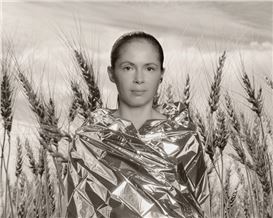
Remai Modern is presenting a new, multi-year project that convenes a group of artists with diverse practices living and working across the northern hemisphere, from urban centres to remote, rural, and reserve communities.
What's on nearby