ARTISTS







Kāi Tahu and Anne Noble: Unutai e! Unutai e!
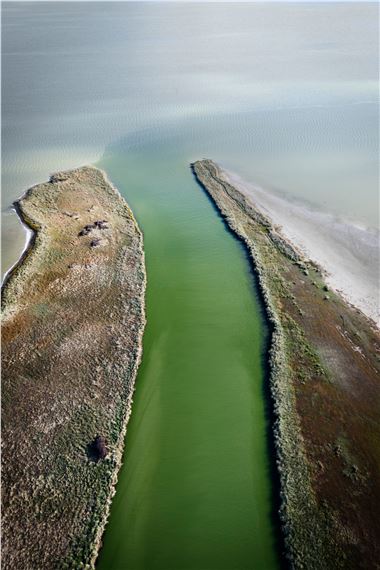
Unutai e! Unutai e! harnesses the power of contemporary art to shed light on an urgent environmental crisis: the deteriorating state of fresh water across the Ngāi Tahu takiwā.
In 2020, Ngāi Tahu filed a statement of claim with the High Court in Ōtautahi Christchurch, seeking recognition of our rakatirataka (authority) over wai māori (fresh water) within our takiwā (territory). To support this claim, Te Kura Taka Pini, the division of Te Rūnanga o Ngāi Tahu responsible for the case, enlisted photographer Anne Noble to capture and document the crisis. Her role was to provide an impartial perspective—capturing our people in their chosen waterbodies while also revealing the widespread environmental degradation we witness daily across Te Waipounamu. What began as a photographic assignment evolved into an extensive visual archive, illustrating not only the devastation but also the resilience of whānau, hapū, and iwi striving to restore wai māori, uphold rakatirataka, and protect mahika kai practices.
These practices are integral to Ngāi Tahu identity and survival. They compel us to ask the existential question: Who are we when we can no longer feed our manuhiri (guests) with the kai for which we are renowned?
Recommended for you

Unutai e! Unutai e! harnesses the power of contemporary art to shed light on an urgent environmental crisis: the deteriorating state of fresh water across the Ngāi Tahu takiwā.
In 2020, Ngāi Tahu filed a statement of claim with the High Court in Ōtautahi Christchurch, seeking recognition of our rakatirataka (authority) over wai māori (fresh water) within our takiwā (territory). To support this claim, Te Kura Taka Pini, the division of Te Rūnanga o Ngāi Tahu responsible for the case, enlisted photographer Anne Noble to capture and document the crisis. Her role was to provide an impartial perspective—capturing our people in their chosen waterbodies while also revealing the widespread environmental degradation we witness daily across Te Waipounamu. What began as a photographic assignment evolved into an extensive visual archive, illustrating not only the devastation but also the resilience of whānau, hapū, and iwi striving to restore wai māori, uphold rakatirataka, and protect mahika kai practices.
These practices are integral to Ngāi Tahu identity and survival. They compel us to ask the existential question: Who are we when we can no longer feed our manuhiri (guests) with the kai for which we are renowned?
Artists on show
Contact details

What's on nearby