ARTISTS
LUDWIG GOES POP
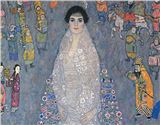
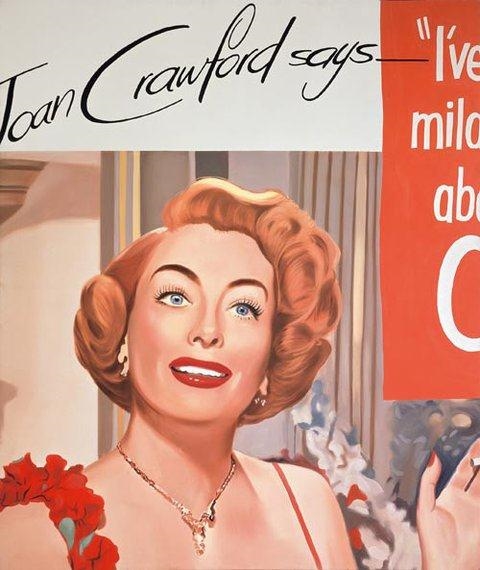
The exhibition LUDWIG GOES POP offers an opportunity to explore this phenomenon and to comprehend Pop Art as an expression of a modern attitude toward life. In the 1960s the “everyday” had arrived—it had made its way into art: in all manner of play, from humorously ironic to biting and critical, artists explored the Zeitgeist in their art, integrated fragments and quotes from the world of consumerism and advertising, comics, science, technology, erotic, and mass media.
Thanks to Peter and Irene Ludwig, the Museum Ludwig in Cologne holds one of the internationally most significant collections of American as well as British Pop Art. In addition to the Cologne holdings, other parts of this collection are preserved at the mumok in Vienna, the Ludwig Forum in Aachen, and the Kunstmuseum Basel, as well as at the Ludwig museums in Budapest, Koblenz, St. Petersburg, and Beijing.
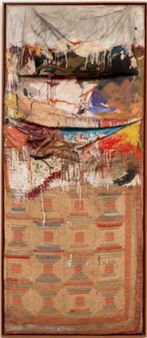
When Peter Ludwig first encountered a Pop Art sculpture by George Segal at MoMA in the mid- 1960s, the collector, who together with his wife had up to then collected chiefly antique and medieval art, was shocked. Shortly thereafter, however, both became enthusiastic collectors of these then-current works. Tom Wesselman’s Landscape No. 4, featuring a Ford driving through a country road in the mountains, was among the first purchases; soon followed key works by Roy Lichtenstein, James Rosenquist, Robert Rauschenberg, and Jasper Johns. These artists belonged to the same generation as the Ludwigs; they represented modern life, and the couple visited many of them directly in their studios.
Many works came to Ludwig from the renowned Scull and Kraushaar collections, a few derived from the holdings of the Darmstadt Wella manufacturer Karl Ströher, who had bought New York insurance salesman Leon Kraushar’s pop collection. In 1968, following documenta 4, the Ludwigs bought works directly from the exhibition, including M-Maybe—A Girl’s Picture by Roy Lichtenstein, Claes Oldenburg’s Soft Washstand, Rauschenberg’s Wall Street, George Segal’s Restaurant Window I, and Richard Lindner’s Leopard Lilly. The following year the Ludwigs presented their collection for the first time in Cologne, at the then Wallraf-Richartz Museum. The media and public responded enthusiastically to the exhibition, and it attracted around 200,000 visitors. Consequently Pop Art became the Museum Ludwig’s signature tune.
Recommended for you


The exhibition LUDWIG GOES POP offers an opportunity to explore this phenomenon and to comprehend Pop Art as an expression of a modern attitude toward life. In the 1960s the “everyday” had arrived—it had made its way into art: in all manner of play, from humorously ironic to biting and critical, artists explored the Zeitgeist in their art, integrated fragments and quotes from the world of consumerism and advertising, comics, science, technology, erotic, and mass media.
Thanks to Peter and Irene Ludwig, the Museum Ludwig in Cologne holds one of the internationally most significant collections of American as well as British Pop Art. In addition to the Cologne holdings, other parts of this collection are preserved at the mumok in Vienna, the Ludwig Forum in Aachen, and the Kunstmuseum Basel, as well as at the Ludwig museums in Budapest, Koblenz, St. Petersburg, and Beijing.
When Peter Ludwig first encountered a Pop Art sculpture by George Segal at MoMA in the mid- 1960s, the collector, who together with his wife had up to then collected chiefly antique and medieval art, was shocked. Shortly thereafter, however, both became enthusiastic collectors of these then-current works. Tom Wesselman’s Landscape No. 4, featuring a Ford driving through a country road in the mountains, was among the first purchases; soon followed key works by Roy Lichtenstein, James Rosenquist, Robert Rauschenberg, and Jasper Johns. These artists belonged to the same generation as the Ludwigs; they represented modern life, and the couple visited many of them directly in their studios.
Many works came to Ludwig from the renowned Scull and Kraushaar collections, a few derived from the holdings of the Darmstadt Wella manufacturer Karl Ströher, who had bought New York insurance salesman Leon Kraushar’s pop collection. In 1968, following documenta 4, the Ludwigs bought works directly from the exhibition, including M-Maybe—A Girl’s Picture by Roy Lichtenstein, Claes Oldenburg’s Soft Washstand, Rauschenberg’s Wall Street, George Segal’s Restaurant Window I, and Richard Lindner’s Leopard Lilly. The following year the Ludwigs presented their collection for the first time in Cologne, at the then Wallraf-Richartz Museum. The media and public responded enthusiastically to the exhibition, and it attracted around 200,000 visitors. Consequently Pop Art became the Museum Ludwig’s signature tune.
Artists on show
Contact details

What's on nearby