
 ARTISTS


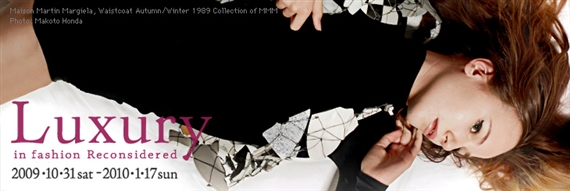
Luxury in Fashion Reconsidered
Oct 31, 2009 - Jan 17, 2010
The word “luxury” denotes a richness that derives from excess—an item gorgeous to behold, our special feelings when wearing such an item, our psychological satisfaction at its high refinement. Today, we know lives of material plenty as a result of industrial development. We also face the hard challenges of the global problems our materialistic way of life has created. In these circumstances, our views of luxury, as a manifestation of the richness we desire, are changing dramatically. This exhibition examines our changing times and values from the perspective of luxury, through fashion—a field that sensitively reflects human desire and the trends of society. Featured are some 100 fashion creations dating from the 17th century to current times, carefully selected from multiple perspectives and representing everything from visual luxury to a more personal, intellectual luxury, closer to the spirit of play.
[List of Brands or Artists] Balenciaga / Beer / Chanel / Christian Dior / Comme des Garçons / Courréges / Grés / Issey Miyake / Lanvin / Louis Vuitton / Madeleine Vionnet / Maison Martin Margiela / Paul Poiret / Pierre Cardin / Roy Lichtenstein / Schiaparelli / Thierry Mugler Viktor & Rolf / Worth / Yves Saint Laurent
[Exhibition Outline] Ostentation Pascal declared, "to be spruce is to show one's power." One of the aims of clothing is to flaunt wealth and power. The act of adorning oneself with rare and costly materials arguably represents this eternal human desire, while history has proven that this insatiable passion for adornment has supported and nurtured craftsmen and stimulated the arts and industry. "Ostentation," the theme of this section, focuses on garments featuring a lavish use of gold and silver thread, and sumptuous dresses representing hundreds of hours of labor and handiwork.
Less is more Although people in the past tended to favor clothing that was showy and glamorous, the tendency in the modern age has been to avoid excessive glamour, and instead to prefer simplicity. This tendency has been particularly pronounced with the current and strong demand for comfort and function in design. However, garments that are simple and yet make the wearer appear beautiful require designs that create shape, the appropriate fabrics, and outstanding skills on the part of the creator. This section showcases haute couture, the epitome of simplified design, quality, and exquisite craftsmanship as seen in Chanel's functional ensembles and Balenciaga's architectural dresses. Main exhibits: Paul Poiret (1910-1920s), Chanel, Madeleine Vionnet (1920-1930s), Gr_s, Christian Dior, Balenciaga, and Courr_ges (1940-1960s), Yves Saint Laurent, Issey Miyake (1980-90s), Lanvin (Alber Elbaz) (2000-)
Clothes are free-spirited A Tokyo Culture Creation Project Luxury in fashion Reconsidered: Special Exhibit Kazuyo Sejima Spatial Design for Comme des Garçons Luxury is not simply about material and financial wealth. A designer attempts to create a garment that has never been seen before. A wearer encounters that garment, and becomes the receptor of the passion that the designer has directed into that garment. The intense relationship that is generated between the designer and the wearer that surrounds the act of "wearing" is a form of "mental" luxury.
[List of Brands or Artists] Balenciaga / Beer / Chanel / Christian Dior / Comme des Garçons / Courréges / Grés / Issey Miyake / Lanvin / Louis Vuitton / Madeleine Vionnet / Maison Martin Margiela / Paul Poiret / Pierre Cardin / Roy Lichtenstein / Schiaparelli / Thierry Mugler Viktor & Rolf / Worth / Yves Saint Laurent
[Exhibition Outline] Ostentation Pascal declared, "to be spruce is to show one's power." One of the aims of clothing is to flaunt wealth and power. The act of adorning oneself with rare and costly materials arguably represents this eternal human desire, while history has proven that this insatiable passion for adornment has supported and nurtured craftsmen and stimulated the arts and industry. "Ostentation," the theme of this section, focuses on garments featuring a lavish use of gold and silver thread, and sumptuous dresses representing hundreds of hours of labor and handiwork.
Less is more Although people in the past tended to favor clothing that was showy and glamorous, the tendency in the modern age has been to avoid excessive glamour, and instead to prefer simplicity. This tendency has been particularly pronounced with the current and strong demand for comfort and function in design. However, garments that are simple and yet make the wearer appear beautiful require designs that create shape, the appropriate fabrics, and outstanding skills on the part of the creator. This section showcases haute couture, the epitome of simplified design, quality, and exquisite craftsmanship as seen in Chanel's functional ensembles and Balenciaga's architectural dresses. Main exhibits: Paul Poiret (1910-1920s), Chanel, Madeleine Vionnet (1920-1930s), Gr_s, Christian Dior, Balenciaga, and Courr_ges (1940-1960s), Yves Saint Laurent, Issey Miyake (1980-90s), Lanvin (Alber Elbaz) (2000-)
Clothes are free-spirited A Tokyo Culture Creation Project Luxury in fashion Reconsidered: Special Exhibit Kazuyo Sejima Spatial Design for Comme des Garçons Luxury is not simply about material and financial wealth. A designer attempts to create a garment that has never been seen before. A wearer encounters that garment, and becomes the receptor of the passion that the designer has directed into that garment. The intense relationship that is generated between the designer and the wearer that surrounds the act of "wearing" is a form of "mental" luxury.
Recommended for you

Jul 07, 2017
- Jun 05, 2027

May 01, 2022
- Jun 01, 2050


The word “luxury” denotes a richness that derives from excess—an item gorgeous to behold, our special feelings when wearing such an item, our psychological satisfaction at its high refinement. Today, we know lives of material plenty as a result of industrial development. We also face the hard challenges of the global problems our materialistic way of life has created. In these circumstances, our views of luxury, as a manifestation of the richness we desire, are changing dramatically. This exhibition examines our changing times and values from the perspective of luxury, through fashion—a field that sensitively reflects human desire and the trends of society. Featured are some 100 fashion creations dating from the 17th century to current times, carefully selected from multiple perspectives and representing everything from visual luxury to a more personal, intellectual luxury, closer to the spirit of play.
[List of Brands or Artists] Balenciaga / Beer / Chanel / Christian Dior / Comme des Garçons / Courréges / Grés / Issey Miyake / Lanvin / Louis Vuitton / Madeleine Vionnet / Maison Martin Margiela / Paul Poiret / Pierre Cardin / Roy Lichtenstein / Schiaparelli / Thierry Mugler Viktor & Rolf / Worth / Yves Saint Laurent
[Exhibition Outline] Ostentation Pascal declared, "to be spruce is to show one's power." One of the aims of clothing is to flaunt wealth and power. The act of adorning oneself with rare and costly materials arguably represents this eternal human desire, while history has proven that this insatiable passion for adornment has supported and nurtured craftsmen and stimulated the arts and industry. "Ostentation," the theme of this section, focuses on garments featuring a lavish use of gold and silver thread, and sumptuous dresses representing hundreds of hours of labor and handiwork.
Less is more Although people in the past tended to favor clothing that was showy and glamorous, the tendency in the modern age has been to avoid excessive glamour, and instead to prefer simplicity. This tendency has been particularly pronounced with the current and strong demand for comfort and function in design. However, garments that are simple and yet make the wearer appear beautiful require designs that create shape, the appropriate fabrics, and outstanding skills on the part of the creator. This section showcases haute couture, the epitome of simplified design, quality, and exquisite craftsmanship as seen in Chanel's functional ensembles and Balenciaga's architectural dresses. Main exhibits: Paul Poiret (1910-1920s), Chanel, Madeleine Vionnet (1920-1930s), Gr_s, Christian Dior, Balenciaga, and Courr_ges (1940-1960s), Yves Saint Laurent, Issey Miyake (1980-90s), Lanvin (Alber Elbaz) (2000-)
Clothes are free-spirited A Tokyo Culture Creation Project Luxury in fashion Reconsidered: Special Exhibit Kazuyo Sejima Spatial Design for Comme des Garçons Luxury is not simply about material and financial wealth. A designer attempts to create a garment that has never been seen before. A wearer encounters that garment, and becomes the receptor of the passion that the designer has directed into that garment. The intense relationship that is generated between the designer and the wearer that surrounds the act of "wearing" is a form of "mental" luxury.
[List of Brands or Artists] Balenciaga / Beer / Chanel / Christian Dior / Comme des Garçons / Courréges / Grés / Issey Miyake / Lanvin / Louis Vuitton / Madeleine Vionnet / Maison Martin Margiela / Paul Poiret / Pierre Cardin / Roy Lichtenstein / Schiaparelli / Thierry Mugler Viktor & Rolf / Worth / Yves Saint Laurent
[Exhibition Outline] Ostentation Pascal declared, "to be spruce is to show one's power." One of the aims of clothing is to flaunt wealth and power. The act of adorning oneself with rare and costly materials arguably represents this eternal human desire, while history has proven that this insatiable passion for adornment has supported and nurtured craftsmen and stimulated the arts and industry. "Ostentation," the theme of this section, focuses on garments featuring a lavish use of gold and silver thread, and sumptuous dresses representing hundreds of hours of labor and handiwork.
Less is more Although people in the past tended to favor clothing that was showy and glamorous, the tendency in the modern age has been to avoid excessive glamour, and instead to prefer simplicity. This tendency has been particularly pronounced with the current and strong demand for comfort and function in design. However, garments that are simple and yet make the wearer appear beautiful require designs that create shape, the appropriate fabrics, and outstanding skills on the part of the creator. This section showcases haute couture, the epitome of simplified design, quality, and exquisite craftsmanship as seen in Chanel's functional ensembles and Balenciaga's architectural dresses. Main exhibits: Paul Poiret (1910-1920s), Chanel, Madeleine Vionnet (1920-1930s), Gr_s, Christian Dior, Balenciaga, and Courr_ges (1940-1960s), Yves Saint Laurent, Issey Miyake (1980-90s), Lanvin (Alber Elbaz) (2000-)
Clothes are free-spirited A Tokyo Culture Creation Project Luxury in fashion Reconsidered: Special Exhibit Kazuyo Sejima Spatial Design for Comme des Garçons Luxury is not simply about material and financial wealth. A designer attempts to create a garment that has never been seen before. A wearer encounters that garment, and becomes the receptor of the passion that the designer has directed into that garment. The intense relationship that is generated between the designer and the wearer that surrounds the act of "wearing" is a form of "mental" luxury.
Contact details
Sunday
10:00 AM - 5:30 PM
4-1-1 Miyoshi
Toritsu Kiba-koen Koto-ku - Tokyo, Japan 135-0022

What's on nearby
Dec 25, 2025
- Apr 02, 2026
Dec 25, 2025
- Mar 29, 2026
Dec 25, 2025
- Mar 29, 2026
