
 ARTISTS

Mackintosh to Lichtenstein: Design Landmarks in the History of the Poster
Jan 31, 2012 - Mar 16, 2012
From January 31 to March 16, 2012, the Reinhold-Brown Gallery will exhibit rare masterworks in the history of poster design that present a concise but revealing overview of the evolution and major manifestations in the history of the poster medium. Nearly all the works on display are either unique in the world or of extreme rarity. In every instance each represents the pinnacle of achievement in its genre, be it Art Nouveau, Vienna Secession, Art Deco, Russian Constructivism, avant-garde typography and photomontage, or Pop Art.
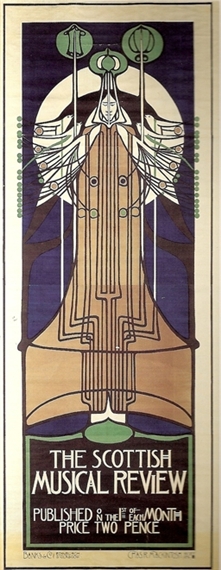
Among the works on view are one of the earliest and most influential examples of modern design, Charles Rennie Mackintosh’s poster for “The Scottish Musical Review” (1896); two original, unpublished designs for posters by Josef Hoffmann and Koloman Moser for the opening of the first Wiener Werkstätte showroom in 1905; the quintessential Russian Constructivist photomontage poster by Nikolas Prusakov for the film “Khaz Push”; an innovative typographic poster from 1928 by the Bauhaus-trained graphic designer Theo Ballmer; masterpieces by the three greatest Art Deco poster designers A.M. Cassandre, Charles Loupot and Jean Carlu; two Swiss typographic-Neo-Constructivist posters by the Brazilian-born painter Mary Viera and the great Swiss graphic designer Joseph Mueller-Brockmann; the rare, signed letterpress poster that Claes Oldenburg designed to advertise his legendary 1961 shop and installation called “The Store”; and a signed, limited-edition poster printed on foil by Roy Lichtenstein for the 1966 New York Film Festival.
Among the works on view are one of the earliest and most influential examples of modern design, Charles Rennie Mackintosh’s poster for “The Scottish Musical Review” (1896); two original, unpublished designs for posters by Josef Hoffmann and Koloman Moser for the opening of the first Wiener Werkstätte showroom in 1905; the quintessential Russian Constructivist photomontage poster by Nikolas Prusakov for the film “Khaz Push”; an innovative typographic poster from 1928 by the Bauhaus-trained graphic designer Theo Ballmer; masterpieces by the three greatest Art Deco poster designers A.M. Cassandre, Charles Loupot and Jean Carlu; two Swiss typographic-Neo-Constructivist posters by the Brazilian-born painter Mary Viera and the great Swiss graphic designer Joseph Mueller-Brockmann; the rare, signed letterpress poster that Claes Oldenburg designed to advertise his legendary 1961 shop and installation called “The Store”; and a signed, limited-edition poster printed on foil by Roy Lichtenstein for the 1966 New York Film Festival.
Recommended for you

Jul 07, 2017
- Jun 05, 2027

May 01, 2022
- Jun 01, 2050

From January 31 to March 16, 2012, the Reinhold-Brown Gallery will exhibit rare masterworks in the history of poster design that present a concise but revealing overview of the evolution and major manifestations in the history of the poster medium. Nearly all the works on display are either unique in the world or of extreme rarity. In every instance each represents the pinnacle of achievement in its genre, be it Art Nouveau, Vienna Secession, Art Deco, Russian Constructivism, avant-garde typography and photomontage, or Pop Art.
Among the works on view are one of the earliest and most influential examples of modern design, Charles Rennie Mackintosh’s poster for “The Scottish Musical Review” (1896); two original, unpublished designs for posters by Josef Hoffmann and Koloman Moser for the opening of the first Wiener Werkstätte showroom in 1905; the quintessential Russian Constructivist photomontage poster by Nikolas Prusakov for the film “Khaz Push”; an innovative typographic poster from 1928 by the Bauhaus-trained graphic designer Theo Ballmer; masterpieces by the three greatest Art Deco poster designers A.M. Cassandre, Charles Loupot and Jean Carlu; two Swiss typographic-Neo-Constructivist posters by the Brazilian-born painter Mary Viera and the great Swiss graphic designer Joseph Mueller-Brockmann; the rare, signed letterpress poster that Claes Oldenburg designed to advertise his legendary 1961 shop and installation called “The Store”; and a signed, limited-edition poster printed on foil by Roy Lichtenstein for the 1966 New York Film Festival.
Among the works on view are one of the earliest and most influential examples of modern design, Charles Rennie Mackintosh’s poster for “The Scottish Musical Review” (1896); two original, unpublished designs for posters by Josef Hoffmann and Koloman Moser for the opening of the first Wiener Werkstätte showroom in 1905; the quintessential Russian Constructivist photomontage poster by Nikolas Prusakov for the film “Khaz Push”; an innovative typographic poster from 1928 by the Bauhaus-trained graphic designer Theo Ballmer; masterpieces by the three greatest Art Deco poster designers A.M. Cassandre, Charles Loupot and Jean Carlu; two Swiss typographic-Neo-Constructivist posters by the Brazilian-born painter Mary Viera and the great Swiss graphic designer Joseph Mueller-Brockmann; the rare, signed letterpress poster that Claes Oldenburg designed to advertise his legendary 1961 shop and installation called “The Store”; and a signed, limited-edition poster printed on foil by Roy Lichtenstein for the 1966 New York Film Festival.
Contact details
Tuesday - Saturday
10:30 AM - 5:00 PM
960 Madison Avenue Upper East Side - New York, NY, USA 10021

What's on nearby
Dec 11, 2025
- May 12, 2026
Apr 18, 2025
- Jan 18, 2026
Oct 09, 2025
- Jan 12, 2026
