
 ARTISTS

Matisse: Metamorfosi
Henri Matisse was one of the greatest artists of the twentieth century, although paradoxically an important part of his work is still overlooked. Indeed, Matisse the sculptor is little known in the subtlest folds of his research. Although painting always remained his main mode of expression, “his” language and way of investigating the visible to which he dedicated his entire life, Matisse simultaneously conducted a reflection on sculpture (and also engraving) that makes him one of the most complete artists of the last century. Highly versatile, he explored various techniques at the same time, with curiosity and penetrating experimentation. Against the backdrop of this multifaceted intelligence, Matisse’s sculptural work reveals a parallel life to that of the colourist, a double soul devoted to matter, volume and space, which deserves to be placed in relation – in terms of processes and goals – to that of other great twentieth-century sculptors, who learned from Auguste Rodin and became geniuses of the avant-garde. From Brancusi to Giacometti, Boccioni and Wotruba.
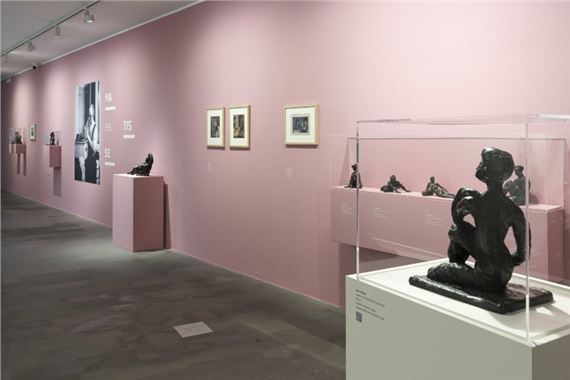
For the first time in Italy, the Museo MAN is dedicating an exhibition to sculptures by Henri Matisse. The exhibition project, curated by Chiara Gatti, reinterprets the unprecedented and complex concept of the Matisse Métamorphoses exhibition staged in 2019 by the Kunsthaus in Zurich and the Musée Matisse in Nice, adapting it to the spaces of the Sardinian museum. This is a project that will lead us to rethink Matisse, to reconsider the role of his work within the art scene of the first half of the twentieth century, in the light of more extensive aesthetic research that sees sculpture as the vehicle for new and revolutionary formal solutions. Within this necessary exploration, the human figure particularly emerges as the main theme of his interest in synthesis. From his investigation of the body, posture, gesture and physiognomy, Matisse developed a process of geometrically reducing the image, leading him towards an abstraction bordering the radical. As the artist himself affirmed in 1908 in his Notes d’un peintre: “what I am most interested in is not the still life or the landscape, but the figure.” The figure, not for its pathos, lyricism, moods or existential inflections, but for its sense of presence in space and its ideal evolution in time. Indeed, Matisse questioned the body’s relationship with the immediate environment and with changing circumstances over an extended period of time. Here then is the evolution of a naturalistic factor into a final synthesis that sublimates contingency into a dimension of absolute perfection. In its turn, space conditions a system of subtle relationships between physical substance and inhabited void, between gestures and the dynamic lines they draw in the air.
Recommended for you


Henri Matisse was one of the greatest artists of the twentieth century, although paradoxically an important part of his work is still overlooked. Indeed, Matisse the sculptor is little known in the subtlest folds of his research. Although painting always remained his main mode of expression, “his” language and way of investigating the visible to which he dedicated his entire life, Matisse simultaneously conducted a reflection on sculpture (and also engraving) that makes him one of the most complete artists of the last century. Highly versatile, he explored various techniques at the same time, with curiosity and penetrating experimentation. Against the backdrop of this multifaceted intelligence, Matisse’s sculptural work reveals a parallel life to that of the colourist, a double soul devoted to matter, volume and space, which deserves to be placed in relation – in terms of processes and goals – to that of other great twentieth-century sculptors, who learned from Auguste Rodin and became geniuses of the avant-garde. From Brancusi to Giacometti, Boccioni and Wotruba.
For the first time in Italy, the Museo MAN is dedicating an exhibition to sculptures by Henri Matisse. The exhibition project, curated by Chiara Gatti, reinterprets the unprecedented and complex concept of the Matisse Métamorphoses exhibition staged in 2019 by the Kunsthaus in Zurich and the Musée Matisse in Nice, adapting it to the spaces of the Sardinian museum. This is a project that will lead us to rethink Matisse, to reconsider the role of his work within the art scene of the first half of the twentieth century, in the light of more extensive aesthetic research that sees sculpture as the vehicle for new and revolutionary formal solutions. Within this necessary exploration, the human figure particularly emerges as the main theme of his interest in synthesis. From his investigation of the body, posture, gesture and physiognomy, Matisse developed a process of geometrically reducing the image, leading him towards an abstraction bordering the radical. As the artist himself affirmed in 1908 in his Notes d’un peintre: “what I am most interested in is not the still life or the landscape, but the figure.” The figure, not for its pathos, lyricism, moods or existential inflections, but for its sense of presence in space and its ideal evolution in time. Indeed, Matisse questioned the body’s relationship with the immediate environment and with changing circumstances over an extended period of time. Here then is the evolution of a naturalistic factor into a final synthesis that sublimates contingency into a dimension of absolute perfection. In its turn, space conditions a system of subtle relationships between physical substance and inhabited void, between gestures and the dynamic lines they draw in the air.
Artists on show

