ARTISTS
Monet and the Impressionist Revolution, 1860–1910
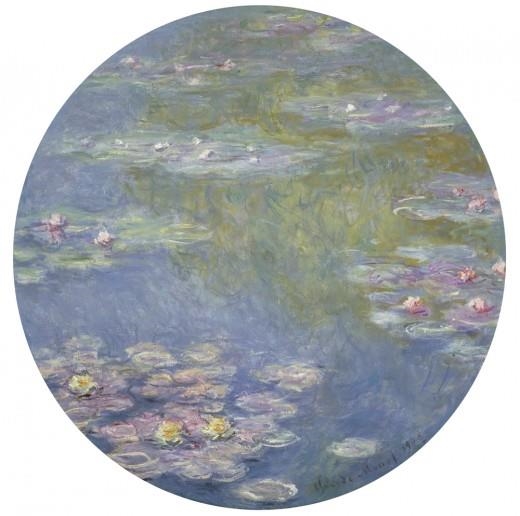
With broad strokes, Monet and the Impressionist Revolution, 1860–1910 highlights the transformation of Claude Monet's (French, 1840–1926) visual practice. He brought painting to the brink of abstraction, but on no occasion crossed over into completely nonrepresentational imagery. One of the founders of French Impressionism, Monet painted outside en plein air (in the open air), where he refined his use of color to reveal the ambiance of natural light. Monet worked alongside artists including Pierre-Auguste Renoir (French, 1841–1919), Édouard Manet (French, 1832–1883), Camille Pissarro (French, 1831–1903), and Alfred Sisley (British, born France, 1839–1899), while leading and serving as an inspirational figure within the movement. Using visible brushstrokes and developing open compositions, the Impressionists were the pioneers of “action painting” long before the time of Abstract Expressionism in the mid-twentieth century.
Monet embraced the unpredictability of nature. With this, he broke away from linear perspective, refined forms, and other techniques associated with the synthesized style of academic painting. Instead, he experimented with the introduction of bold pigments, a looser handling of paint, and an emphasis on the interplay of color and light. In this exhibition, the evolution of Monet’s ingenuity is presented alongside a similar trajectory of works from the Albright-Knox’s Collection of modern art. Spanning five decades—from the heyday of Realism in Western art in the 1860s toward the landfall of abstract painting in the early part of the 1900s—Monet’s works are considered alongside those of other contemporary rebels.
The impetus behind Monet and the Impressionist Revolution arose in midwinter 2015. The museum decided, as part of an unexpected reciprocal loan arrangement, to mount a small spotlight presentation dedicated to Monet within a larger body of synchronous artists’ works from the museum’s Collection. While the Albright-Knox is home to myriad late-nineteenth-century masterpieces, it owns only one painting by Monet—Chemin de Halage à Argenteuil (Towpath at Argenteuil, Winter)—a delightful river scene painted on the banks of the Seine in Argenteuil, France, around 1875. Ultimately, the loan of seven additional paintings by Monet and one by Manet (an artist who is not significantly represented in the museum’s Collection) from six American museums came to fruition, and serve as the exhibition’s basis. These important loans allow for a contemplative space within the exhibition dedicated solely to the course of Monet's practice from the mid-1860s to circa 1910. Together, they are framed by the work of artists such as Eugène Boudin (French, 1824–1898), Gustave Caillebotte (French, 1848–1894), Paul Cézanne (French, 1839–1906), Gustave Courbet (French, 1819–1877), Charles François Daubigny (French, 1817–1878), Edgar Degas (French, 1834–1917), Berthe Morisot (French, 1841–1895), Pissarro, Renoir, and Sisley, as well as post-Impressionist masters André Derain (French, 1880–1954), Raoul Dufy (French, 1877–1953), Paul Gauguin (French, 1848–1903), Henri Matisse (French, 1869–1954), Georges Seurat (French, 1859–1891), Vincent van Gogh (Dutch, 1853–1890), and Édouard Vuillard (French, 1868–1940).
Recommended for you


With broad strokes, Monet and the Impressionist Revolution, 1860–1910 highlights the transformation of Claude Monet's (French, 1840–1926) visual practice. He brought painting to the brink of abstraction, but on no occasion crossed over into completely nonrepresentational imagery. One of the founders of French Impressionism, Monet painted outside en plein air (in the open air), where he refined his use of color to reveal the ambiance of natural light. Monet worked alongside artists including Pierre-Auguste Renoir (French, 1841–1919), Édouard Manet (French, 1832–1883), Camille Pissarro (French, 1831–1903), and Alfred Sisley (British, born France, 1839–1899), while leading and serving as an inspirational figure within the movement. Using visible brushstrokes and developing open compositions, the Impressionists were the pioneers of “action painting” long before the time of Abstract Expressionism in the mid-twentieth century.
Monet embraced the unpredictability of nature. With this, he broke away from linear perspective, refined forms, and other techniques associated with the synthesized style of academic painting. Instead, he experimented with the introduction of bold pigments, a looser handling of paint, and an emphasis on the interplay of color and light. In this exhibition, the evolution of Monet’s ingenuity is presented alongside a similar trajectory of works from the Albright-Knox’s Collection of modern art. Spanning five decades—from the heyday of Realism in Western art in the 1860s toward the landfall of abstract painting in the early part of the 1900s—Monet’s works are considered alongside those of other contemporary rebels.
The impetus behind Monet and the Impressionist Revolution arose in midwinter 2015. The museum decided, as part of an unexpected reciprocal loan arrangement, to mount a small spotlight presentation dedicated to Monet within a larger body of synchronous artists’ works from the museum’s Collection. While the Albright-Knox is home to myriad late-nineteenth-century masterpieces, it owns only one painting by Monet—Chemin de Halage à Argenteuil (Towpath at Argenteuil, Winter)—a delightful river scene painted on the banks of the Seine in Argenteuil, France, around 1875. Ultimately, the loan of seven additional paintings by Monet and one by Manet (an artist who is not significantly represented in the museum’s Collection) from six American museums came to fruition, and serve as the exhibition’s basis. These important loans allow for a contemplative space within the exhibition dedicated solely to the course of Monet's practice from the mid-1860s to circa 1910. Together, they are framed by the work of artists such as Eugène Boudin (French, 1824–1898), Gustave Caillebotte (French, 1848–1894), Paul Cézanne (French, 1839–1906), Gustave Courbet (French, 1819–1877), Charles François Daubigny (French, 1817–1878), Edgar Degas (French, 1834–1917), Berthe Morisot (French, 1841–1895), Pissarro, Renoir, and Sisley, as well as post-Impressionist masters André Derain (French, 1880–1954), Raoul Dufy (French, 1877–1953), Paul Gauguin (French, 1848–1903), Henri Matisse (French, 1869–1954), Georges Seurat (French, 1859–1891), Vincent van Gogh (Dutch, 1853–1890), and Édouard Vuillard (French, 1868–1940).
Artists on show

What's on nearby