ARTISTS
Paul Troubetzkoy. Sculptor (1866 -1938)
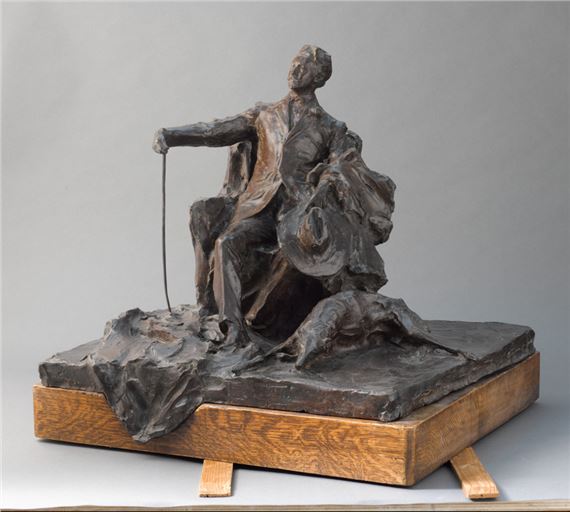
The exhibition traces the extraordinary life of this Italian artist, a Russian prince by birth and Parisian by adoption, who also had a brilliant career in the United States. A highly talented portraitist, he was much sought-after by a cosmopolitan elite, celebrities, the Parisian smart set and the first American film stars. His life was marked by decisive encounters and friendships with men of letters, Tolstoy in Russia and George Bernard Shaw in Paris, with whom he shared a vegetarian lifestyle, somewhat unusual for the era. In addition to the portraits that made his name, the exhibition will be highlighting his animal sculptures along with his astonishing work on behalf of animal rights, of which he was an ardent advocate well ahead of his time.
Developed in partnership with the Museo del Paesaggio in Verbania, the exhibition provides an opportunity to present a part of Troubetzkoy’s studio collection, which was bequeathed to the Italian museum after his death. It is an invitation to look at his practice and very recognisable style with fresh eyes. The way in which Troubetzkoy worked on his models, in energetic little touches that catch the light and make it vibrate on his bronze casts’ surfaces, clearly raises the question of impressionism in sculpture.
Visitors will acquaint themselves with a sensitive and very modern artist who was particularly subtle in his ability to depict the fluidity of bodies, the energy of movement and the strength of characters. His body of work, which was produced between the late 19th and early 20th century, will also provide a lively image of the Belle Époque. A catalogue will be published to mark the occasion, the first work in French on a sculptor who nonetheless spent part of his life in Paris.
Although Paris enabled Troubetzkoy to launch his career at international level, Milan, where he settled in 1884 at the age of 18, was the city that enabled him to discover himself, train and define himself as an artist free of all academic constraints. There, he got to know the main actors in the Scapigliatura literary and artistic movement, the painters Ranzoni and Cremona, and the sculptor Grandi, who played a major role in his first years of training. He made a name for himself among the public at large by participating in the city’s main exhibitions (Brera, La Famiglia Artistica and La Permanente) every year from 1886 to 1897, before his departure to Russia. He created his first masterpieces there, including the bust of the painter Giovanni Segantini modelled in 1896, whose bronze edition enjoyed enormous success Troubetzkoy’s first customers were Milanese (for portraits and several tombs in the Cimitero Monumentale). It was also through the good offices of a Milanese engineer that eight of the artist’s sculptures were presented at the World’s Columbian Exhibition in Chicago in 1893, and that four of them were shown the following year at the California Midwinter International Exhibition in San Francisco and were purchased by the businessman Michael Henry de Young for the city’s museum, which induced the sculptor to go to California in 1917. Throughout his career, Troubetzkoy continued to exhibit in Milan, up until 1936, two years before his death. In addition to a great many of Troubetzkoy’s major sculptures, the Galleria d’Arte Moderna’s collection also includes works by the Scapigliatura artists who guided his first steps.
Recommended for you
The exhibition traces the extraordinary life of this Italian artist, a Russian prince by birth and Parisian by adoption, who also had a brilliant career in the United States. A highly talented portraitist, he was much sought-after by a cosmopolitan elite, celebrities, the Parisian smart set and the first American film stars. His life was marked by decisive encounters and friendships with men of letters, Tolstoy in Russia and George Bernard Shaw in Paris, with whom he shared a vegetarian lifestyle, somewhat unusual for the era. In addition to the portraits that made his name, the exhibition will be highlighting his animal sculptures along with his astonishing work on behalf of animal rights, of which he was an ardent advocate well ahead of his time.
Developed in partnership with the Museo del Paesaggio in Verbania, the exhibition provides an opportunity to present a part of Troubetzkoy’s studio collection, which was bequeathed to the Italian museum after his death. It is an invitation to look at his practice and very recognisable style with fresh eyes. The way in which Troubetzkoy worked on his models, in energetic little touches that catch the light and make it vibrate on his bronze casts’ surfaces, clearly raises the question of impressionism in sculpture.
Visitors will acquaint themselves with a sensitive and very modern artist who was particularly subtle in his ability to depict the fluidity of bodies, the energy of movement and the strength of characters. His body of work, which was produced between the late 19th and early 20th century, will also provide a lively image of the Belle Époque. A catalogue will be published to mark the occasion, the first work in French on a sculptor who nonetheless spent part of his life in Paris.
Although Paris enabled Troubetzkoy to launch his career at international level, Milan, where he settled in 1884 at the age of 18, was the city that enabled him to discover himself, train and define himself as an artist free of all academic constraints. There, he got to know the main actors in the Scapigliatura literary and artistic movement, the painters Ranzoni and Cremona, and the sculptor Grandi, who played a major role in his first years of training. He made a name for himself among the public at large by participating in the city’s main exhibitions (Brera, La Famiglia Artistica and La Permanente) every year from 1886 to 1897, before his departure to Russia. He created his first masterpieces there, including the bust of the painter Giovanni Segantini modelled in 1896, whose bronze edition enjoyed enormous success Troubetzkoy’s first customers were Milanese (for portraits and several tombs in the Cimitero Monumentale). It was also through the good offices of a Milanese engineer that eight of the artist’s sculptures were presented at the World’s Columbian Exhibition in Chicago in 1893, and that four of them were shown the following year at the California Midwinter International Exhibition in San Francisco and were purchased by the businessman Michael Henry de Young for the city’s museum, which induced the sculptor to go to California in 1917. Throughout his career, Troubetzkoy continued to exhibit in Milan, up until 1936, two years before his death. In addition to a great many of Troubetzkoy’s major sculptures, the Galleria d’Arte Moderna’s collection also includes works by the Scapigliatura artists who guided his first steps.
Artists on show
Contact details

What's on nearby