ARTISTS
Picasso – Birth of a Genius
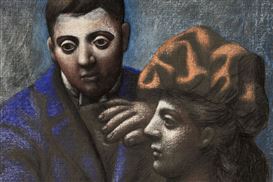
Between June 15 and September 1, 2019, UCCA Center for Contemporary Art, Beijing, presents “Picasso – Birth of a Genius,” the most significant exhibition of work by Pablo Picasso (1881-1973) ever to take place in China. The exhibition, which offers a comprehensive overview of the first three decades of Picasso’s career, includes 103 works drawn entirely from the collection of the the Musée national Picasso-Paris, which trace Picasso’s development from childhood to middle age. Curated by Emilia Philippot, Head of Collections, Musée national Picasso-Paris, the exhibition has been conceived and organized specifically for this presentation at UCCA and in China, and includes paintings, sculptures, and works on paper. Taken together, this selection of works realized between 1893 and 1921 constitutes the core of the exhibition and tell the story of the creative formation and evolution of the most daring, original, and prolific talent in the history of modern art.
The three decades under consideration here were a period of artistic discovery and ferment for the young Picasso, whose style underwent numerous changes, from the academic realism of his student days to his post-war return to classical style; from the alternately somber and carnivalesque motifs of the Blue and Rose periods to the primitivistexplorations which ultimately led to the multiple phases of Cubism. Rather than rigidly separating Picasso’s work into different thematic sections, the exhibition seeks to reaffirm the coexistence of several seemingly contradictory languages in his creative process, and to highlight the lived realities behind them, which exceed the period. This is the reason why theshow also proposes to present subsequent works through 1972.
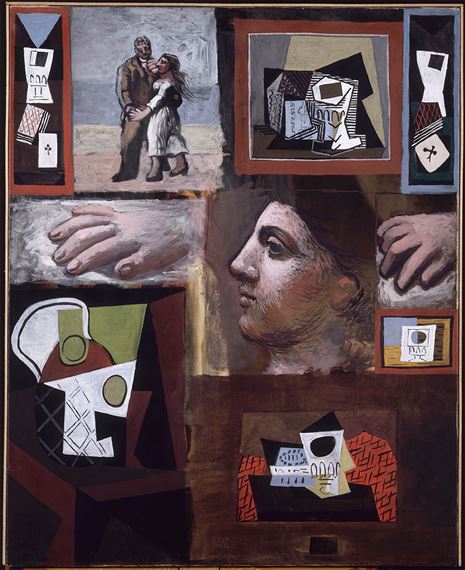
“Picasso – Birth of a Genius” is organized in six chapters: “The First Picasso,” which accounts for the artist’s artistic upbringing, when he produced works such as Man in a Cap (1895) and Study of a Torso, After a Plaster Cast (1893-1894); “Picasso Blue and Rose,” during which he advanced from imitating Post-Impressionist masters to develop a truly original style, resulting in works like The Jester (1905) and Two Brothers(1906); “Picasso the Exorcist,” which saw his revolutionary experiments with form and space, producing artworks like Self-portrait (1906) and preparing his masterpiece, Les Demoiselles D’Avignon (Museum of Modern Art, New York, 1907); “Picasso the Cubist,” a period when he wrought an elaborate system of signs, producing works such as The Mandolinist (1911) and Man with Fireplace (1916); “Picasso the Chameleon,” which marked the artist’s turn towards classical revivalism, creating works such as The Lovers (1919) and Studies (1920), as well as designing the sets, costumes, and curtain for the Ballets Russes production of Le Tricorne (1919); and a final section which includes several notable paintings and sculptures done between 1927 and 1972, giving a sense of how Picasso’s creative idiom, developed during the period under consideration in the exhibition, informed his later practice.
Recommended for you


Between June 15 and September 1, 2019, UCCA Center for Contemporary Art, Beijing, presents “Picasso – Birth of a Genius,” the most significant exhibition of work by Pablo Picasso (1881-1973) ever to take place in China. The exhibition, which offers a comprehensive overview of the first three decades of Picasso’s career, includes 103 works drawn entirely from the collection of the the Musée national Picasso-Paris, which trace Picasso’s development from childhood to middle age. Curated by Emilia Philippot, Head of Collections, Musée national Picasso-Paris, the exhibition has been conceived and organized specifically for this presentation at UCCA and in China, and includes paintings, sculptures, and works on paper. Taken together, this selection of works realized between 1893 and 1921 constitutes the core of the exhibition and tell the story of the creative formation and evolution of the most daring, original, and prolific talent in the history of modern art.
The three decades under consideration here were a period of artistic discovery and ferment for the young Picasso, whose style underwent numerous changes, from the academic realism of his student days to his post-war return to classical style; from the alternately somber and carnivalesque motifs of the Blue and Rose periods to the primitivistexplorations which ultimately led to the multiple phases of Cubism. Rather than rigidly separating Picasso’s work into different thematic sections, the exhibition seeks to reaffirm the coexistence of several seemingly contradictory languages in his creative process, and to highlight the lived realities behind them, which exceed the period. This is the reason why theshow also proposes to present subsequent works through 1972.
“Picasso – Birth of a Genius” is organized in six chapters: “The First Picasso,” which accounts for the artist’s artistic upbringing, when he produced works such as Man in a Cap (1895) and Study of a Torso, After a Plaster Cast (1893-1894); “Picasso Blue and Rose,” during which he advanced from imitating Post-Impressionist masters to develop a truly original style, resulting in works like The Jester (1905) and Two Brothers(1906); “Picasso the Exorcist,” which saw his revolutionary experiments with form and space, producing artworks like Self-portrait (1906) and preparing his masterpiece, Les Demoiselles D’Avignon (Museum of Modern Art, New York, 1907); “Picasso the Cubist,” a period when he wrought an elaborate system of signs, producing works such as The Mandolinist (1911) and Man with Fireplace (1916); “Picasso the Chameleon,” which marked the artist’s turn towards classical revivalism, creating works such as The Lovers (1919) and Studies (1920), as well as designing the sets, costumes, and curtain for the Ballets Russes production of Le Tricorne (1919); and a final section which includes several notable paintings and sculptures done between 1927 and 1972, giving a sense of how Picasso’s creative idiom, developed during the period under consideration in the exhibition, informed his later practice.
Artists on show
Contact details

Related articles
Summer is travel season for many, and museums around the world are rising to the occasion, hosting a bevy of must-see shows.
Exhibition at UCCA in Beijing of 103 works from the National Picasso Museum in Paris will show Chinese people what makes the artist great, its director says
Calder in Melbourne, Murakami in Hong Kong, Picasso in Beijing — our updated guide to the best shows across the rest of the world this summer and beyond
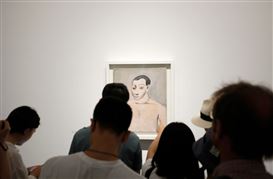
Less than a month into its run, a Pablo Picasso exhibition in China is already drawing massive crowds.
What's on nearby