
 ARTISTS
Pop on Paper: From Warhol to Lichtenstein
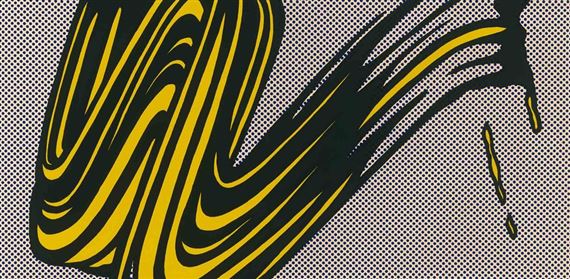
For the first time ever, Berlin’s Kupferstichkabinett will be presenting the highlights of its Pop Art collection, one of the most important of its kind in Europe. Beginning with American printmaking from the 1960s and the Pop Art pioneers Andy Warhol and Roy Lichtenstein, Pop on Paper covers a broad spectrum – both thematically and stylistically – ranging from work by artists as diverse as Claes Oldenburg, James Rosenquist and Elaine Sturtevant through to European figures such as Allen Jones, Sigmar Polke und Maria Lassnig, and right up into the present day.
One of the central elements of “classic” Pop Art was how it worked with the trivial, mass-produced and distributed imagery and products of American consumer society, from the humble soup can and the comic strip through to the press photos of Jackie O, the widow of JFK. But not all Pop Art was created alike. Alongside “outsiders” such as Jim Dine, there were also Minimalist tendencies, as seen in the abstract, geometrical iconography of Robert Indiana, Gerald Laing and Allan D’Arcangelo.
Recommended for you


For the first time ever, Berlin’s Kupferstichkabinett will be presenting the highlights of its Pop Art collection, one of the most important of its kind in Europe. Beginning with American printmaking from the 1960s and the Pop Art pioneers Andy Warhol and Roy Lichtenstein, Pop on Paper covers a broad spectrum – both thematically and stylistically – ranging from work by artists as diverse as Claes Oldenburg, James Rosenquist and Elaine Sturtevant through to European figures such as Allen Jones, Sigmar Polke und Maria Lassnig, and right up into the present day.
One of the central elements of “classic” Pop Art was how it worked with the trivial, mass-produced and distributed imagery and products of American consumer society, from the humble soup can and the comic strip through to the press photos of Jackie O, the widow of JFK. But not all Pop Art was created alike. Alongside “outsiders” such as Jim Dine, there were also Minimalist tendencies, as seen in the abstract, geometrical iconography of Robert Indiana, Gerald Laing and Allan D’Arcangelo.

