BUY ART
Rubén Ortiz Torres: Voluntary Repatriation
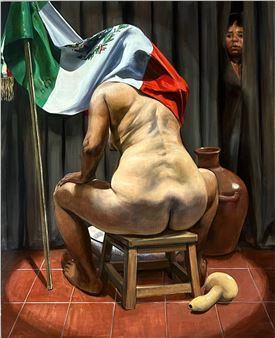
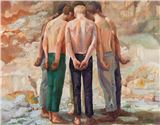
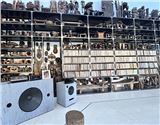
Repatriación Voluntaria [Voluntary Repatriation] brings together a group of recent works in which Rubén Ortiz-Torres (Mexico, 1964) revisits questions that have accompanied his practice for decades: the relation between context, art and language, and the instability of origins and destinations themselves. Situated within the cultural space that connects Mexico and the United States, the exhibition begins with a deceptively simple question: what does it mean to return?
From América Tropical (1932), the only mural David Alfaro Siqueiros created in the United States and later censored for its political content, to retired police vehicle doors from Tijuana, ceramics inspired by popular graphic culture, and symbols circulating across both sides of the border, Ortiz Torres examines the ways images, narratives, and identities are transformed as they move between territories, communities, and personal narratives.
Rather than proposing a return to a stable origin, Voluntary Repatriation suggests that whatever comes back never returns unchanged. Images reappear transformed by the contexts they have traversed, symbols accumulate new meanings, and narratives survive in unexpected new things and forms. More than an exhibition about return, it is a meditation on everything that happens along the way.
Recommended for you

Repatriación Voluntaria [Voluntary Repatriation] brings together a group of recent works in which Rubén Ortiz-Torres (Mexico, 1964) revisits questions that have accompanied his practice for decades: the relation between context, art and language, and the instability of origins and destinations themselves. Situated within the cultural space that connects Mexico and the United States, the exhibition begins with a deceptively simple question: what does it mean to return?
From América Tropical (1932), the only mural David Alfaro Siqueiros created in the United States and later censored for its political content, to retired police vehicle doors from Tijuana, ceramics inspired by popular graphic culture, and symbols circulating across both sides of the border, Ortiz Torres examines the ways images, narratives, and identities are transformed as they move between territories, communities, and personal narratives.
Rather than proposing a return to a stable origin, Voluntary Repatriation suggests that whatever comes back never returns unchanged. Images reappear transformed by the contexts they have traversed, symbols accumulate new meanings, and narratives survive in unexpected new things and forms. More than an exhibition about return, it is a meditation on everything that happens along the way.
Artists on show
What's on nearby