BUY ART

Sally Veach: Hubris and the Sublime
In this immersive exhibition, artist Sally Veach uses sight and sound to investigate her ancestry and humanity’s historical drive to control natural systems and nature’s indomitable power.
The installation explores how the philosophical concept of the Sublime—that overwhelming sense of awe and terror before nature’s magnitude—finds renewed urgency as climate anxiety intensifies. Hubris, humanity’s arrogant confidence in its dominion over the natural world, stands in stark opposition to the Sublime. The exhibition examines this tension: our persistent belief that we can master nature even as we face the consequences of that arrogance.
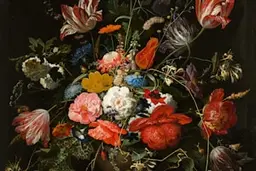
Veach explores these themes through symbolic gestural and romantic landscapes often interwoven with 18th-century botanical imagery. Two monumental, ceiling-suspended paintings feature mantua court dresses—18th-century garments that embodied colonial wealth, power, and the exploitation of both natural resources and human labor. Many paintings contain three symbolic layers that reveal themselves through sustained viewing.
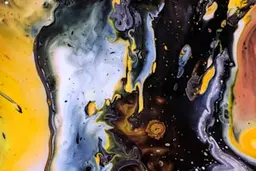
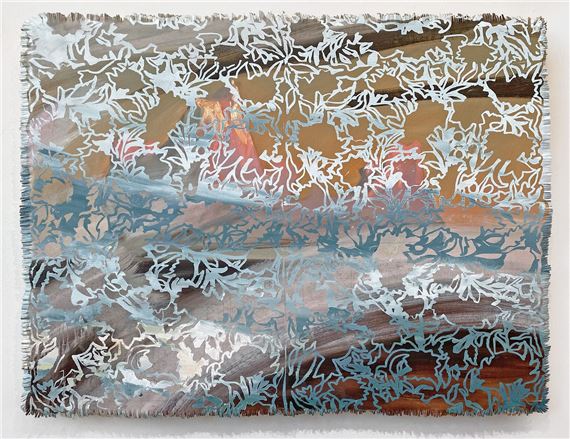
Veach employs energetic gestural strokes to invoke the power of the natural world. She sources decorative patterns and botanical illustrations from museums and rare-book library collections, using them as metaphors for humanity’s impulse to control and commercialize nature. Historic Indian chintz textile patterns represent colonialism and the cotton trade. Scientific illustrations indicate the naming and ordering of the natural world as another form of control and appropriation. These elements are layered over gestural representations of sublime natural power and romantic landscape interpretations. Many works feature frayed and fringed edges that remind viewers the substrate is cloth made from cotton or linen.Yellow Boy: Ancestral Reckoning on the Red Moshannon takes this investigation further. Drawings created with iron oxide pigments harvested from acid mine drainage on her ancestral coal-leased land in Pennsylvania transform toxic legacy into art. Proceeds of drawing sales are donated to the Moshannon Creek Watershed Association for remediation efforts.
Recommended for you


In this immersive exhibition, artist Sally Veach uses sight and sound to investigate her ancestry and humanity’s historical drive to control natural systems and nature’s indomitable power.
The installation explores how the philosophical concept of the Sublime—that overwhelming sense of awe and terror before nature’s magnitude—finds renewed urgency as climate anxiety intensifies. Hubris, humanity’s arrogant confidence in its dominion over the natural world, stands in stark opposition to the Sublime. The exhibition examines this tension: our persistent belief that we can master nature even as we face the consequences of that arrogance.
Veach explores these themes through symbolic gestural and romantic landscapes often interwoven with 18th-century botanical imagery. Two monumental, ceiling-suspended paintings feature mantua court dresses—18th-century garments that embodied colonial wealth, power, and the exploitation of both natural resources and human labor. Many paintings contain three symbolic layers that reveal themselves through sustained viewing.
Veach employs energetic gestural strokes to invoke the power of the natural world. She sources decorative patterns and botanical illustrations from museums and rare-book library collections, using them as metaphors for humanity’s impulse to control and commercialize nature. Historic Indian chintz textile patterns represent colonialism and the cotton trade. Scientific illustrations indicate the naming and ordering of the natural world as another form of control and appropriation. These elements are layered over gestural representations of sublime natural power and romantic landscape interpretations. Many works feature frayed and fringed edges that remind viewers the substrate is cloth made from cotton or linen.Yellow Boy: Ancestral Reckoning on the Red Moshannon takes this investigation further. Drawings created with iron oxide pigments harvested from acid mine drainage on her ancestral coal-leased land in Pennsylvania transform toxic legacy into art. Proceeds of drawing sales are donated to the Moshannon Creek Watershed Association for remediation efforts.
Artists on show
What's on nearby