ARTISTS

Sarah Crowner: Post Jacaranda
May 18, 2019 - Jun 15, 2019
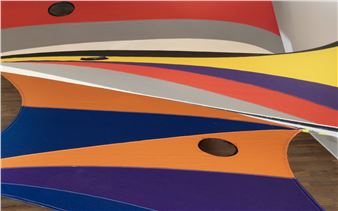
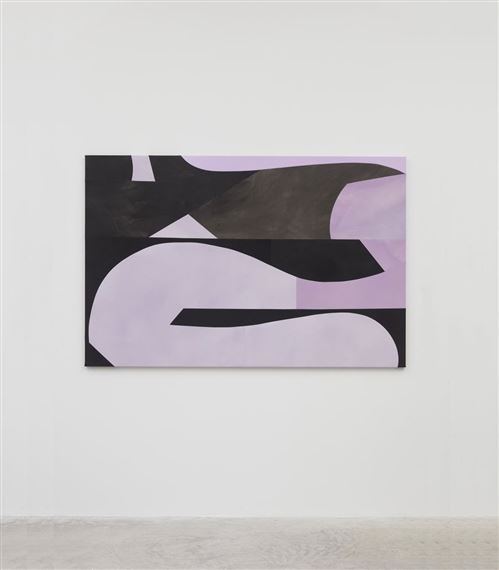
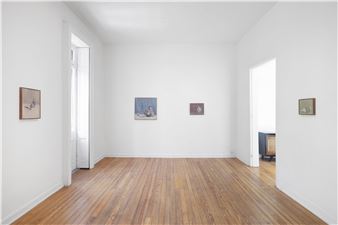
Lilac color dots Mexico City in the Spring, and is the color which Sarah Crowner (Philadelphia, U.S., 1974, based in Brooklyn, New York) takes as a seed to develop a body of work consisting of eight paintings and eleven collages. The works are accompanied by constellations of small jacaranda plants inside the gallery. This installation and a publication mark her first exhibition in Nordenhake Mexico. The eight paintings define groups of curved geometries and follow the artist’s thread of investigation over the last decade. The specific methodology of her practice consists in first painting rectilinear or oval fragments of canvas with one single color of diluted acrylic paint, leaving visible brushstrokes which evoke body movement. Then, the painting is structured by sewing together the fragments with a machine in squared forms, to finally be mounted on a wooden frame. The sutures reveal the composition of the work, where the joints both divide and unite the color-shapes, signaling again the body by recalling the stitches of wounds. The unions (or divisions) compound the relationships already laden in the sections of color, generating an affective agency, as if the lively color forms wanted to at once strike each other out and converge.
Recommended for you
Mar 19, 2026
- Aug 23, 2026
Apr 17, 2026
- Aug 02, 2026
Aug 21, 2025
- Nov 01, 2026
Lilac color dots Mexico City in the Spring, and is the color which Sarah Crowner (Philadelphia, U.S., 1974, based in Brooklyn, New York) takes as a seed to develop a body of work consisting of eight paintings and eleven collages. The works are accompanied by constellations of small jacaranda plants inside the gallery. This installation and a publication mark her first exhibition in Nordenhake Mexico. The eight paintings define groups of curved geometries and follow the artist’s thread of investigation over the last decade. The specific methodology of her practice consists in first painting rectilinear or oval fragments of canvas with one single color of diluted acrylic paint, leaving visible brushstrokes which evoke body movement. Then, the painting is structured by sewing together the fragments with a machine in squared forms, to finally be mounted on a wooden frame. The sutures reveal the composition of the work, where the joints both divide and unite the color-shapes, signaling again the body by recalling the stitches of wounds. The unions (or divisions) compound the relationships already laden in the sections of color, generating an affective agency, as if the lively color forms wanted to at once strike each other out and converge.
Artists on show
Contact details
Monterrey 65, Roma Nte., Cuauhtémoc Ciudad De Mexico, Mexico 06700

What's on nearby
Apr 23, 2026
- Jul 11, 2026
Jul 04, 2026
- Aug 22, 2026