
 ARTISTS




The Moon Museum
Jun 18, 2010 - Aug 01, 2010
The Tampa Museum of Art is pleased to announce the opening of The Moon Museum. The exhibition will be on view from June 18 through August 1, 2010.
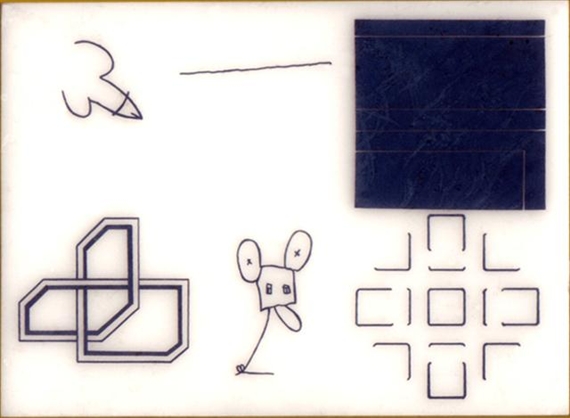
A postage stamp-sized, paper-thin multiple, The Moon Museum was the brainchild of New York sculptor Forrest “Frosty” Myers. A group of the most significant artists of the time including John Chamberlain, David Novros, Claes Oldenburg, Bob Rauschenberg and Andy Warhol joined Myers in contributing individual drawings that engineers at Bell Laboratories transferred (using a photo-reduction technique developed for micro circuitry) onto a handful of identical ceramic tiles.
The first-ever Space Art object, one edition of The Moon Museum was then surreptitiously attached to the Apollo 12 lunar landing LEM, and has, consequently, resided on the surface of the Moon now for more than four decades.
As Forrest Myers has described it, “Darwinian evolution seemed to happen in fossil time, but seeing Man leave the Earth and step foot on the Moon was both instant and epic.” Myers was inspired by the success of Apollo 11 to propose sending art to the Moon - his art and (most generously) the art of others he admired.
“We are thrilled that the exhibition of this work that highlights a fascinating moment when the worlds of space exploration and art meet as these six important artists contributed to a work that made its way onboard the Apollo 12 lunar landing mission in 1969,” states Museum Director Todd D. Smith. “I am pleased to have had the opportunity to work on this special project with independent curator Jade Dellinger.” As Dellinger notes, “Frosty wanted nothing more than to put something soulful up where typically NASA had left detritus and hardware behind. Forty years later, The Moon Museum still resonates profoundly in the imagination.”
The story of the Moon Museum is the subject of an investigative segment premiering nationally on the summer season launch of the PBS series HISTORY DETECTIVES on Monday, June 21 at 9pm ET on WEDU TV. To view the full clip online now and throughout the exhibition, go to pbs.org/historydetectives
A postage stamp-sized, paper-thin multiple, The Moon Museum was the brainchild of New York sculptor Forrest “Frosty” Myers. A group of the most significant artists of the time including John Chamberlain, David Novros, Claes Oldenburg, Bob Rauschenberg and Andy Warhol joined Myers in contributing individual drawings that engineers at Bell Laboratories transferred (using a photo-reduction technique developed for micro circuitry) onto a handful of identical ceramic tiles.
The first-ever Space Art object, one edition of The Moon Museum was then surreptitiously attached to the Apollo 12 lunar landing LEM, and has, consequently, resided on the surface of the Moon now for more than four decades.
As Forrest Myers has described it, “Darwinian evolution seemed to happen in fossil time, but seeing Man leave the Earth and step foot on the Moon was both instant and epic.” Myers was inspired by the success of Apollo 11 to propose sending art to the Moon - his art and (most generously) the art of others he admired.
“We are thrilled that the exhibition of this work that highlights a fascinating moment when the worlds of space exploration and art meet as these six important artists contributed to a work that made its way onboard the Apollo 12 lunar landing mission in 1969,” states Museum Director Todd D. Smith. “I am pleased to have had the opportunity to work on this special project with independent curator Jade Dellinger.” As Dellinger notes, “Frosty wanted nothing more than to put something soulful up where typically NASA had left detritus and hardware behind. Forty years later, The Moon Museum still resonates profoundly in the imagination.”
The story of the Moon Museum is the subject of an investigative segment premiering nationally on the summer season launch of the PBS series HISTORY DETECTIVES on Monday, June 21 at 9pm ET on WEDU TV. To view the full clip online now and throughout the exhibition, go to pbs.org/historydetectives
Recommended for you

Jul 07, 2017
- Jun 05, 2027


The Tampa Museum of Art is pleased to announce the opening of The Moon Museum. The exhibition will be on view from June 18 through August 1, 2010.
A postage stamp-sized, paper-thin multiple, The Moon Museum was the brainchild of New York sculptor Forrest “Frosty” Myers. A group of the most significant artists of the time including John Chamberlain, David Novros, Claes Oldenburg, Bob Rauschenberg and Andy Warhol joined Myers in contributing individual drawings that engineers at Bell Laboratories transferred (using a photo-reduction technique developed for micro circuitry) onto a handful of identical ceramic tiles.
The first-ever Space Art object, one edition of The Moon Museum was then surreptitiously attached to the Apollo 12 lunar landing LEM, and has, consequently, resided on the surface of the Moon now for more than four decades.
As Forrest Myers has described it, “Darwinian evolution seemed to happen in fossil time, but seeing Man leave the Earth and step foot on the Moon was both instant and epic.” Myers was inspired by the success of Apollo 11 to propose sending art to the Moon - his art and (most generously) the art of others he admired.
“We are thrilled that the exhibition of this work that highlights a fascinating moment when the worlds of space exploration and art meet as these six important artists contributed to a work that made its way onboard the Apollo 12 lunar landing mission in 1969,” states Museum Director Todd D. Smith. “I am pleased to have had the opportunity to work on this special project with independent curator Jade Dellinger.” As Dellinger notes, “Frosty wanted nothing more than to put something soulful up where typically NASA had left detritus and hardware behind. Forty years later, The Moon Museum still resonates profoundly in the imagination.”
The story of the Moon Museum is the subject of an investigative segment premiering nationally on the summer season launch of the PBS series HISTORY DETECTIVES on Monday, June 21 at 9pm ET on WEDU TV. To view the full clip online now and throughout the exhibition, go to pbs.org/historydetectives
A postage stamp-sized, paper-thin multiple, The Moon Museum was the brainchild of New York sculptor Forrest “Frosty” Myers. A group of the most significant artists of the time including John Chamberlain, David Novros, Claes Oldenburg, Bob Rauschenberg and Andy Warhol joined Myers in contributing individual drawings that engineers at Bell Laboratories transferred (using a photo-reduction technique developed for micro circuitry) onto a handful of identical ceramic tiles.
The first-ever Space Art object, one edition of The Moon Museum was then surreptitiously attached to the Apollo 12 lunar landing LEM, and has, consequently, resided on the surface of the Moon now for more than four decades.
As Forrest Myers has described it, “Darwinian evolution seemed to happen in fossil time, but seeing Man leave the Earth and step foot on the Moon was both instant and epic.” Myers was inspired by the success of Apollo 11 to propose sending art to the Moon - his art and (most generously) the art of others he admired.
“We are thrilled that the exhibition of this work that highlights a fascinating moment when the worlds of space exploration and art meet as these six important artists contributed to a work that made its way onboard the Apollo 12 lunar landing mission in 1969,” states Museum Director Todd D. Smith. “I am pleased to have had the opportunity to work on this special project with independent curator Jade Dellinger.” As Dellinger notes, “Frosty wanted nothing more than to put something soulful up where typically NASA had left detritus and hardware behind. Forty years later, The Moon Museum still resonates profoundly in the imagination.”
The story of the Moon Museum is the subject of an investigative segment premiering nationally on the summer season launch of the PBS series HISTORY DETECTIVES on Monday, June 21 at 9pm ET on WEDU TV. To view the full clip online now and throughout the exhibition, go to pbs.org/historydetectives
Artists on show
Contact details
Sunday
11:00 AM - 5:00 PM
Tuesday - Saturday
10:00 AM - 5:00 PM
120 W. Gasparilla Plaza Tampa, FL, USA 33602

