
 ARTISTS

The Omnipotence of Dreams
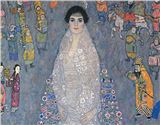
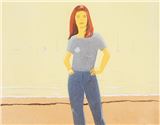
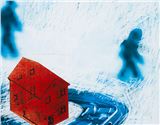
Gagosian is pleased to announce The Omnipotence of Dreams, an exhibition pairing works of art with items of artist-designed jewelry, opening at the Gstaad gallery on December 19. These images and objects trace a disciplinary crossover that offers surprising aesthetic and conceptual possibilities, Surrealist jewelry, in particular, having gained resonance through its deviation from the preceding Art Nouveau and Art Deco traditions. In The Omnipotence of Dreams, historic and contemporary works are also juxtaposed with paintings made specially for the exhibition by Ewa Juszkiewicz, Takashi Murakami, and Nathaniel Mary Quinn.
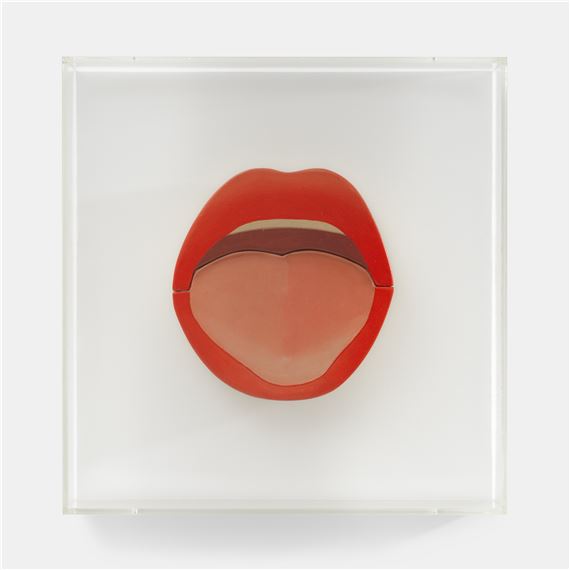
Tom Wesselmann’s painting Study for Mouth #10 (1966), a bold depiction of a wide-open maw with red-tinted lips, echoes the design of a brooch featuring ruby lips and cultured pearl teeth that was produced for Salvador Dalí by jeweler Henryk Kaston. In the vivid stylization of their respective designs, both works also recall Dalí’s iconic Mae West Lips Sofa (1937–38), a sculpture in the form of a piece of furniture modeled on the provocative movie star’s luscious features.
Several artworks incorporating floral imagery resonate with brooch, choker, and necklace designs by Claude Lalanne. In Looking Up (2025), from his Problem Paintings series (2010–), Urs Fischer presents a headshot of the late film noir actor Veronica Lake partially obscured by the silkscreened image of a flower. The juxtaposition summons the romantic associations of blossoms while hinting at the fleeting nature of fame, its masking of the face suggesting a redaction of personal identity.
Making further use of floral motifs are Derrick Adams, whose painting Untitled (Woman with Orchid) (2024) portrays a Black figure with a white blossom in her hair, and Takashi Murakami, who employs his multicolored smiling flower motif—a device adapted from the interwoven cultures of anime, manga, otaku, and kawaii. And in a new painting by Ewa Juszkiewicz, Portrait with Cordyline (2025), the artist replaces the sitter’s visage in a historically styled portrait with a jewel-accented swirl of her garment’s red fabric, alluding to the Western canon’s suppression of the feminine.
Recommended for you


Gagosian is pleased to announce The Omnipotence of Dreams, an exhibition pairing works of art with items of artist-designed jewelry, opening at the Gstaad gallery on December 19. These images and objects trace a disciplinary crossover that offers surprising aesthetic and conceptual possibilities, Surrealist jewelry, in particular, having gained resonance through its deviation from the preceding Art Nouveau and Art Deco traditions. In The Omnipotence of Dreams, historic and contemporary works are also juxtaposed with paintings made specially for the exhibition by Ewa Juszkiewicz, Takashi Murakami, and Nathaniel Mary Quinn.
Tom Wesselmann’s painting Study for Mouth #10 (1966), a bold depiction of a wide-open maw with red-tinted lips, echoes the design of a brooch featuring ruby lips and cultured pearl teeth that was produced for Salvador Dalí by jeweler Henryk Kaston. In the vivid stylization of their respective designs, both works also recall Dalí’s iconic Mae West Lips Sofa (1937–38), a sculpture in the form of a piece of furniture modeled on the provocative movie star’s luscious features.
Several artworks incorporating floral imagery resonate with brooch, choker, and necklace designs by Claude Lalanne. In Looking Up (2025), from his Problem Paintings series (2010–), Urs Fischer presents a headshot of the late film noir actor Veronica Lake partially obscured by the silkscreened image of a flower. The juxtaposition summons the romantic associations of blossoms while hinting at the fleeting nature of fame, its masking of the face suggesting a redaction of personal identity.
Making further use of floral motifs are Derrick Adams, whose painting Untitled (Woman with Orchid) (2024) portrays a Black figure with a white blossom in her hair, and Takashi Murakami, who employs his multicolored smiling flower motif—a device adapted from the interwoven cultures of anime, manga, otaku, and kawaii. And in a new painting by Ewa Juszkiewicz, Portrait with Cordyline (2025), the artist replaces the sitter’s visage in a historically styled portrait with a jewel-accented swirl of her garment’s red fabric, alluding to the Western canon’s suppression of the feminine.

