
 ARTISTS

Ways of Seeing the City
Sep 14, 2012 - Jan 07, 2013
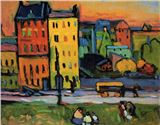
Throughout history artists and designers have utilized a variety of methods to capture the urban landscape, from etching, drawing, painting, photography, film, sound, and model-making, to more recent explorations using digital media and animation. These techniques of “seeing the city” are a means to represent, to interpret, to construct, to make present, to hear, to write, to touch, and to feel the city. They are employed for a multiplicity of purposes—to convince people to visit or relocate to the city, to convey the artist’s or designer’s understanding of the city, to interpret and reveal the city to oneself, and to promote a vision of the city. For architects and urban designers, the act of representing the city is exploratory and reflective, and is as much a way to generate thoughts and approaches to making the city as it is a means to communicate ideas to others. The Teaching Gallery exhibition Ways of Seeing the City presents a diverse selection of works in various media from the Museum’s permanent collection by such artists and architects as Le Corbusier, Howard French, Giovanni Battista Piranesi, Edward Ruscha, and Andy Warhol, among others.

Recommended for you

Jul 07, 2017
- Jun 05, 2027

Jul 22, 2022
- Dec 31, 2025


Throughout history artists and designers have utilized a variety of methods to capture the urban landscape, from etching, drawing, painting, photography, film, sound, and model-making, to more recent explorations using digital media and animation. These techniques of “seeing the city” are a means to represent, to interpret, to construct, to make present, to hear, to write, to touch, and to feel the city. They are employed for a multiplicity of purposes—to convince people to visit or relocate to the city, to convey the artist’s or designer’s understanding of the city, to interpret and reveal the city to oneself, and to promote a vision of the city. For architects and urban designers, the act of representing the city is exploratory and reflective, and is as much a way to generate thoughts and approaches to making the city as it is a means to communicate ideas to others. The Teaching Gallery exhibition Ways of Seeing the City presents a diverse selection of works in various media from the Museum’s permanent collection by such artists and architects as Le Corbusier, Howard French, Giovanni Battista Piranesi, Edward Ruscha, and Andy Warhol, among others.
Artists on show
Contact details
Washington University, One Brookings Drive St. Louis, MO, USA 63130

What's on nearby
Sep 05, 2025
- Feb 08, 2026
Sep 05, 2025
- Feb 01, 2026
Nov 07, 2025
- Mar 15, 2026
