ARTISTS

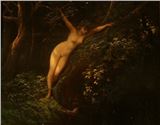
Yan Pei-Ming
Feb 12, 2009 - May 18, 2009
Following upon the exhibition Picasso/Delacroix, and with a view to delving once again into the rich mine of confrontations between contemporary artists and earlier masters, the Louvre extends an invitation to the Franco-Chinese painter Yan Pei-Ming.
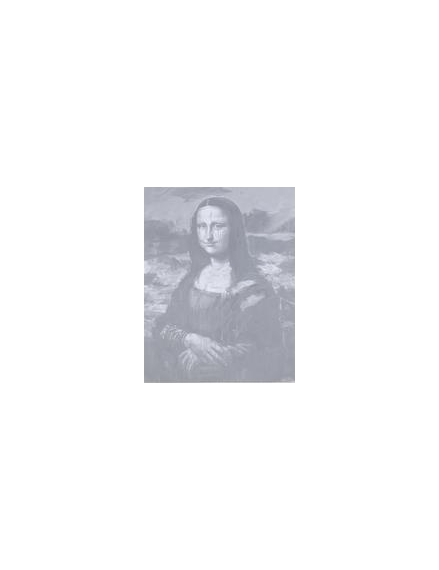
The artist will present several monumental paintings at the very heart of the museum: in the galleries devoted to the largest French nineteenth-century canvases and opposite the Salle des Etats, home to a number of masterpieces of Italian Renaissance painting. In so doing Yan Pei-Ming will seek to convey his singular perspective on the most famous work of art in the Louvre’s collections: Leonardo da Vinci’s Mona Lisa.
This young, immensely talented painter was born into the Cultural Revolution and served as a propaganda artist under the Maoist regime before emigrating to France in 1980, at the age of 19. Throughout his career in exile, his unique artistic style has contained echoes of totalitarian aesthetics, at the same time eluding their grasp. He often executes series of paintings, imposing in their dimensions, their use of aggressive and violent gesture, and the hieratic attitude of the figures depicted in portraits, chief among them Chinese political and cultural icons. His works explore traditional genres—still life, landscape, figurative and history painting—making austere use of a signature black-white-and-gray palette (with the occasional addition of a deep, saturated red) and a scale of representation that resist simple interpretations. Yan employs confident, muscular brushstrokes, applying the paint in broad, fast sweeps, allowing the excess to run along the surface of the canvas.
Since the early years of the current decade, Yan’s work has taken on a decidedly political focus (Mao, Obama/McCain, Jean Paul II, Buddha). At the Louvre, he engages directly with a number of iconic masterpieces in the museum’s collections.
Recommended for you


Jul 07, 2017
- Jun 05, 2027


May 01, 2022
- Jun 01, 2050
Following upon the exhibition Picasso/Delacroix, and with a view to delving once again into the rich mine of confrontations between contemporary artists and earlier masters, the Louvre extends an invitation to the Franco-Chinese painter Yan Pei-Ming.
The artist will present several monumental paintings at the very heart of the museum: in the galleries devoted to the largest French nineteenth-century canvases and opposite the Salle des Etats, home to a number of masterpieces of Italian Renaissance painting. In so doing Yan Pei-Ming will seek to convey his singular perspective on the most famous work of art in the Louvre’s collections: Leonardo da Vinci’s Mona Lisa.
This young, immensely talented painter was born into the Cultural Revolution and served as a propaganda artist under the Maoist regime before emigrating to France in 1980, at the age of 19. Throughout his career in exile, his unique artistic style has contained echoes of totalitarian aesthetics, at the same time eluding their grasp. He often executes series of paintings, imposing in their dimensions, their use of aggressive and violent gesture, and the hieratic attitude of the figures depicted in portraits, chief among them Chinese political and cultural icons. His works explore traditional genres—still life, landscape, figurative and history painting—making austere use of a signature black-white-and-gray palette (with the occasional addition of a deep, saturated red) and a scale of representation that resist simple interpretations. Yan employs confident, muscular brushstrokes, applying the paint in broad, fast sweeps, allowing the excess to run along the surface of the canvas.
Since the early years of the current decade, Yan’s work has taken on a decidedly political focus (Mao, Obama/McCain, Jean Paul II, Buddha). At the Louvre, he engages directly with a number of iconic masterpieces in the museum’s collections.
Artists on show
Contact details
Sunday
9:00 AM - 6:00 PM
Monday
9:00 AM - 6:00 PM
Wednesday
9:00 AM - 6:00 PM
Thursday - Saturday
9:00 AM - 6:00 PM
34-36 quai du Louvre 1e - Paris, France 75058

What's on nearby