
 ARTISTS

DAM Projects
The Algorists
It was Jean-Pierre who proposed using the term "algorist". Noting that algorists "ought to be defined with an algorithm", he also wrote an algorithm identifying an algorist as one who uses one's own algorithms for creating art objects. The correspondence I have located is dated August 31, 1995. Jean-Pierre's name for the group and his algorithm were both brilliant contributions serving as an identity and a manifesto. The Hébert algorithm, as quoted below, is formatted precisely as received:
if (creation && object of art && algorithm && one's own algorithm)
{ include * an algorist * }
elseif (!creation || !object of art || !algorithm || !one's own algorithm)
{ exclude * not an algorist * }
Quote from the website www.algorists.org, notified by Roman Verostko.
So artists who create an object of art with a process that includes their own algorithms are identified as algorists.
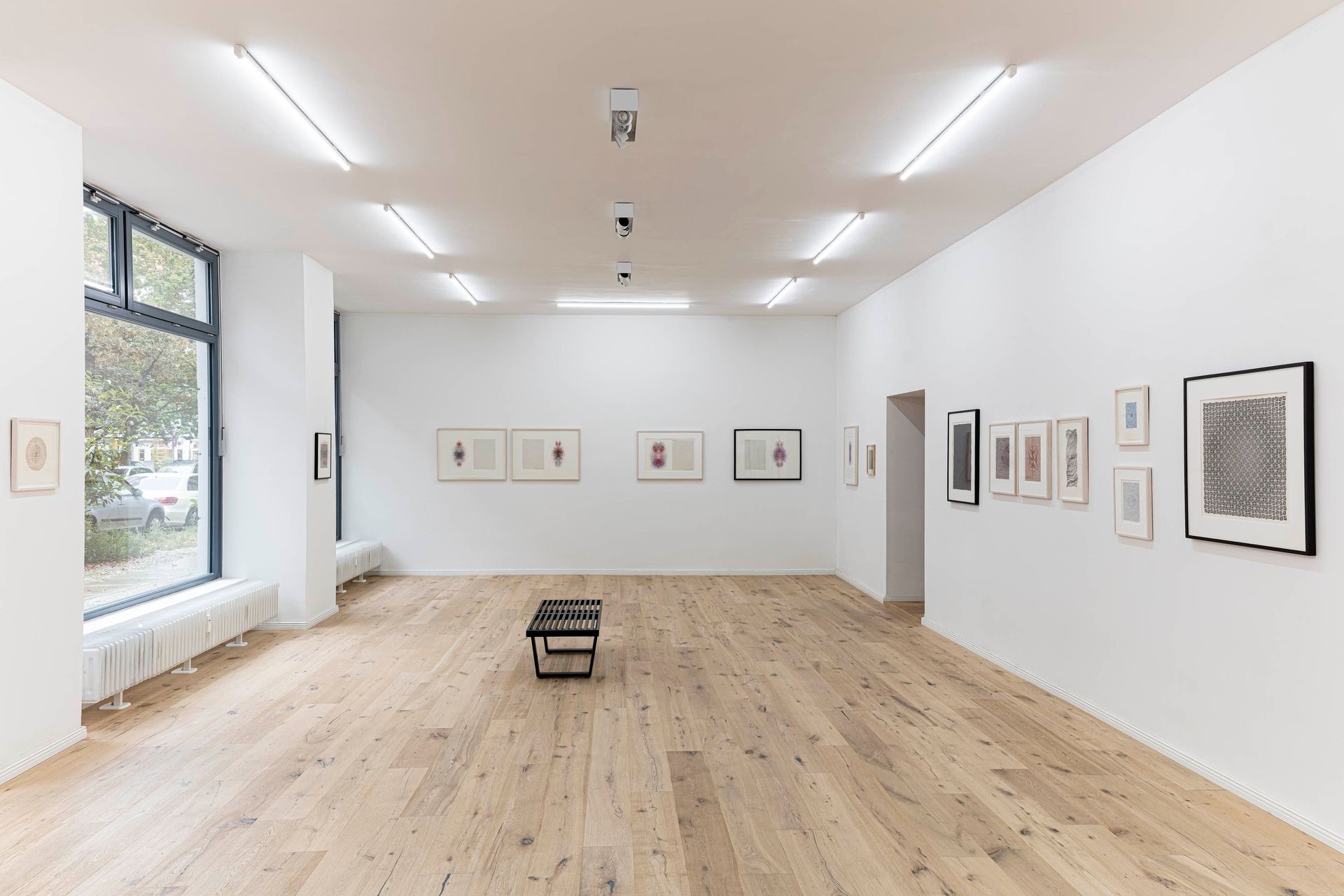
In our exhibition, we are presenting new works by Jean-Pierre Hébert from this early period of his career. With regard to Roman Verostko, we are focusing on a group of works dedicated to Alan Turing, which have only been exhibited once before, in Manchester in 1998.
In the 1930s, Alan Turing demonstrated that it was possible to solve any computable problem using Boolean algebra alone, performing mathematics by using just two values, 0 and 1, or true and false. His Universal Turing Machine, introduced as an idea in 1936-37, posited a mathematical tool equivalent to a digital computer, a single machine that could be used to compute any computable sequence.
As a special guest, we are delighted to present two plotter drawings by James Merrill from 2025, who also works in the tradition of the Algorists.
Artists on show: