 BUY ART



Fou Gallery
Ai Makita and Sizhu Li: Synthetic Mobility
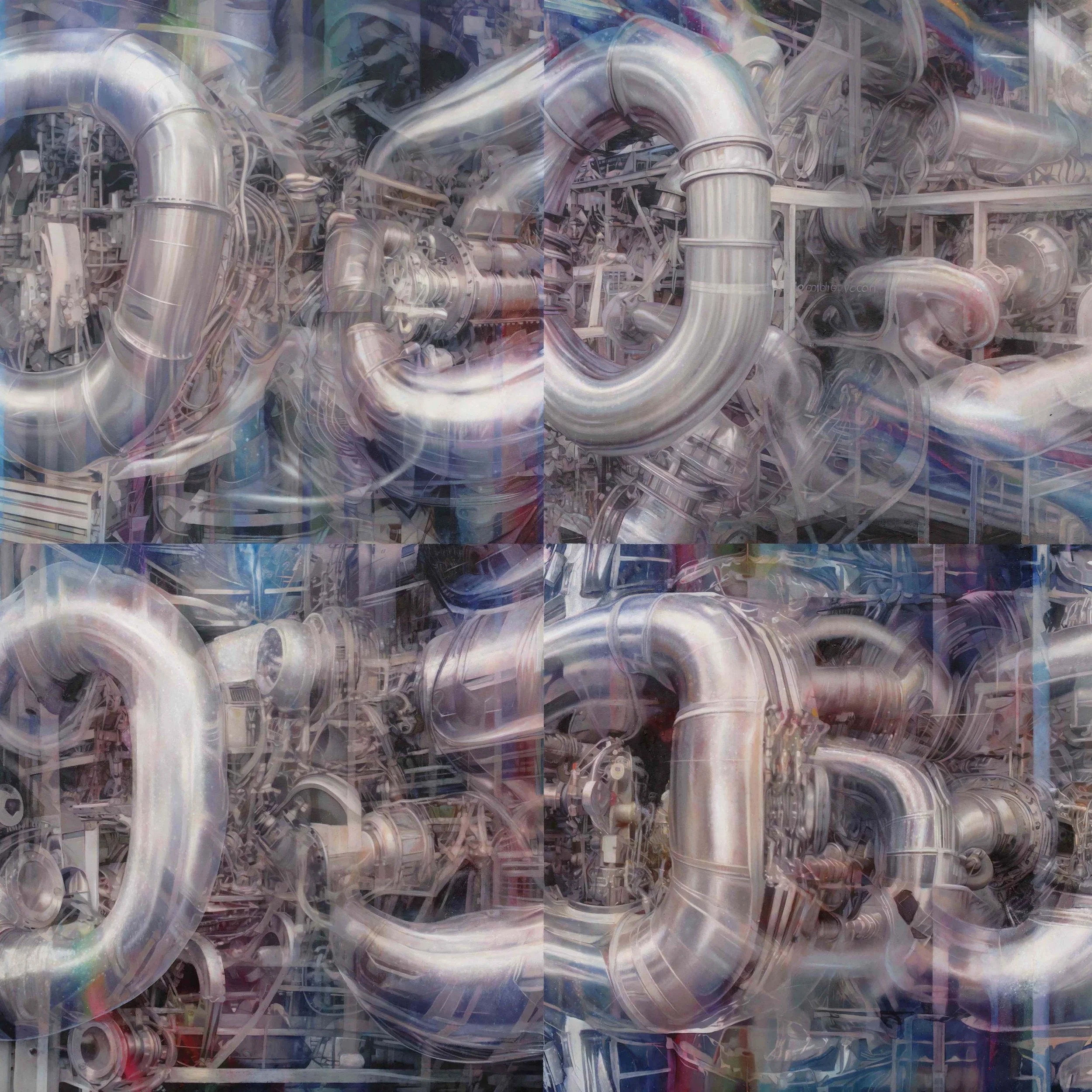
Fou Gallery is pleased to present Synthetic Mobility, a two-person exhibition featuring Tokyo- and New York-based artist Ai Makita and China-born, Houston-based kinetic artist Sizhu Li, on view from September 19 through November 8, 2026. The exhibition brings to the fore important questions about the interaction between technology and humans, considering how larger societal shifts affect the way artists represent humanity and reconstituted spaces.
The concept of the exhibition is connected to Timothy Morton’s idea of hyperobjects, according to which we cannot fully perceive larger structures surrounding us and widely distributed across space and time, but can try to describe their attributes and make a reasonable guess about their true nature. Synthetic mobility - the artificial generation of realistic human movement patterns using advanced algorithms - is a phenomenon related to the new acceleration of living rhythms promoted by digital progress. As the world is enveloped in ideological and cultural conflicts, Makita and Li consider what it means to remain individuals today, and how changes in technology alter our sense of perception and our mode of existence.
Ai Makita presents oil paintings, several of them developed in conjunction with the AI model Midjourney and others based on images created in Photoshop by folding aluminum sheets. The depicted forms represent abstract conjunctions of pipes, conduits, and industrial infrastructure. Folded materials result in labyrinths of fluidity and line resembling a circulatory or nervous system, an organism’s internal anatomy, or an invisible technological network now made visible. The created conduits recall flowing rivers, transcended thresholds, and the linearity of time. Close conceptual connection with Minimalism makes Makita’s stretched lines internally connected to Donald Judd looking at the properties and the rigidity of the structures as well as relation of this (in)stability to the current historical moment. Process art likewise plays a significant role in Makita’s practice, albeit in a form more appropriate to its new, updated version, where the digital has taken the place of the physical. Her paintings leave the viewer with a sense of wonder about where these meandering curves are leading and whether there is any specific destination. Mystery emerges not through mystical effects, but through the inability to grasp the full picture, pushing us to step away while also looking closer.
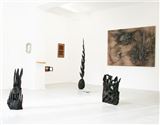
Sizhu Li presents sculptures made primarily from aluminum sheets and industrial fans. In Pushing Hands (2024–present), opposing forces travel through an industrial metal wave, creating a rhythm of tension and equilibrium that references the Taoist principle of balance. The title directly refers to the fundamental Tai Chi practice of Tui Shou, or “pushing hands,” centered on sensing, yielding to, and balancing opposing forces. Evolving from her earlier project Moonment, Li uses programmed fans and suspended aluminum sheets to construct a live, percussive environment of moving metallic waves. In Yuanbao (2026), she brings the traditional Chinese symbol of wealth and blessing into conversation with the ephemeral form of clouds, moving between material and spiritual aspirations, permanence and transience. Meanwhile, Oops, Caught’ya! (2026) turns the clamp into both a generative and restraining device, using movement, suspension, and pressure to consider freedom, constraint, instability, and balance.
Together, the two artists create a dialogue in which materials work as experimental tools to devise new understandings of where we are as a human species. Both artists look at motion, structure, and encounter as facilitated by materials, planes, and color. Makita’s paintings examine the transformations and limits caused by new synthetic mobility, while Li’s sculptures engage the same idea through three-dimensional objects. Neither artist provides specific arguments or answers; instead, they offer aesthetic tools that can help broaden our understanding of the technological forces increasingly shaping contemporary life.