ARTISTS


LETTERS
REBEL WITH A CLAUSE HAMZA WALKER'S characterization of Peter Saul, in his introduction to the artist's "1000 Words" [Art forum, Summer 2009], as
/ ARTFORUM
Sep 01, 2009

REBEL WITH A CLAUSE
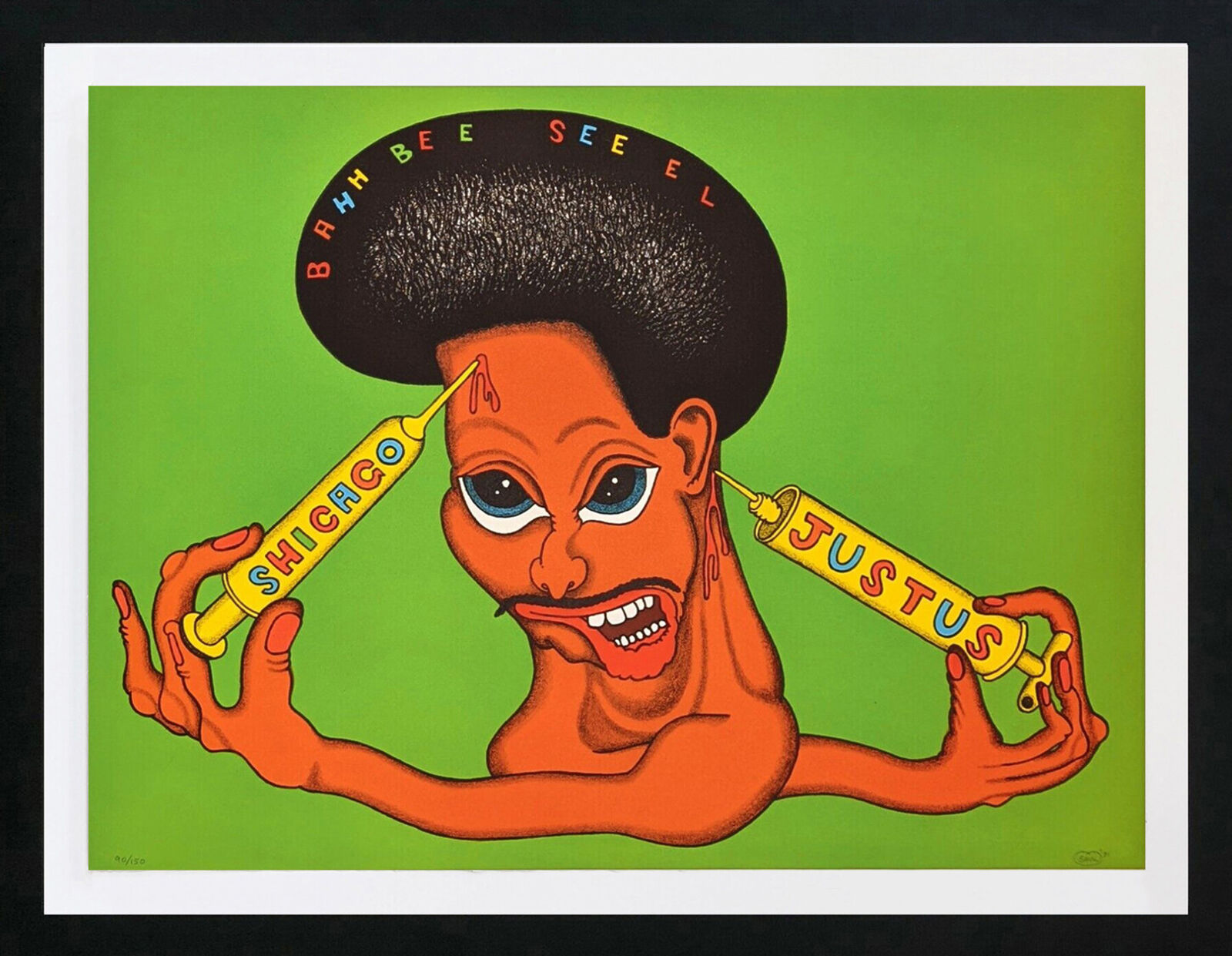
HAMZA WALKER'S characterization of Peter Saul, in his introduction to the artist's "1000 Words" [Art forum, Summer 2009], as "long an outsider to the New York museum and gallery establishment" presents an interesting perspective on what is by any standard an extraordinary artistic career.
Saul has never been an outsider in the New York art establishment, let alone in the many other cities in which he has exhibited regularly - in some cases for close to fifty years including Chicago, San Francisco, Houston, Cologne, Paris, and Geneva. In New York, Saul has had numerous solo shows at the same gallery since 1962 (Allan Frumkin; Frumkin/Adams; George Adams); indeed, already this year he has been the subject of not one but two New York gallery exhibitions one of early drawings and prints (Adams), the other of new work (David Nolan Gallery).
The Museum of Modern Art made its first acquisition, a drawing, in 1963 and has continued to collect his work in depth. The Whitney Museum of American Art purchased its first Saul (the monumental Saigon, 1967) in 1969 and now owns ten works, including a set of early prints acquired last February. Finally, the Metropolitan Museum of Art purchased the large-scale painting View of San Francisco #2, 1986, in 1988. As for the "art establishment" in general, at last count Saul was represented in the collections of no fewer than thirty-five major museums throughout the United States and abroad, and since 1980 he has been the subject of four museumorganized career survey exhibitions, the most recent being a retrospective that toured the US in 2008-2009.
With regard to art coverage in New York (not to mention press he has received elsewhere), along with more than twenty profiles, reviews, and articles published in the New York Times since 1962, Saul has also been featured multiple times in the Village Voice, the SoHo News, the New Yorker, Art in America, Art News, the New York Observer, the Daily News, New York Magazine, and Arts Magazine, among other publications. And need I point out that there have been no fewer than eight reviews or articles on the artist published in Artforum since 1972, including a cover story in 1993?
Finally, Walker correctly questions the usefulness of applying classifications such as "outsider" to artists like Peter Saul, and he points out that, in any event, it never mattered to Saul in the first place. If being "inside" or "outside" didn't matter to Saul, one can't help wondering why it should matter to Walker or other "critics and historians." In the end, as with any iconoclast, such concerns are irrelevant - in Saul's case perhaps all the more so since the record clearly demonstrates he has been "inside" all along.
-George Adams
George Adams Gallery
New York
Hamza Walker responds:
Thanks for setting the record straight. I concur. As for his being "'inside' all along, " I would argue that Saul, for the first decade of his career, was celebrated as an insider's outsider, which remains the source of his art-world currency. But like a toxic asset, he needs to be removed from the books. Apparently he still poses a problem to a dominant arthistorical narrative as constructed and enforced through museum installations. It is always refreshing to see a Saul crop up, but I ask myself when, if ever, besides an exhibition such as 1992's "Hand-Painted Pop, " I have seen Saul in the vicinity of a Warhol, let alone near a Donald Judd.
Although this did not ultimately appear in the edited interview, Saul himself uses the term "outsider" liberally as a self-designation. I was following his lead, correlating his being a geographic outsider to the New York establishment with his position "outside" dominant trends. Saul's use of "outsider" aside, such terms can make for productive parsing. Even if Saul didn't care about the term "outsider, " that doesn't mean I shouldn't. His not caring about "inside" or "outside" is no reason to dispense with an art-historical backdrop for his work, a backdrop since turned inside out, especially in relation to Saul's consistency over the years. This would make Saul all the more his own man, so to speak, and not simply an iconoclast, a description that in and of itself runs the risk of painting him as a reactionary, which has proven not to be the case. But even if Saul were viewed solely as an iconoclast, classifications such as "insider" and "outsider" would still prove indispensable in positioning him. To be an iconoclast requires a tradition or a dominant narrative - that is, an inside - against which to rebel. I chalk up his claim of being a "relaxed rebel" not only to the recognition he has received over the course of his career but also to an art-historical change of scenery in which his contemporaries are to be found among artists a full two generations removed. Whereas Saul was once an insider's outsider, now he is an insider's insider.
- Hamza Walker
Chicago
COPYRIGHT: Copyright Artforum Inc. Sep 2009. Provided by Proquest- CSA, LLC. All Rights Reserved. Only fair use as provided by the United States copyright law is permitted.
PROQUEST-CSA, LLC- MAKES NO WARRANTY REGARDING THE ACCURACY, COMPLETENESS, OR TIMELINESS OF THE LICENSED MATERIALS OR ANY WARRANTY, EXPRESS OR IMPLIED.
HAMZA WALKER'S characterization of Peter Saul, in his introduction to the artist's "1000 Words" [Art forum, Summer 2009], as "long an outsider to the New York museum and gallery establishment" presents an interesting perspective on what is by any standard an extraordinary artistic career.
Saul has never been an outsider in the New York art establishment, let alone in the many other cities in which he has exhibited regularly - in some cases for close to fifty years including Chicago, San Francisco, Houston, Cologne, Paris, and Geneva. In New York, Saul has had numerous solo shows at the same gallery since 1962 (Allan Frumkin; Frumkin/Adams; George Adams); indeed, already this year he has been the subject of not one but two New York gallery exhibitions one of early drawings and prints (Adams), the other of new work (David Nolan Gallery).
The Museum of Modern Art made its first acquisition, a drawing, in 1963 and has continued to collect his work in depth. The Whitney Museum of American Art purchased its first Saul (the monumental Saigon, 1967) in 1969 and now owns ten works, including a set of early prints acquired last February. Finally, the Metropolitan Museum of Art purchased the large-scale painting View of San Francisco #2, 1986, in 1988. As for the "art establishment" in general, at last count Saul was represented in the collections of no fewer than thirty-five major museums throughout the United States and abroad, and since 1980 he has been the subject of four museumorganized career survey exhibitions, the most recent being a retrospective that toured the US in 2008-2009.
With regard to art coverage in New York (not to mention press he has received elsewhere), along with more than twenty profiles, reviews, and articles published in the New York Times since 1962, Saul has also been featured multiple times in the Village Voice, the SoHo News, the New Yorker, Art in America, Art News, the New York Observer, the Daily News, New York Magazine, and Arts Magazine, among other publications. And need I point out that there have been no fewer than eight reviews or articles on the artist published in Artforum since 1972, including a cover story in 1993?
Finally, Walker correctly questions the usefulness of applying classifications such as "outsider" to artists like Peter Saul, and he points out that, in any event, it never mattered to Saul in the first place. If being "inside" or "outside" didn't matter to Saul, one can't help wondering why it should matter to Walker or other "critics and historians." In the end, as with any iconoclast, such concerns are irrelevant - in Saul's case perhaps all the more so since the record clearly demonstrates he has been "inside" all along.
-George Adams
George Adams Gallery
New York
Hamza Walker responds:
Thanks for setting the record straight. I concur. As for his being "'inside' all along, " I would argue that Saul, for the first decade of his career, was celebrated as an insider's outsider, which remains the source of his art-world currency. But like a toxic asset, he needs to be removed from the books. Apparently he still poses a problem to a dominant arthistorical narrative as constructed and enforced through museum installations. It is always refreshing to see a Saul crop up, but I ask myself when, if ever, besides an exhibition such as 1992's "Hand-Painted Pop, " I have seen Saul in the vicinity of a Warhol, let alone near a Donald Judd.
Although this did not ultimately appear in the edited interview, Saul himself uses the term "outsider" liberally as a self-designation. I was following his lead, correlating his being a geographic outsider to the New York establishment with his position "outside" dominant trends. Saul's use of "outsider" aside, such terms can make for productive parsing. Even if Saul didn't care about the term "outsider, " that doesn't mean I shouldn't. His not caring about "inside" or "outside" is no reason to dispense with an art-historical backdrop for his work, a backdrop since turned inside out, especially in relation to Saul's consistency over the years. This would make Saul all the more his own man, so to speak, and not simply an iconoclast, a description that in and of itself runs the risk of painting him as a reactionary, which has proven not to be the case. But even if Saul were viewed solely as an iconoclast, classifications such as "insider" and "outsider" would still prove indispensable in positioning him. To be an iconoclast requires a tradition or a dominant narrative - that is, an inside - against which to rebel. I chalk up his claim of being a "relaxed rebel" not only to the recognition he has received over the course of his career but also to an art-historical change of scenery in which his contemporaries are to be found among artists a full two generations removed. Whereas Saul was once an insider's outsider, now he is an insider's insider.
- Hamza Walker
Chicago
COPYRIGHT: Copyright Artforum Inc. Sep 2009. Provided by Proquest- CSA, LLC. All Rights Reserved. Only fair use as provided by the United States copyright law is permitted.
PROQUEST-CSA, LLC- MAKES NO WARRANTY REGARDING THE ACCURACY, COMPLETENESS, OR TIMELINESS OF THE LICENSED MATERIALS OR ANY WARRANTY, EXPRESS OR IMPLIED.