ARTISTS

Summer, Autumn, Winter, Spring: Why Learn Tradition to Appreciate Art?
Understanding the symbolic weight of seasonal imagery allows viewers to transition from basic observation to a sophisticated engagement with the history of art
Abigail Leali / MutualArt
May 13, 2026
Visual art has always been a great democratizer. From Neolithic cave paintings produced together by tribes, to medieval frescoes crafted to educate the illiterate, to modern signage designed to be intelligible across cultural and linguistic barriers, art draws upon a wealth of human experience to create meaning out of shared understanding.
In this sense, our capacity to interpret art is somewhat innate. Even if you were totally unfamiliar with the religious context of da Vinci’s Last Supper, for instance, you would likely recognize that you were looking at a dinner table. You would also be able to tell that the central figure is the most important – he is, after all, framed by the window, and most of the men are looking toward him. You could likely also sense the shock and trepidation in their poses, and from there surmise that this was a moment of great significance. If you were particularly observant, you might even pick up on the central figure’s agonized expression, gesturing toward a sacrifice to come.
How could you infer all this and more, without being told? Because you have experienced social hierarchies, have felt fear and admiration, and have shared meals with your friends. As unimpressive as it may seem, acknowledging this innate capacity for interpretation should be empowering, especially for those new to art. Even if you can’t interpret the full message of the Last Supper, you can get much further than you realize simply by being a human.
, 1495.Jpeg) Leonardo da Vinci, The Last Supper (restored), 1495
Leonardo da Vinci, The Last Supper (restored), 1495
That said, just because we can encounter art on the raw level of shared experience does not mean there is no value in diving deeper. Beneath the surface of any work of art, there lies a river of cultural memory flowing in and away. The Last Supper is more than a group of men around a solemn dinner table; it is the beginning of a narrative that would lead to betrayal, suffering, and ultimately redemption and hope – a narrative that shaped the minds and hearts of generations of our ancestors and continues to inform our philosophies and policies even today. Every brushstroke contributes to more than an experience or an emotional state. Rather, each artistic choice gestures toward a long tradition of thought about life, death, humanity, and the divine.
These stories are part of the work, as true as the paint on the wall. But you could only know about them if you have been taught. That is no failure on da Vinci’s part; to create a work of art that reaches beyond itself toward the height of human questioning is its own feat of genius (which not all religious art inherently attains). But to recognize and interpret this deep and expansive layer of meaning, you need to be initiated into a cultural “language.”
On the one hand, then, there are aspects of art that we can appreciate “organically”; on the other, there are “traditional” elements that we pass from generation to generation, preserving deeper layers of a work’s meaning. This dichotomy can make exploring the tradition seem all the more daunting. Where to begin? Why try at all, when so much can be gleaned without studying an endless stream of old books?
There’s nothing wrong, of course, with preferring an organic encounter with art. There’s also nothing wrong with being too tired, busy, or unmotivated to study thousands of years of world history, literature, poetry, music, theater, science, etc. Luckily, you don’t have to know everything to sense the contours of tradition in art. In fact, there is often something just as magical in recognizing what you don’t know as what you do.
If you are overwhelmed with the sheer volume of context that undergirds the world’s various artistic traditions, there is a middle ground that might help. Alongside more culturally defined subjects and motifs are ones that are intuitive to our experience and have since been adorned with centuries upon centuries of meaning, allowing for rich thematic interpretations even of apparently simple works.
Among these motifs, seasonal imagery is one of the most ancient. For most of human history, we have been at the whim of the passage of seasons for our food and shelter. Our lives were organized around the migration patterns of herds, the best times for sowing and reaping, the cycle of shorter and longer days. Each season brings a different set of hopes and fears and a different way of living. We know, almost without knowing, that summer is warmer, more fertile, and hospitable than the bleakness of winter. We know that fall is a time to preserve and store, as much as spring is a time to plant and grow.
It sounds obvious, but any artistic depiction of the outdoors has to take place during a specific season. That remains true, regardless of time, place, or culture; the seasons may vary regionally, but they can never be cast aside. Over countless generations and civilizations, therefore, seasonal imagery has been continually present, resulting in an incredibly rich and remarkably accessible symbolic tradition.
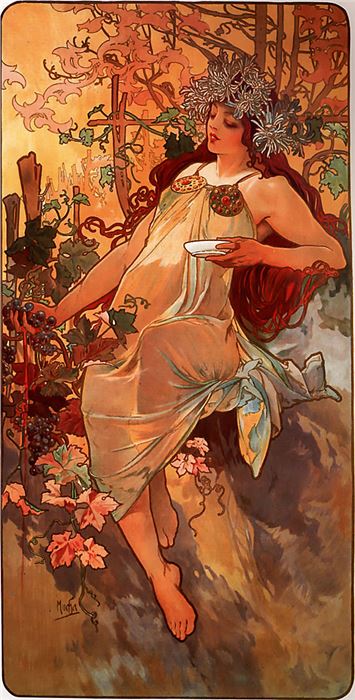
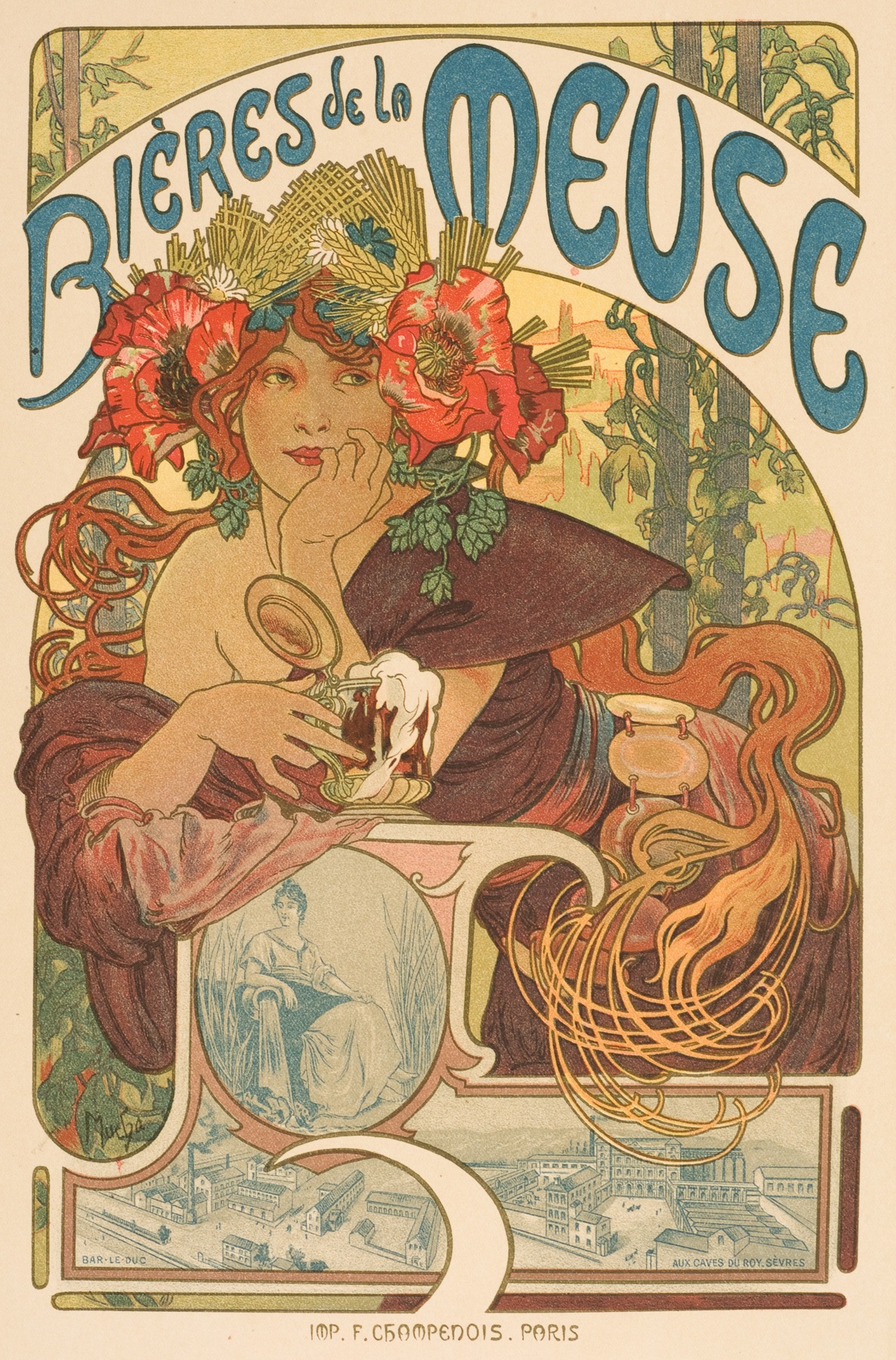
Alfons Mucha, Autumn, 1896
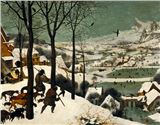
While the exact allusions and shades of meaning can differ (I may have to do a follow-up article on seasons in Japanese art and haiku), in the Western tradition, there are a few overarching attributes associated with each season. Spring represents hope, birth, youth, fertility, and new life. Summer suggests abundance, maturity, fruitfulness, and earthly delight. Autumn indicates both bounty and decline: joyful harvest nights and the approaching end of such celebrations. It is a season that portends death, even as some worldly pleasures remain. Winter, toward which autumn gestures, is a symbol of aging and death, as well as a call to turn toward the life beyond our mortal existence. In some works, huddling before a fire also calls to mind the importance of relationships in overcoming harsh circumstances. 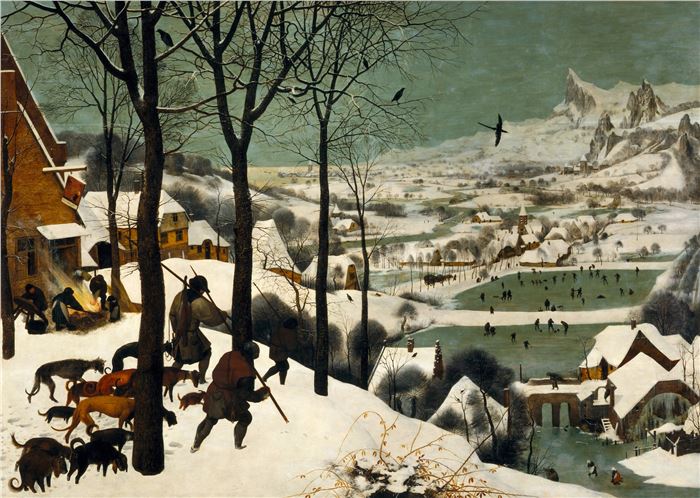 Pieter Brueghel the Elder, The Hunters in the Snow, 1565
Does that all sound straightforward? Maybe deceptively so. We can feel the difference between a vibrant summer vista and a quiet, snow-laden forest without thinking about it. But consider the difference between paintings like Pieter Brueghel the Elder’s Hunters in the Snow and Theodore Kleehaas’s Exciting Toboggan Ride. These paintings span centuries of cultural change, yet they share winter imagery. If we take into account the perception of winter as a time of coldness and death, what changes? Kleehaas’s sledding children present more than a nostalgic vision of childhood; they also become a meditation on youth’s carefree joy in the face of death. Meanwhile, the men plodding back through the woods toward the town are more than a picturesque scene; they become a reflection on endurance amid hardship and age – and by turning toward their village, they gesture toward the comfort we can find in our communities. 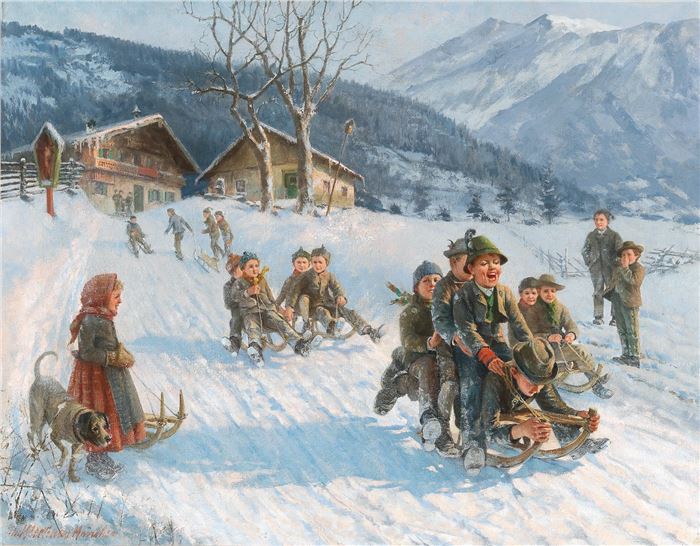 Theodor Kleehaas, Exciting Toboggan Ride, before 1929
Then there is the literary angle. While it’s never guaranteed, many artworks also use seasonal imagery to refer back to specific works. In the Aeneid, Virgil famously described the souls of the dead as falling leaves; Shakespeare’s famous sonnet compares his lover to a summer day; Robert Frost stopped by the woods on a snowy evening to contemplate his coming sleep. Many of our most beloved artists were familiar with these works – or else their art helped inspire their creation. If you are inclined to look for it, seasonal imagery is everywhere. And the more you find it, the more the works you encounter can begin to enrich each other.
Seasonality in art is ubiquitous and, at times, so apparent that we gloss right over it. Still, for the amateur art enthusiast, it is an excellent entry point into a more advanced mode of art appreciation. Simply noticing the seasons in what you see, hear, read, and watch can give you a better sense of their cultural meaning. The next time you find yourself in an art museum, take a moment to observe what your favorite artists are doing with the weather. Over time, you’ll find your reflections delving deeper as you are slowly initiated into a tradition more transcendent – but just as human – as the one you could achieve alone.
For more on auctions, exhibitions, and current trends, visit our Magazine Page