ARTISTS





Patterns of Resistance
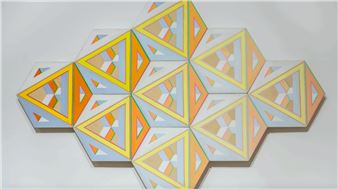
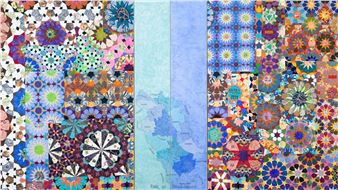
In the early 1970s, the Pattern & Decoration Movement emerged as an antidote to the vice grip in which abstraction had held American art since the 1950s. Artists like Valerie Jaudon, Joyce Kozloff, and Miriam Shapiro began juxtaposing colors and patterns that critics and artists alike had previously dismissed as feminine to powerful effect. Simultaneously, other feminist artists like Lynda Benglis were consciously subverting clay’s associations as a masculine and/or craft medium.
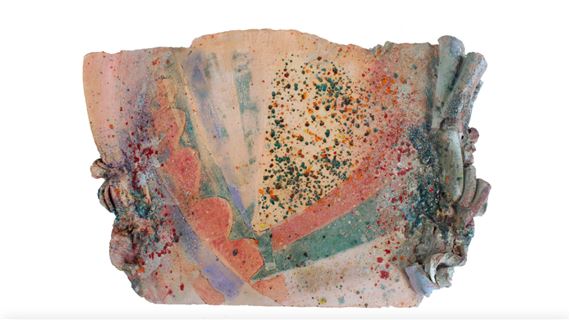
As the seventies played out, a generation of artists like Andrea Gill, Nancy Selvin, and Betty Woodman did not just embrace the decorative strategies of the Pattern & Decoration Movement, they also sought to place a feminist spin on their work. As ceramics become more common in a fine art context, hierarchies surrounding different materials faded, giving artists the ability to experiment and construct narrative and meaning through pattern. Long denigrated as “decorative” and closely associated with domesticity, patterns are now an integral part of the language of contemporary art.
Recommended for you



In the early 1970s, the Pattern & Decoration Movement emerged as an antidote to the vice grip in which abstraction had held American art since the 1950s. Artists like Valerie Jaudon, Joyce Kozloff, and Miriam Shapiro began juxtaposing colors and patterns that critics and artists alike had previously dismissed as feminine to powerful effect. Simultaneously, other feminist artists like Lynda Benglis were consciously subverting clay’s associations as a masculine and/or craft medium.
As the seventies played out, a generation of artists like Andrea Gill, Nancy Selvin, and Betty Woodman did not just embrace the decorative strategies of the Pattern & Decoration Movement, they also sought to place a feminist spin on their work. As ceramics become more common in a fine art context, hierarchies surrounding different materials faded, giving artists the ability to experiment and construct narrative and meaning through pattern. Long denigrated as “decorative” and closely associated with domesticity, patterns are now an integral part of the language of contemporary art.
Contact details

What's on nearby